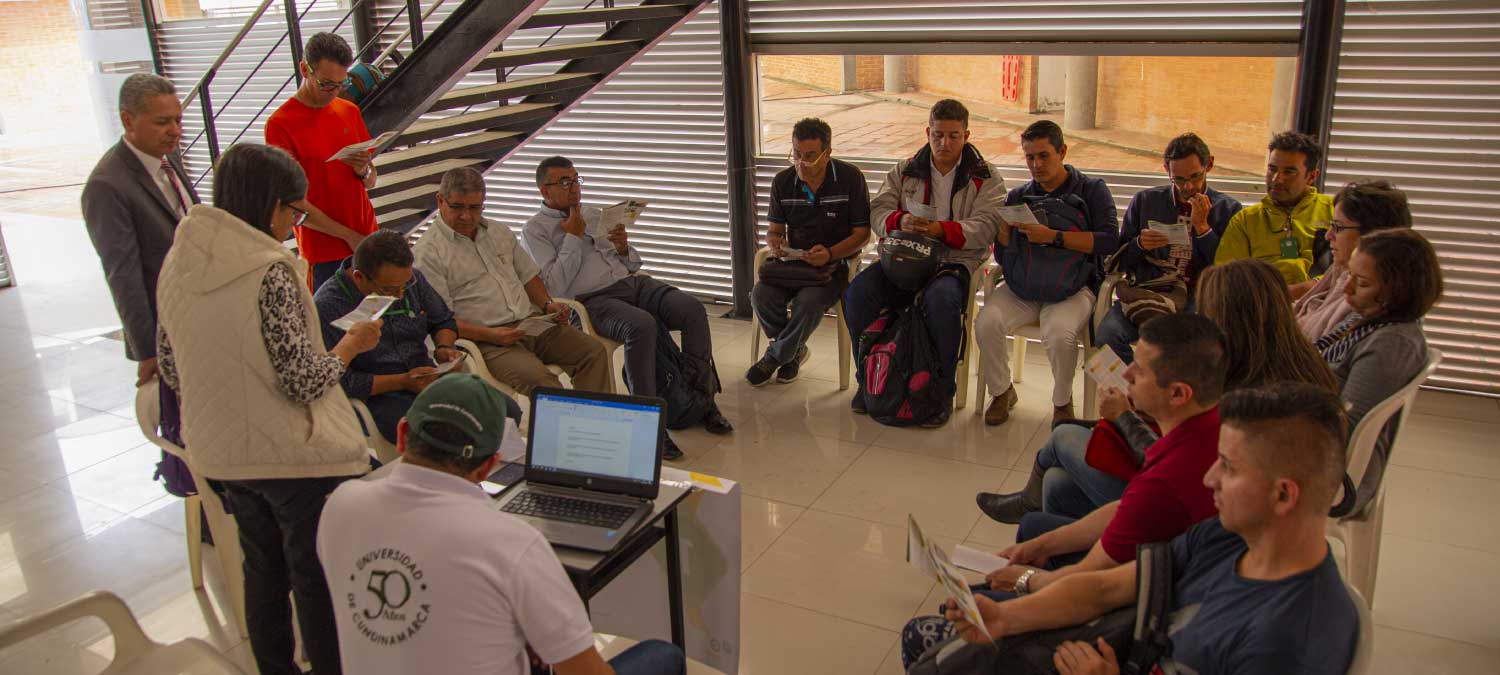
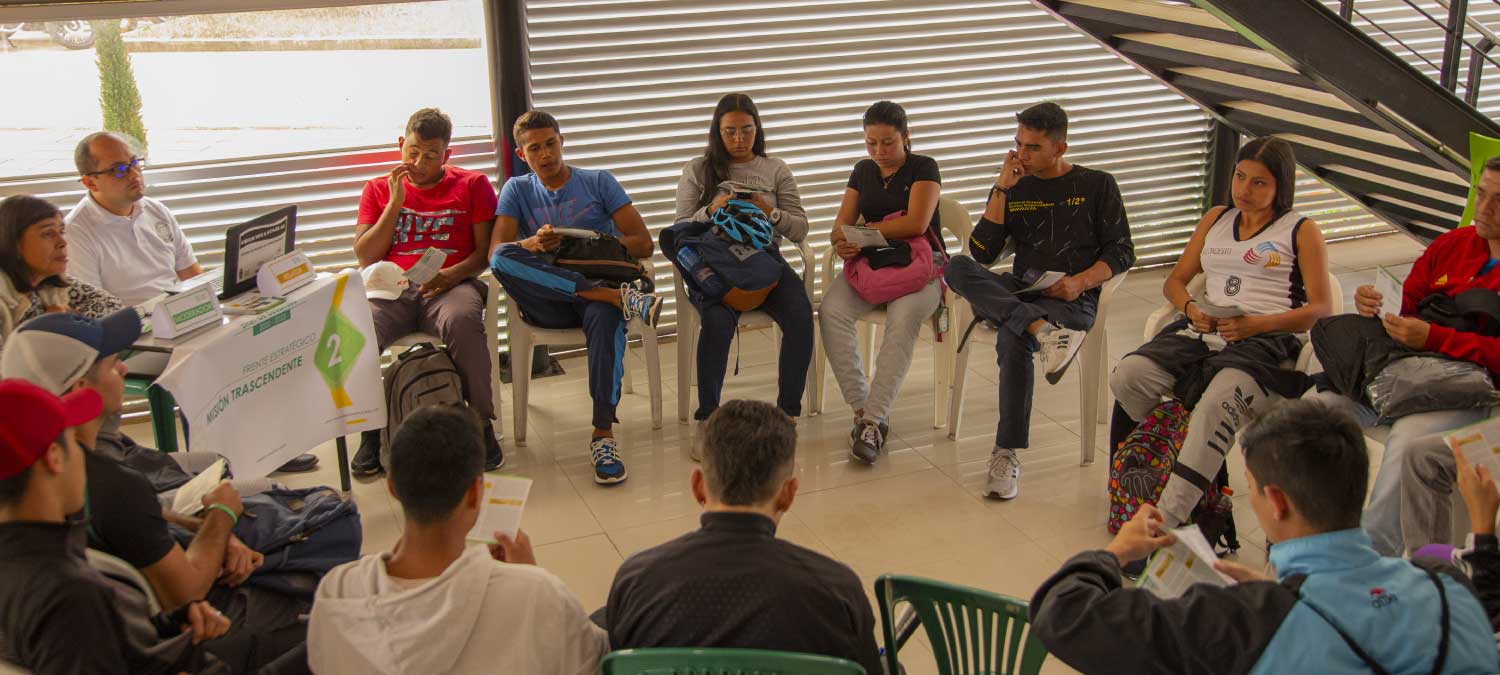
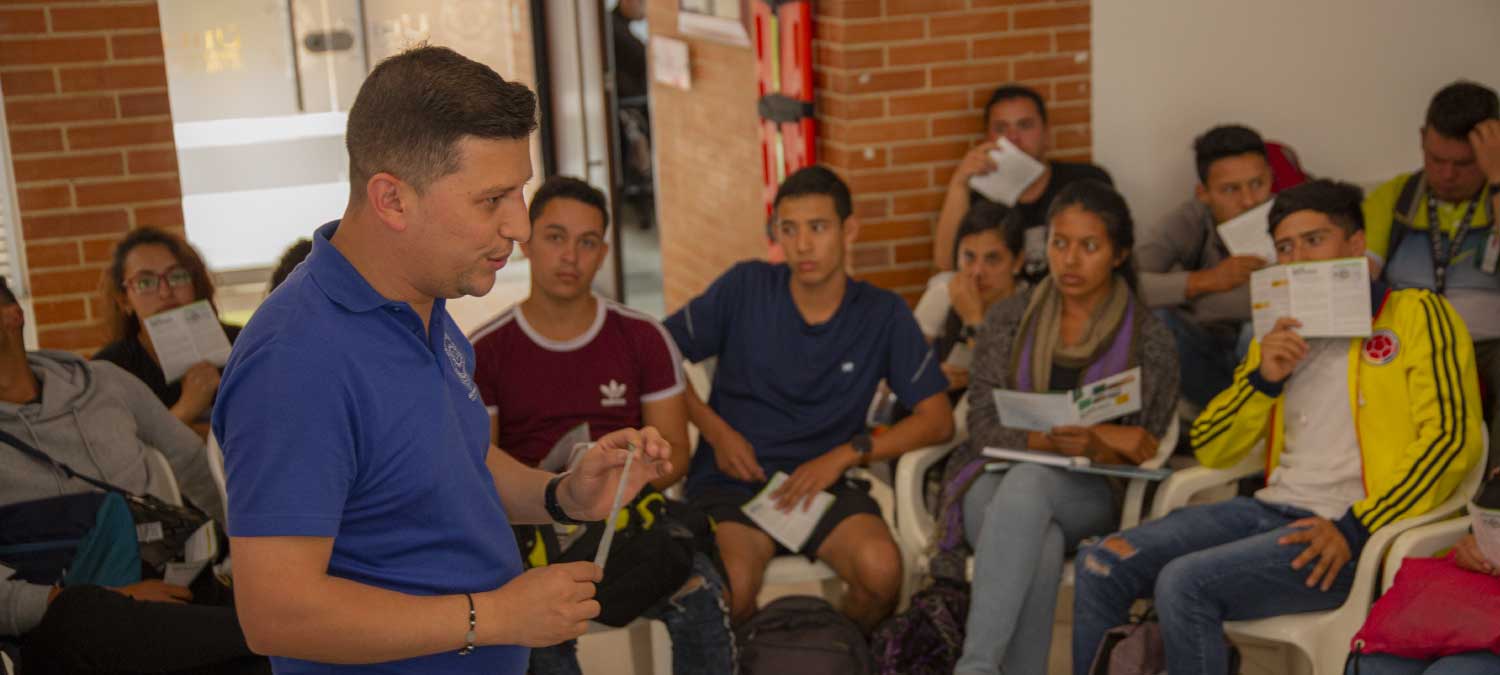
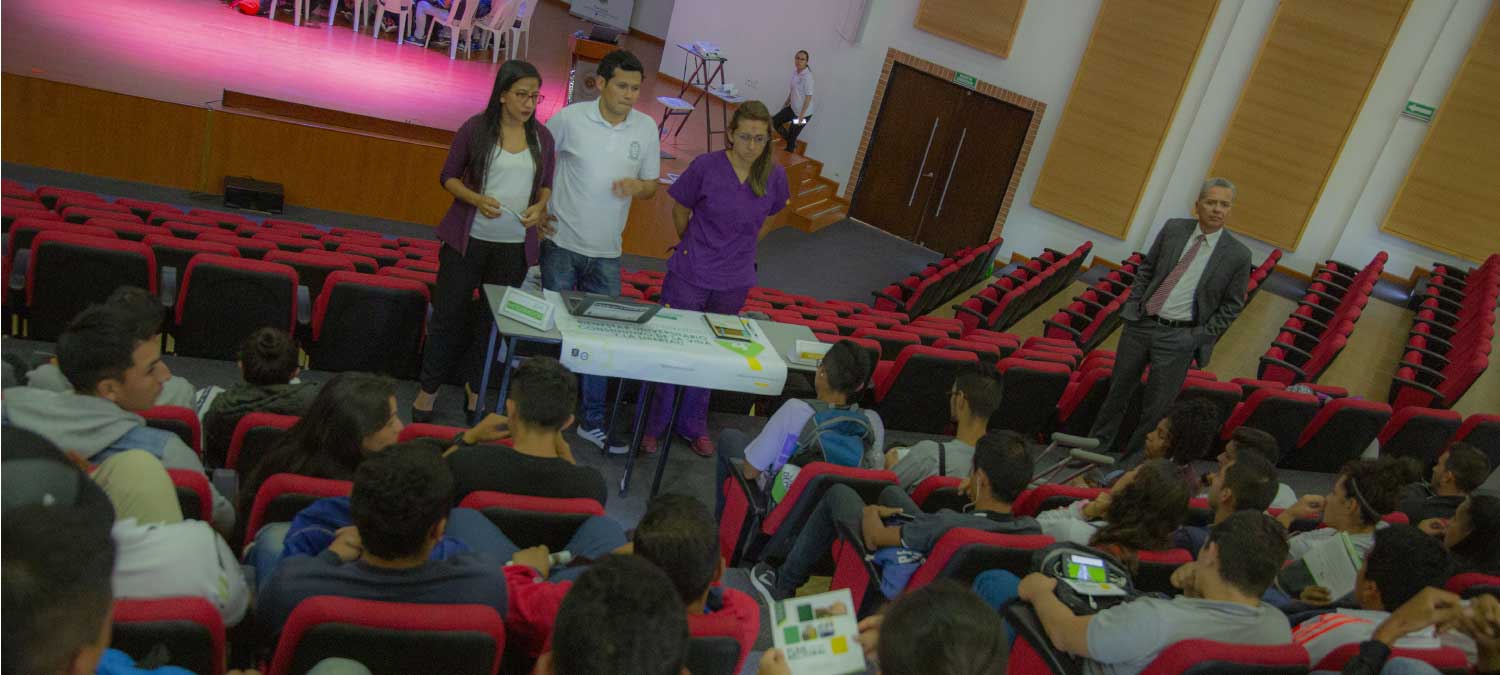
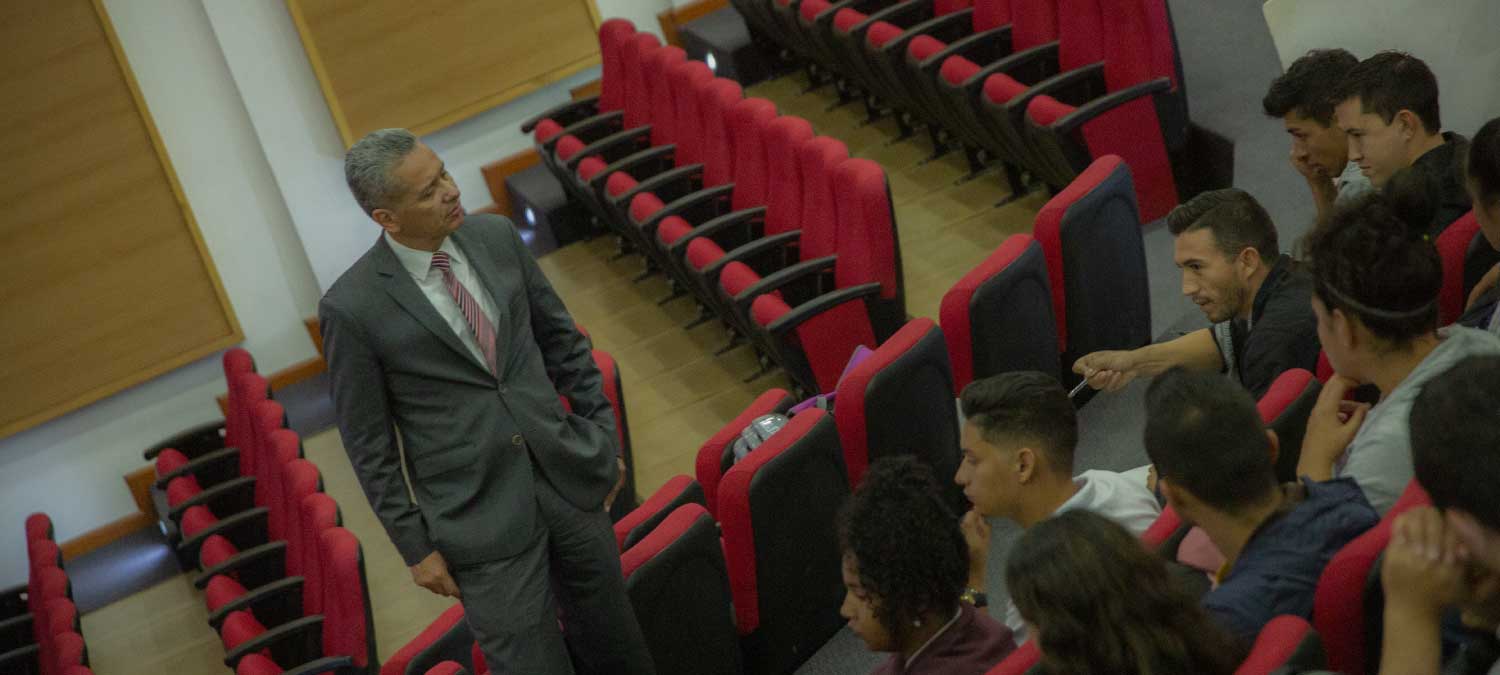
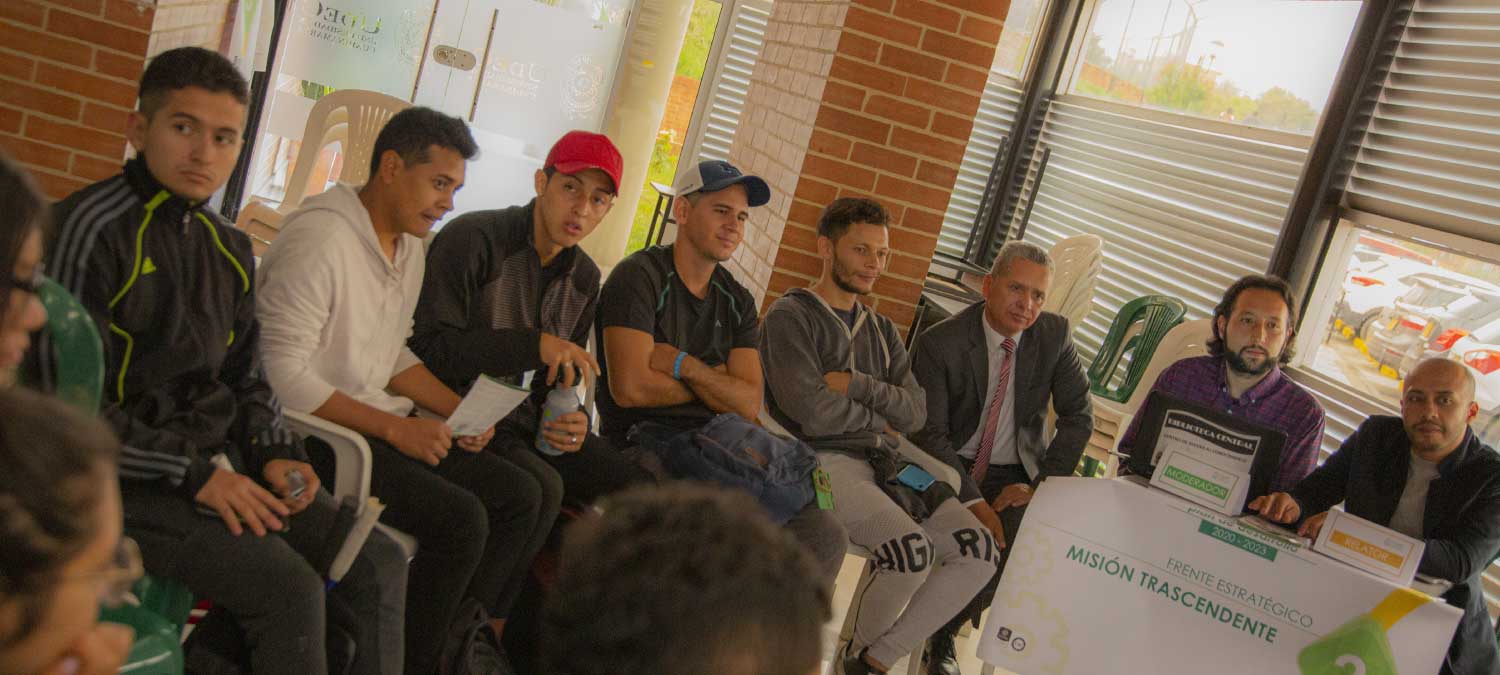
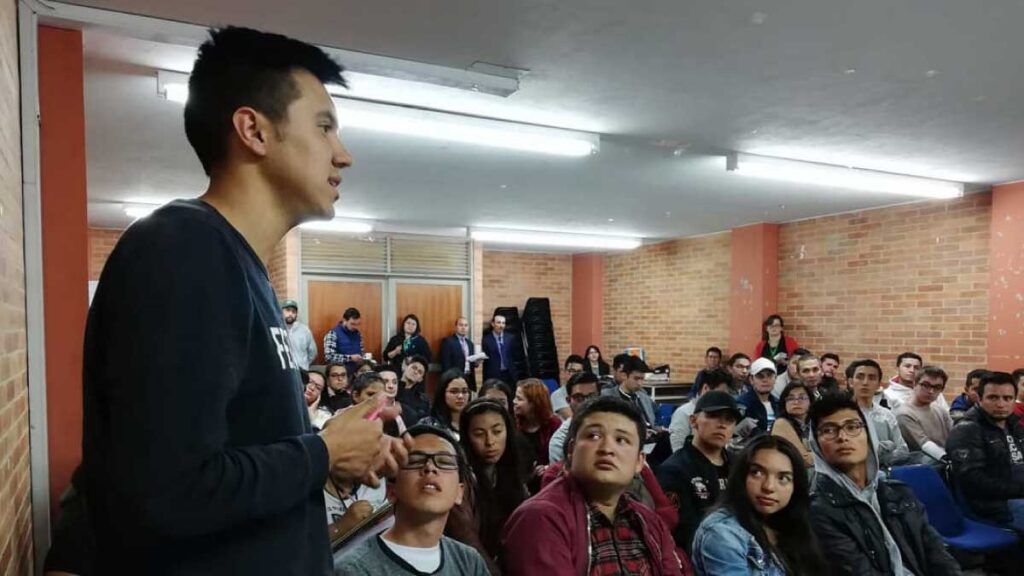
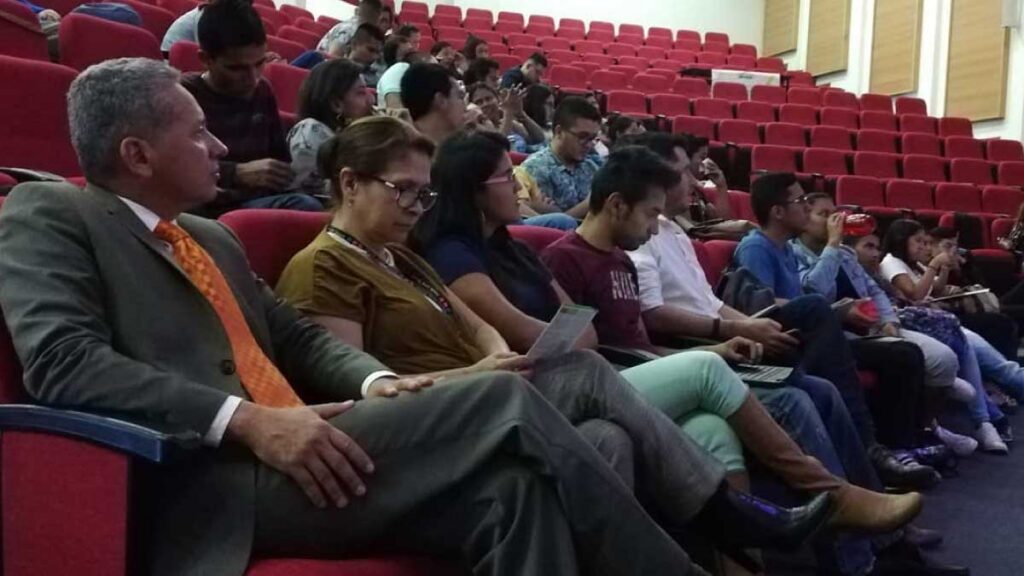
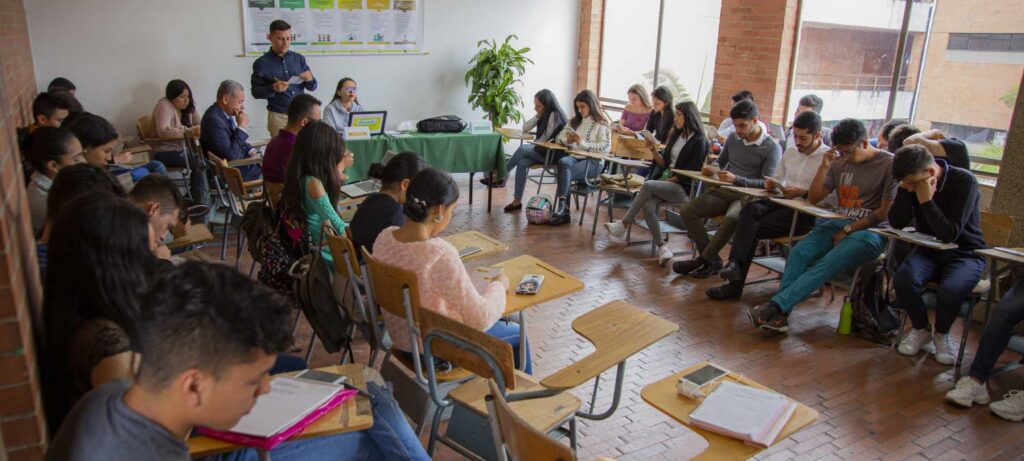
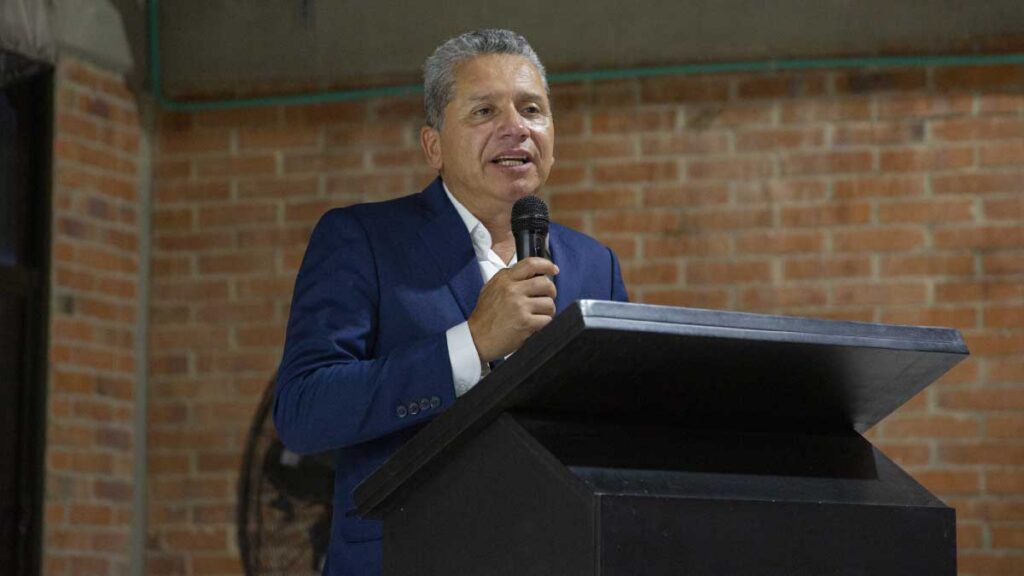
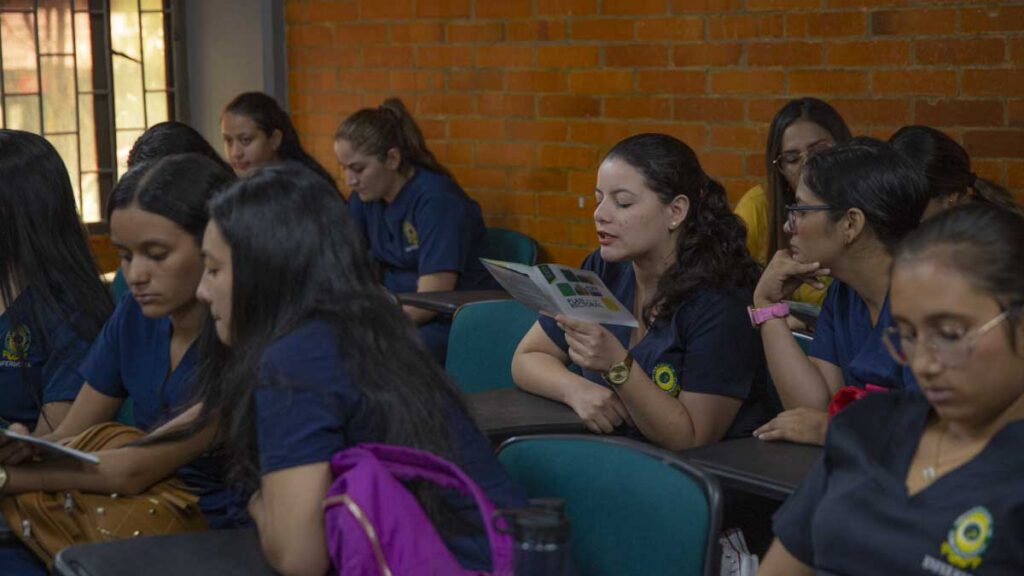
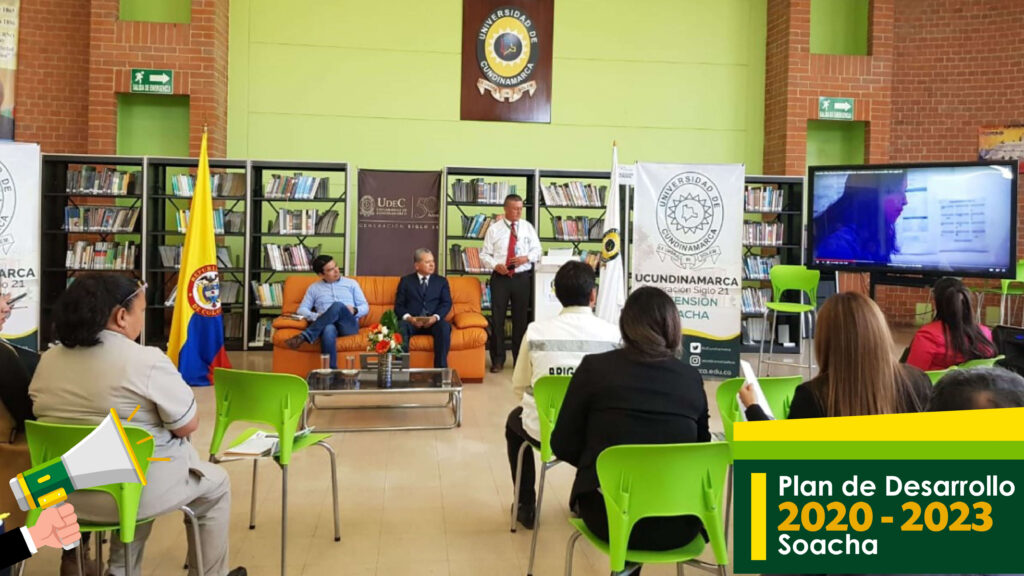
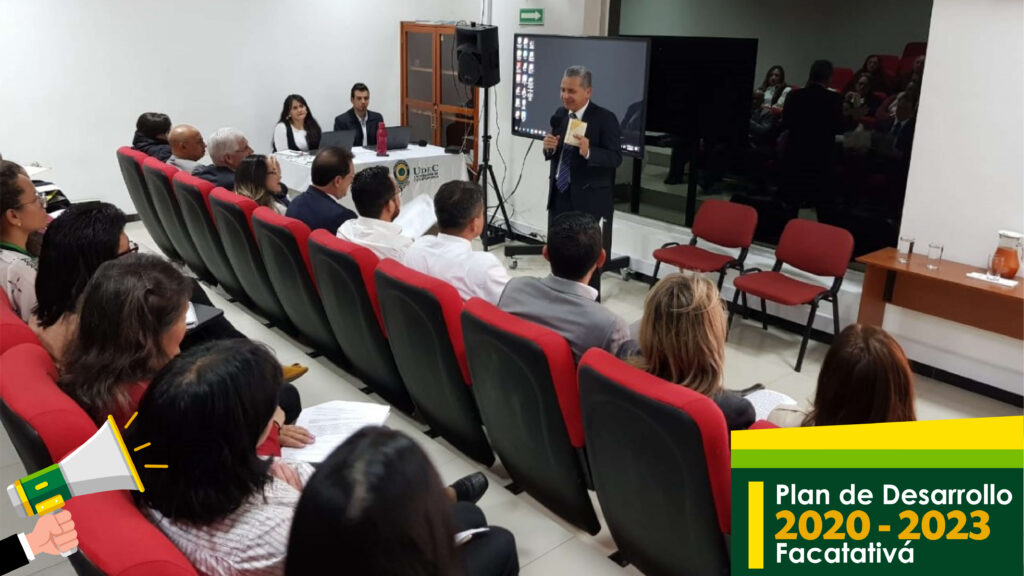
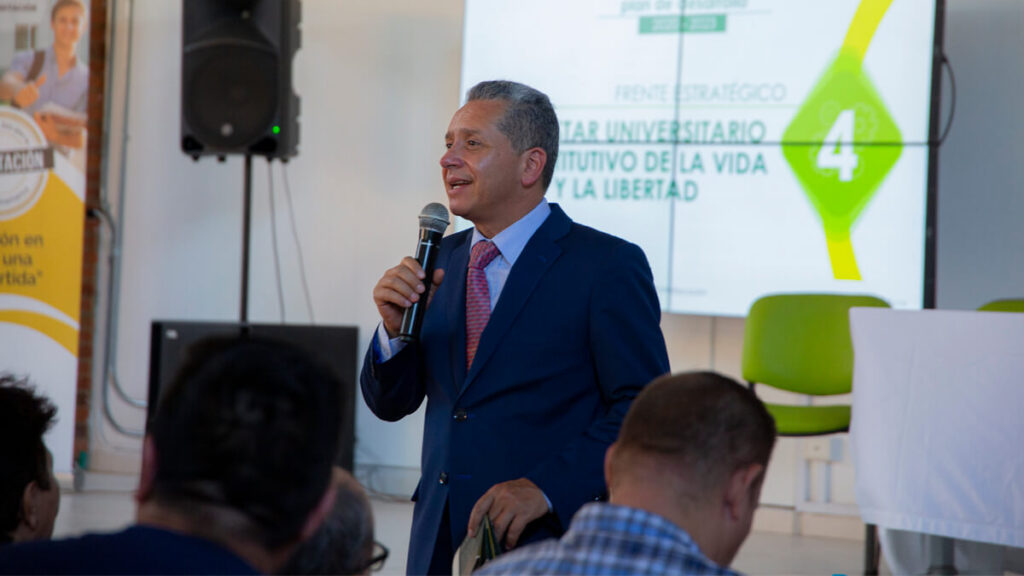
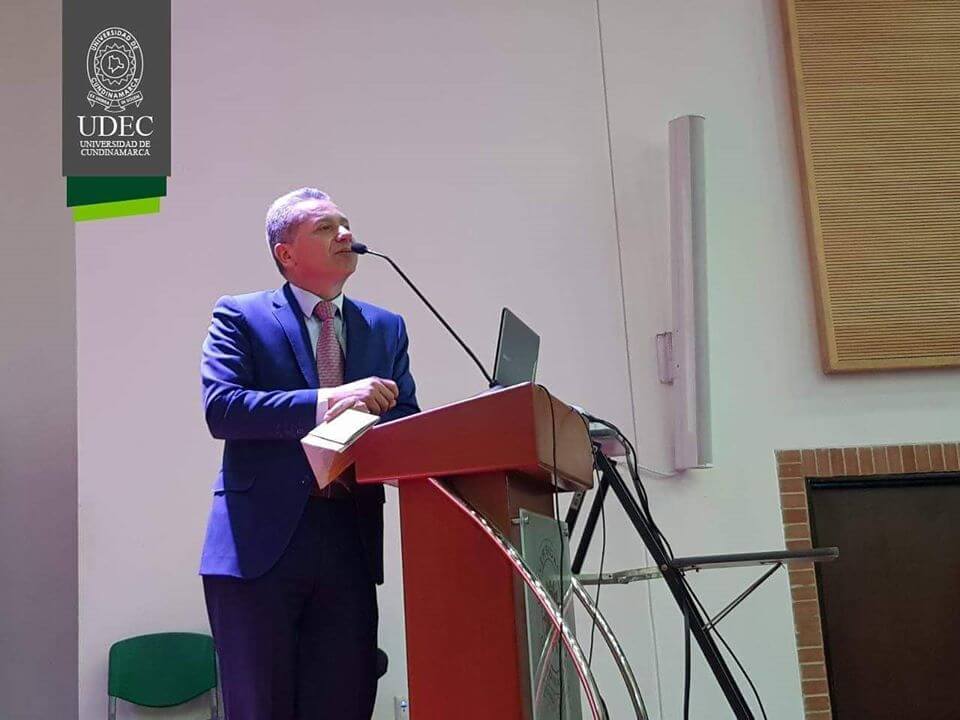
On February 26th, at the Fusagasugá headquarters, the dialogue meeting for the construction of the 2020-2023 Development Plan was held with the participation of 139 teachers from different disciplinary areas and 151 students belonging to the academic program Bachelor's Degree in Basic Education with Emphasis in Physical Education, Recreation and Sports.
Among the contributions highlighted by the teachers in relation to relevance, impact and usefulness, are strengthening the Teacher Training School, training in values and for life, creating the postgraduate institute, digitizing academic processes and reviewing teacher qualification.
It is worth noting that at the end of the day, the rector, Adriano Muñoz Barrera, indicated the importance of being able to materialize the Transmodern Digital Educational Model, MEDIT, in the institution, with which it is sought to transcend beyond the instrumental and informative, based on ethics, learning, knowledge and technology.
“This guiding plan focuses on each one of us; the individual is the driving force, the essence of this model is being. The process is formative, constructive, social, and dialogical, in which we all learn from each other. Therefore, education is understood from the perspective of collaborative and co-creative knowledge, in which the entire university community participates., the rector affirmed during the closing remarks of the day with students and teachers.
Teaching proposals:
– Rethinking teacher recruitment for the continuity of University Social Interaction and Science, Technology and Innovation projects.
-Strengthen, increase, and renew agreements at the national and international level, as well as streamline teacher mobilization processes.
-Think about a re-engineering of academic and administrative processes, 100% digital.
-Provide feedback to the ambassador teachers resulting from the academic and research cultural exchange.
-Build academic spaces for inter-regional dialogue, cross-border colloquiums with Latin American countries.
-Encourage each faculty to generate services and resources through diploma programs.
-Strengthen English in the community.
-Upgrade the technological infrastructure to develop virtual teaching strategies and promote translocality.
-Generate incentives for teachers to pursue postgraduate studies.
-Consider opening academic spaces in English on weekends.
-Strengthen teacher mobility with foreign universities, preferably in English.
-Manage agreements with the IDB and NGOs for the financing and management of projects.
-Participate in online events for knowledge exchange.
-Create documented cross-border international repositories.
– Link the Postgraduate Directorate with research.
-Consider dual degree programs with institutions and languages in English, Portuguese, and French.
-Create the language center.
-Promote practical and dynamic virtual courses to learn new languages.
-Think about creating networks and agreements with Asian and European countries.
-Review a space in the library for learning the English language.
-Strengthen virtual courses.
-To bring successful graduates closer to the productive sector in order to link them to the institution.
-Allocate teaching time for social interaction.
-Greater academic incentives and postgraduate support for teachers.
-Allocate teaching time for research.
-Implement more simulation and practical chemical and physical laboratories.
-Strengthen teaching competence to the new MEDIT model.
-Include teachers in the accreditation processes.
-Strengthen the tenured teaching staff.
-Generate academic spaces for the appropriation of MEDIT.
-Reactivate the Mathematics program or a similar program.
– Improve teaching competence in the application of learning fields.
-Include parents in this plan development.
-Generate strategies and projects to bring academia closer to the community.
– To socialize the projects and strategies of University Social Interaction.
-Strengthen learning; this should not be intramural, but rather aimed at the multidimensional field.
-Ensure resources for research and ease of disbursement.
-Create strategic alliances with public and private entities to generate projects, approach communities to understand their problems and provide solutions.
Furthermore, during the day of participation, the students highlighted the importance of continuing the degree program, and also called on the administration to generate quality standards for teachers and students.
Contributions from undergraduate students:
-Decentralize processes to streamline administrative and academic procedures.
-Promote campaigns to strengthen university culture.
-Allocate more resources for academic outings.
-To socialize MEDIT, and to generate spaces for dialogue to review the reality of the university and public education in Colombia.
-Strengthen and enhance research.
-Create postgraduate programs focused on technology and ICT applied to the Bachelor's degree in Social Sciences.
-Promote sports venues for other disciplines such as sitting volleyball, folk dancing, karate, fencing, among others.
-Greater dissemination of the sports, cultural and socio-economic programs of University Welfare.
– Improve the student selection criteria for socioeconomic programs.
-The mountain biking group has weakened; it needs to be strengthened.
-Support for participation in the Ascun games, and to have sporting diversity, not only those of this event.
-Promote indigenous sports games.
-Create national and international agreements.
-Provide vocational guidance.
-Generate strategies so that CAD can be used by the community.
-Make the physiology laboratory available for practical sessions.
-Bringing urban and rural schools closer together in the region.
-Create the physical education clinic.
-Strengthen technological teams for learning.
-Equip the library.
-Generate practices and projects with the region to integrate the city-region with academia.
-Have an elective course in project formulation.
-Include students in research groups from the first semester.
-Promote the dissemination, benefits and contributions of research groups as well as the traceability of topics to avoid repetition.