Contributing to the country's environmental policy
Environmental justice research reaches the government and opens the door to a technical committee with the Ministry of Environment and Sustainable Development.
By: Alejandro García Suárez – Advisory Office for Communications.
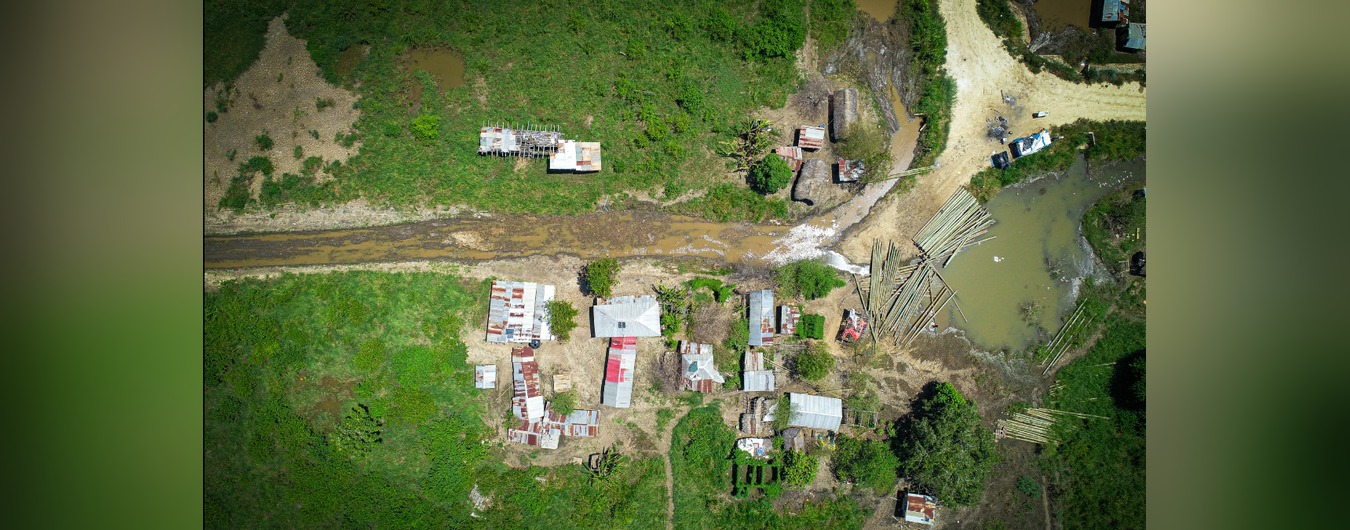
The University of Cundinamarca continues to consolidate its impact in the country through applied research. The Knowledge and Learning Manager of the Public Accounting program at the Facatativá extension, Esteban Correa García, participated in a technical roundtable with the Ministry of Environment and Sustainable Development, where he shared the results of his doctoral research on environmental justice and plural socio-environmental liabilities.
The professor explained that this meeting took place following a formal invitation from the entity, which highlighted the value of this type of study for its contribution to the analysis of socio-environmental conflicts and the strengthening of public policies in Colombia.
Likewise, she noted that the Ministry is currently advancing in the implementation of the Environmental Liabilities Law (Law 2327 of 2023) and in the development of an agenda committed to environmental justice, within the framework of the Escazú Agreement. In this context, the presented research articulates both approaches, providing tools to improve environmental justice indicators and contribute to the remediation and prevention of damage to ecosystems.
During the meeting, held virtually on May 4th and attended by six ministry officials, a high level of interest in the presented findings was evident. As a result, it was agreed to link the researcher to a technical working group aimed at advancing the operationalization of environmental liabilities in Colombia.
Regarding the main contributions of the study, Correa García indicated that it is transdisciplinary research that integrates areas such as ecological economics, political ecology, socio-environmental accounting, and law. Its objective is to respond to how to strengthen environmental justice indicators based on the analysis of environmental liabilities.
One of the most relevant results is the formulation of the concept of “plural socio-environmental liability,” which broadens the traditional vision by incorporating three dimensions: economic, ecological, and sociocultural. This approach provides a dynamic and flexible instrument, capable of being integrated into public policy without requiring modifications to current legislation, with a special emphasis on the National Registry of Environmental Liabilities (RNPA, for its acronym in Spanish) and the prevention of new conflicts.
Additionally, the research led to the development of MANU Software, a free-access tool designed for vulnerable communities, such as indigenous, Afro-descendant, and peasant populations. This platform facilitates the identification, configuration, and visualization of socio-environmental liabilities, strengthening their capacity to demand recognition and management from those responsible.
With this advancement, the University of Cundinamarca reaffirms its role as a key player in the generation of knowledge with real impact, providing solutions to environmental challenges and contributing to the sustainable development of the country.