News
2026-09-24
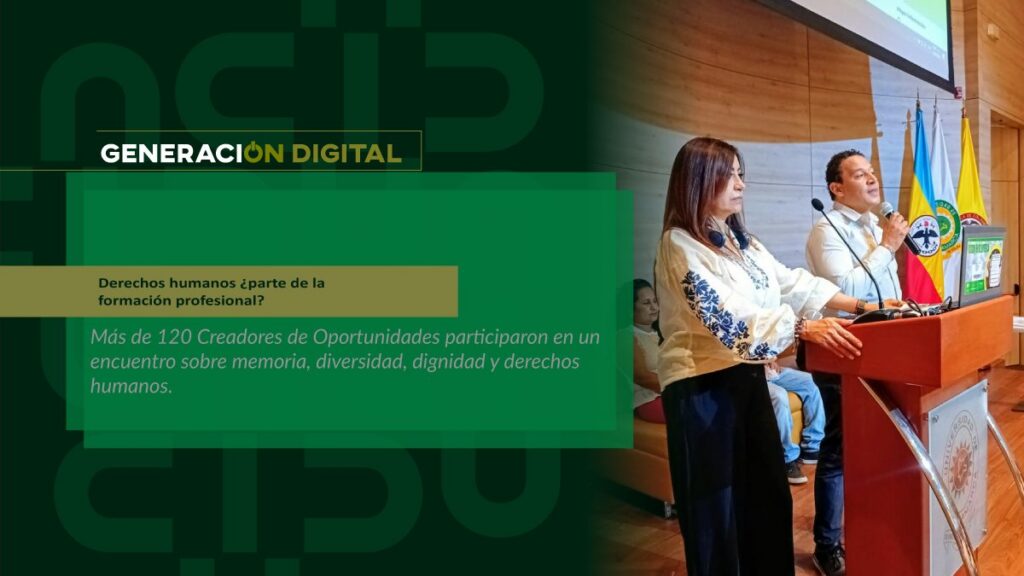
Human rights: part of professional training?
By: Alejandro García Suárez – Advisory Office of Communications



I am your virtual assistant, here to help you quickly and easily.
▲ Back to Top
By: Juan Carlos Monzón. Journalist, Communications Advisory Office
To understand his story and why he ended up on the other side of the world in the city of Dongguan, we have to go back to the time he graduated from high school. “What I wanted to study was engineering, mathematics, or physics. I also considered becoming a soccer coach since I had been the assistant coach for the girls' team in high school, and I enjoyed that.”.
To achieve this last goal, she enrolled at the Pedagogical University to study physical education, but on the day she was supposed to take the entrance exam, she overslept. “I arrived five minutes late to the admissions tests and they wouldn't let me in. So I thought: What do I do now? I remembered that an acquaintance had studied Sports Science and Physical Education at the University of Cundinamarca. I called him and he said: ”The program is very good, I recommend it.’ I enrolled and started studying in Soacha.”.
That's where his love for tennis began, as he studied the sport in his second semester. "I started training against the wall to improve my different shots and practiced with an acquaintance. That's how I gradually abandoned the idea of dedicating myself to soccer.".
By that time, this young man had already worked in a sporting goods store and then in a pizzeria to make ends meet. “Until one day I was offered a job at the High-Performance Center as a caddy—you know, a ball boy. Later, I became a monitor and tennis coach there. One afternoon, I ran into my boss, and he said, ”Ferley, there’s a coaching opening at the Guaymaral Club. Do you want to take it?’ At first, I said no, but then I accepted. I had an interview, and they hired me. I thought those wealthy people were arrogant, but no, most of them are very good people. I even made friends who are still in touch,” he recalls nostalgically.
“I traveled to China without speaking English, much less Mandarin.”
This man has a knack for it. He's always been in the right place at the right time. “Where I lived, I knew someone who was always out playing tennis, but we weren't friends, just neighbors, and we'd talk occasionally. Then one day I was leaving the building and I ran into him, and he said, 'I have a friend from Serbia who's going to open a tennis academy in China. Are you interested?' I replied, 'I'd go, but I don't speak English, let alone Chinese.' He checked, and they said there was no problem, so I went.”.
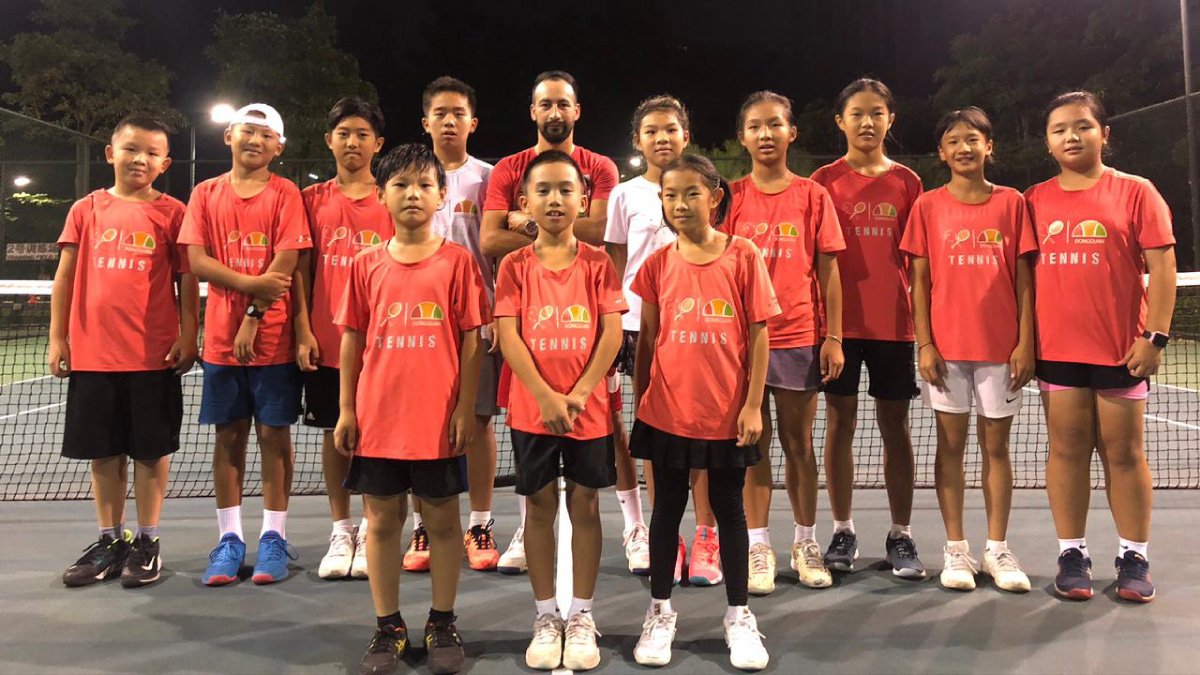
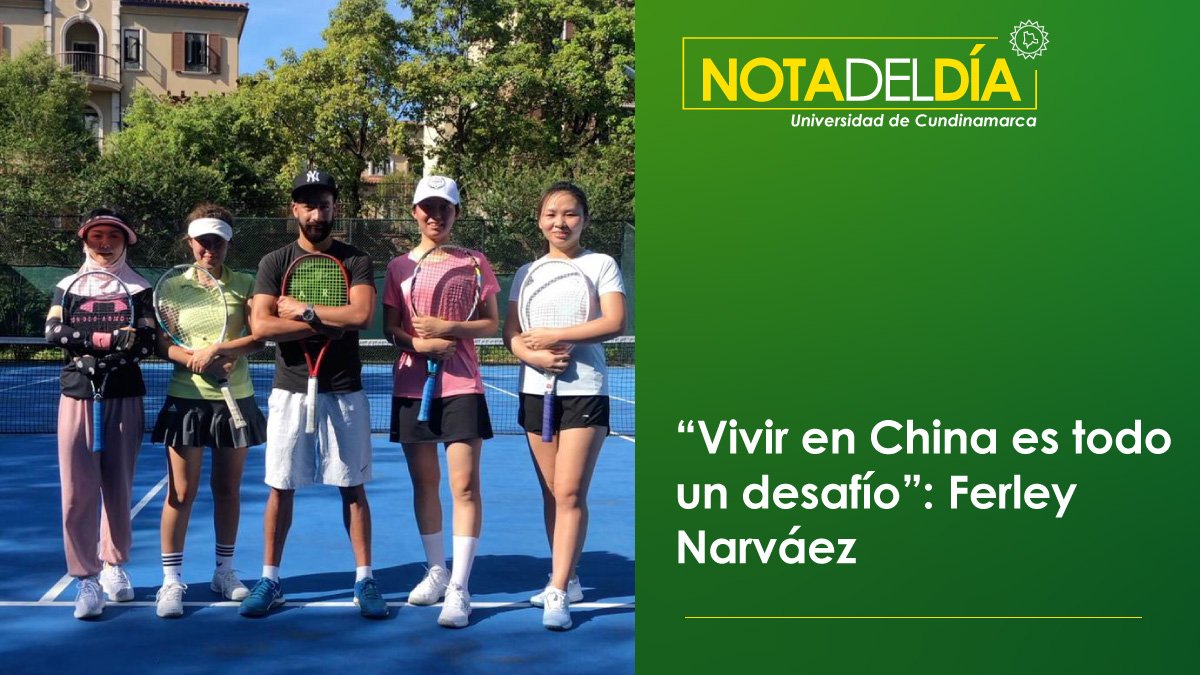
That's how he traveled halfway around the world, stopping in Madrid before landing in the Asian giant with a population of 1.4 billion. “I arrived to teach tennis in the city of Dongguan. At first, it was all done with gestures. Little by little, I learned English since the other teachers at the academy spoke it, and that's how I became more comfortable with the language. Now I also speak some Mandarin, but focused on sports.”.
The culture shock is still a part of her daily life in an ancient society that has absolutely nothing in common with Colombia. “At 36, I'm someone who adapts quickly to circumstances. However, everything here has been a challenge. For example, eating with chopsticks was difficult. At first, I made incredible messes of rice on the table, and another time, in the middle of summer, I went into a restaurant and they put water or tea out for the diners. Well, imagine, I poured myself a drink and took a sip and burned myself. I didn't know they served it hot.”.
But that's not all. "They spit very frequently, burp, and chatter their teeth while eating, and they fart anywhere. I'm also impressed by how much they smoke. These are things you can't change and must respect, but at first they're shocking," says this man who describes himself as a real all-rounder.
The weather has also been another factor he's had to deal with. "There are only two seasons, one of intense cold without snow and another of impressive heat.".
When asked to give a message to young people, he doesn't hesitate to say: “Life is a constant struggle. You have to dream in order to achieve your goals and surround yourself with people who know more than you so you can learn from them without any envy,” he affirms with the experience that comes with years of experience.
At the University of Cundinamarca, we continue to strengthen our relationship with our graduates. If you would like to share your entrepreneurial or professional growth story and inspire others, please write to us at the following email address: [email protected]
News
News
News
News