News
2026-09-24
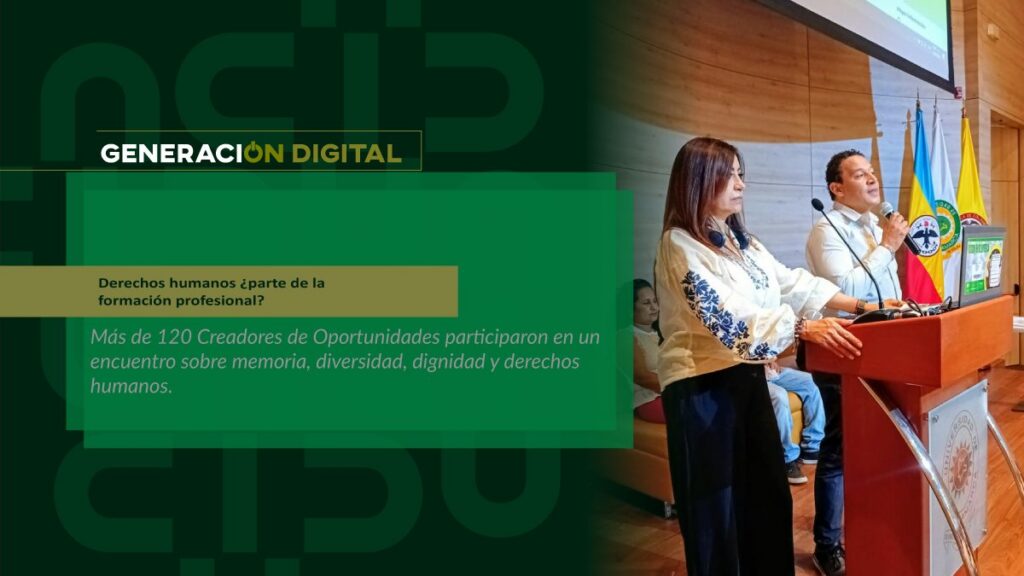
Human rights: part of professional training?
By: Alejandro García Suárez – Advisory Office of Communications


I am your virtual assistant, here to help you quickly and easily.
▲ Back to Top
By: Alejandro García Suárez – Advisory Office for Communications.
The University of Cundinamarca achieved a significant academic and scientific milestone with the acceptance of the Agricultural Sciences Journal of the Faculty of Agricultural Sciences in AGRIS, the International System of Information on Agricultural Science and Technology of the Food and Agriculture Organization of the United Nations (FAO). She was also accepted into CAB Abstracts, one of the leading international bibliographic databases specializing in agriculture and applied life sciences, produced by CABI (Centre for Agriculture and Bioscience International, United Kingdom).
These international platforms facilitate the consultation and dissemination of research related to agricultural sciences, food production, rural development, and food security. Their inclusion will allow the journal's content to reach new audiences and strengthen its presence in the international scientific community.
For John Alexander Moreno Sandoval, dean of the Faculty of Agricultural Sciences, this achievement represents a significant step forward in the positioning of the scientific publications disseminated through the journal, whose articles undergo peer review. “We seek to highlight technological advances and developments, as well as contributions to knowledge that have a global impact. This allows us to establish a scientific dialogue with the world and demonstrate the translocal capacity of the University of Cundinamarca,” the dean emphasized.
John Alexander also highlighted the relationship between the journal and the Transmodern Digital Educational Model (MEDIT), noting that this publication helps to raise awareness, on an international level, of the dimensions of person, society, and nature that guide the institution's work. "This journal is part of a collaborative effort with MEDIT, which allows us to project knowledge and demonstrate the impact of our publications globally," he added.
Edgar Eduardo Roa Guerrero, Director of University Research, noted that this result was made possible thanks to the commitment of editors Diego Alexander Hernández Contreras, Andrés Fernández and Rubén Darío González Román, as well as the ongoing support of the staff at the Center for Knowledge Management and Learning (CGCA).
The Director of University Research explained that inclusion in AGRIS represents a strategic step forward in strengthening the scientific standing of the journal and expanding the possibilities for consulting articles published by the Institution.
Greater visibility for authors and their research
Diego Hernández, editor-in-chief of the journal, highlighted the work carried out by the editorial team to expand the visibility and international reach of this scientific publication. “The recent inclusion in globally recognized bibliographic databases is a testament to the work the editorial team has been doing,” he stated.
She also explained that, with its incorporation into AGRIS, the journal becomes a direct data provider for the FAO, while the metadata migration process is progressing within CABI. These actions will strengthen the visibility of scientific articles and benefit the authors participating in the editorial project.
Andrés Fernández, editorial manager, and Rubén González, associate editor, pointed out that these inclusions are part of a short, medium and long term indexing plan, agreed upon between the editorial team and the Faculty Council.
The purpose of this roadmap is to progressively expand the journal's presence in national and international scientific databases and facilitate the dissemination of research results to an increasingly wider audience. "For the editorial team, our authors, reviewers, and readers, this progress represents additional motivation to consolidate the journal within the translocal agricultural sector," they stated.
Participation in AGRIS also facilitates the consultation of academic content by Knowledge and Learning Managers, Opportunity Creators, researchers and decision-makers interested in agricultural and rural development.
An award that sets new challenges
As part of building on this achievement, the University of Cundinamarca is in the process of obtaining authorization to use the FAO AGRIS Recognition Seal 2027, a distinction that can be displayed on its institutional website. This recognition would highlight the University's participation in the global AGRIS network and its commitment to disseminating open access agricultural research.
The acceptance of the journal Ciencias Agropecuarias into AGRIS reflects UCundinamarca's commitment to relevant, rigorous research connected to the needs of the region. In line with MEDIT, this achievement demonstrates how knowledge, innovation, and academic collaboration can transcend the classroom, reach international audiences, and contribute to the transformation of the agricultural and rural sectors.
News
News
News
News