News
2026-09-24
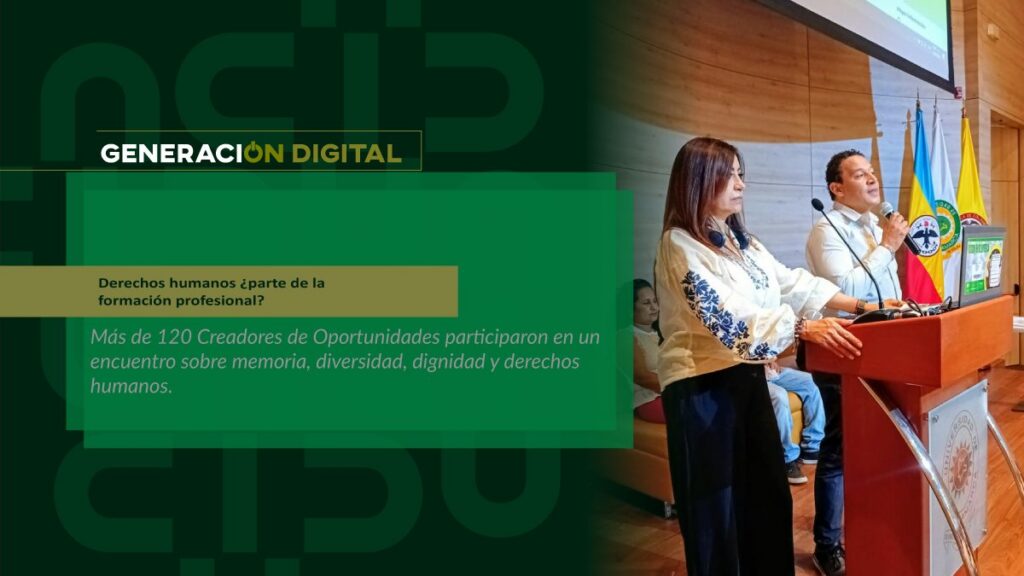
Human rights: part of professional training?
By: Alejandro García Suárez – Advisory Office of Communications



I am your virtual assistant, here to help you quickly and easily.
▲ Back to Top


By: Alejandro García Suárez – Advisory Office of Communications
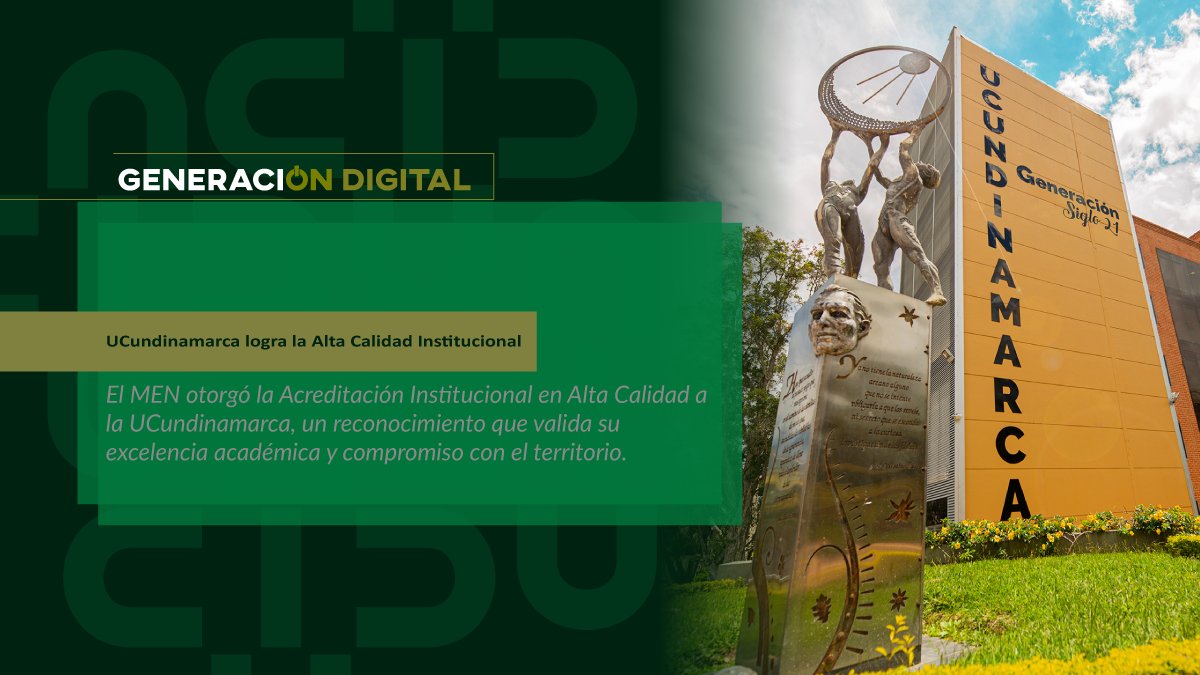
The University of Cundinamarca achieved one of the greatest milestones in its institutional history by obtaining Institutional Accreditation in High Quality, granted by the Ministry of National Education (MEN) through Resolution No. 015202. This recognition certifies compliance with the highest quality standards in higher education and strengthens the Institution's commitment to comprehensive training, research, innovation and the transformation of territories.
In a dialogue with the UCundinamarca News Agency (ANUC), Dr. Wilson Ricardo Pinillos Castillo, Director of Self-Evaluation and Accreditation, explained the meaning of this recognition, the process that allowed it to be achieved, and the main challenges and achievements that today consolidate the University as a leading public institution in the country.
ANUC: What does Institutional Accreditation in High Quality mean for the University of Cundinamarca?
Wilson Ricardo Pinillos Castillo: Institutional accreditation in High Quality has three meanings for the University of Cundinamarca. The first is the external and independent recognition that the National Accreditation Council (CNA) and the Ministry of National Education grant to the Institution for meeting the highest quality standards in its core functions.
The second represents the validation of an institutional culture based on quality assurance and continuous improvement, understood not as a formality, but as a permanent commitment.
Finally, for the University of Cundinamarca, as a public institution in the department, this accreditation represents recognition from society that its educational processes are relevant, rigorous, and contribute to the transformation of the region. “Accreditation is not a goal; it is a way of working at UCundinamarca,” he stated.
ANUC: How did this accreditation process unfold?
WRPC: The path towards Institutional Accreditation in High Quality was developed in three major phases.
The first phase was preparatory, involving the consolidation of quality management systems, the implementation of accreditation guidelines, and institutional self-assessment exercises with the participation of the entire university community. In this phase, the initial conditions were presented in May 2023, the verification visit took place in October of the same year, and the CNA subsequently approved these conditions.
The second phase involved the preparation of the self-assessment report, developed during the first half of 2024 and submitted in November of that year. Simultaneously, the University conducted internal simulations and collaborative peer exercises to strengthen the preparedness of the teams responsible for presenting each of the quality factors.
The third phase was dedicated to external evaluation through a visit by academic peers from the National Accreditation Council, carried out at the end of November 2025. Subsequently, the University submitted its response to the peer review report, a process that culminated in the issuance of the administrative act by which the Ministry of National Education granted Institutional Accreditation in High Quality for six years.
“This result is the fruit of the collaboration between the administrative and academic departments, the faculties, the programs and the different collegiate bodies that were part of the process,” he emphasized.
ANUC: How many visits did the National Accreditation Council (CNA) make during this process?
WRPC: In addition to the visit related to initial conditions and institutional evaluation, the University simultaneously made progress in strengthening the quality of its academic programs. During this period, 20 applications for accreditation and renewal of High Quality accreditation were submitted, and by the end of the first semester of 2026, 13 external evaluation visits by the CNA (National Accreditation Council) had been recorded, along with the renewal of High Quality Accreditation for the Bachelor's Degree in Social Sciences at the Fusagasugá campus.
ANUC: From your perspective, what is the overall assessment of this process?
WRPC: The overall assessment is highly positive. Achieving Institutional Accreditation for High Quality represents the result of a collective effort and provides important lessons for continuing to strengthen the University.
The director explained that new challenges and opportunities for improvement have already been identified that will allow the consolidation of an institutional plan aimed at further strengthening the quality assurance system from a mature, rigorous and participatory perspective.
ANUC: What do you consider to be the main achievements obtained during this process?
WRPC: Among the main achievements are the strengthening of the Multidimensional Learning Field (CMA) and the consolidation of the Transmodern Digital Educational Model (MEDIT), which articulates training, science, technology, innovation, research and University Social Interaction.
He also highlighted the consolidation of an institutional quality assurance system that integrates the participation of all actors in the university community and strengthens a permanent culture of self-evaluation with verifiable results.
Finally, he highlighted the position achieved by the University of Cundinamarca as a public institution in the department, with a broad regional and national projection, supported by the different processes of institutional and academic program accreditation.
The Institutional Accreditation for High Quality also recognizes the impact of the Transmodern Digital Educational Model (MEDIT), a pedagogical approach that places the individual at the center of learning and promotes the development of Opportunity Creators committed to social transformation. Through this model, the University of Cundinamarca strengthens relevant, innovative education with a profound humanistic focus, capable of responding to the needs of local communities through knowledge, research, social interaction, and continuous improvement.
News
News
News
News