Fusagasugá Branch
2026-09-24
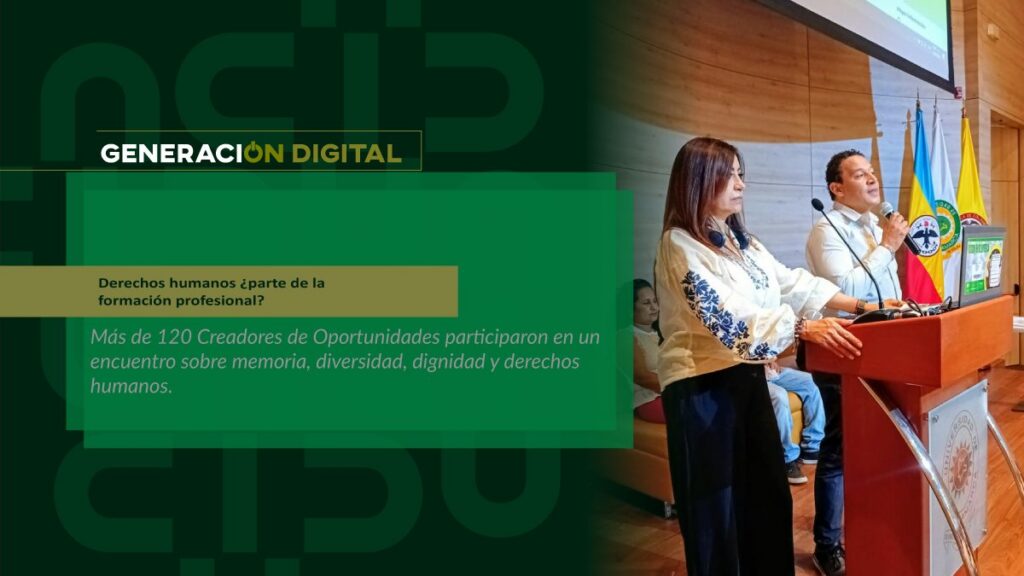
Human rights: part of professional training?
By: Alejandro García Suárez – Advisory Office of Communications



I am your virtual assistant, here to help you quickly and easily.
▲ Back to Top
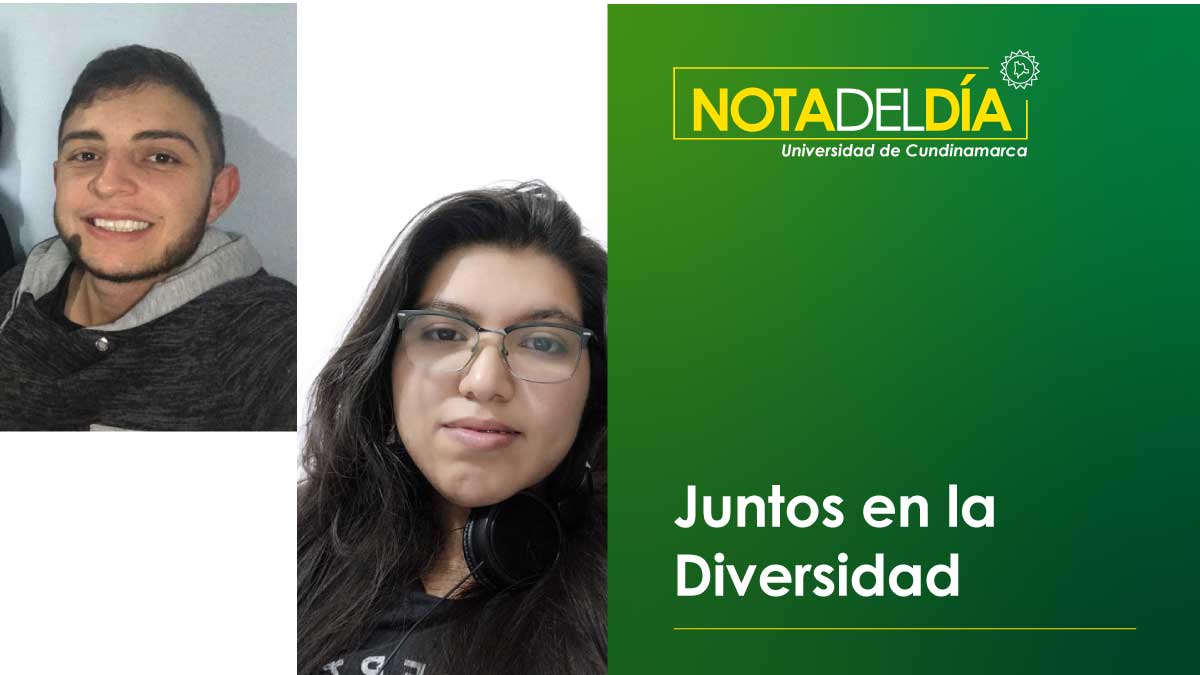
UCundinamarca: It's a pleasure to have you here. What academic program do you belong to?
Daniela and Jonathan: Agricultural Engineering
UC: We know you're developing a thesis related to inclusion. Can you tell us what it involves?
D & J: Our project aims to create an opportunity for people with hearing disabilities to access appropriate and suitable education. Therefore, this project seeks to develop a new educational tool that will allow deaf students to access the content of the undergraduate agronomic engineering program at the University of Cundinamarca.
UC: It's very interesting that a project like this is being carried out in the agronomy program, and not in a bachelor's degree program, for example. Why did you venture into this work involving deaf people?
D & J: At one point, I (Daniela) had the opportunity to participate in a similar project in the field of goldsmithing at a vocational school where I interacted with deaf people. So, this topic seemed quite interesting to explore, since these types of projects aren't very visible. That's where the idea came from, which we then shared with Professor Juan Carlos Tapias. He encouraged us to develop the project.
UC: Have you already had any contact with deaf people during the course of your work?
D & J: Yes. We had the opportunity to conduct a field study at an educational institution in Fusagasugá with a community of deaf students. There, we closely observed the dynamics in the classrooms, particularly in biology, how the deaf students acquire their knowledge, the use of sign language, the interpreter's mediation—in short, we wanted to know what we were facing when undertaking this project.
UC: What findings were there in that fieldwork?
D & J: One very important point is that deaf students are very open to receiving information as long as the content is conveyed to them in an appropriate way. There is a great deal of work by qualified people behind this. And it is very interesting to see how effectively they grasp the concepts, even the more complex ones.
UC: What phase of the project are you in?
D & J: We are starting to develop the teaching material itself, consisting of videos in Colombian Sign Language, to then test it with deaf young people.
UC: What do you hope to do in the future to give continuity to the project?
D & J: We would like to secure a contract with the university. This would give us the institution's full support and make it easier to present a concrete proposal for the new educational tool we want to create, once our project is finished, so that deaf young people can access higher education more effectively.
News
News
News
News