News
2026-09-24
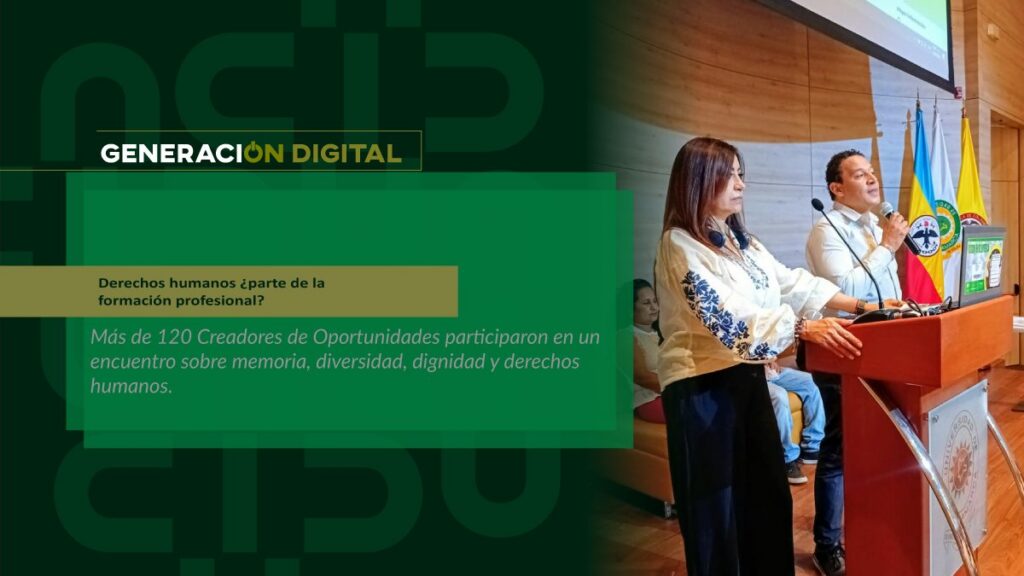
Human rights: part of professional training?
By: Alejandro García Suárez – Advisory Office of Communications


I am your virtual assistant, here to help you quickly and easily.
▲ Back to Top
By: Héctor Andrés Bernal Gutiérrez – Communications Advisory Office
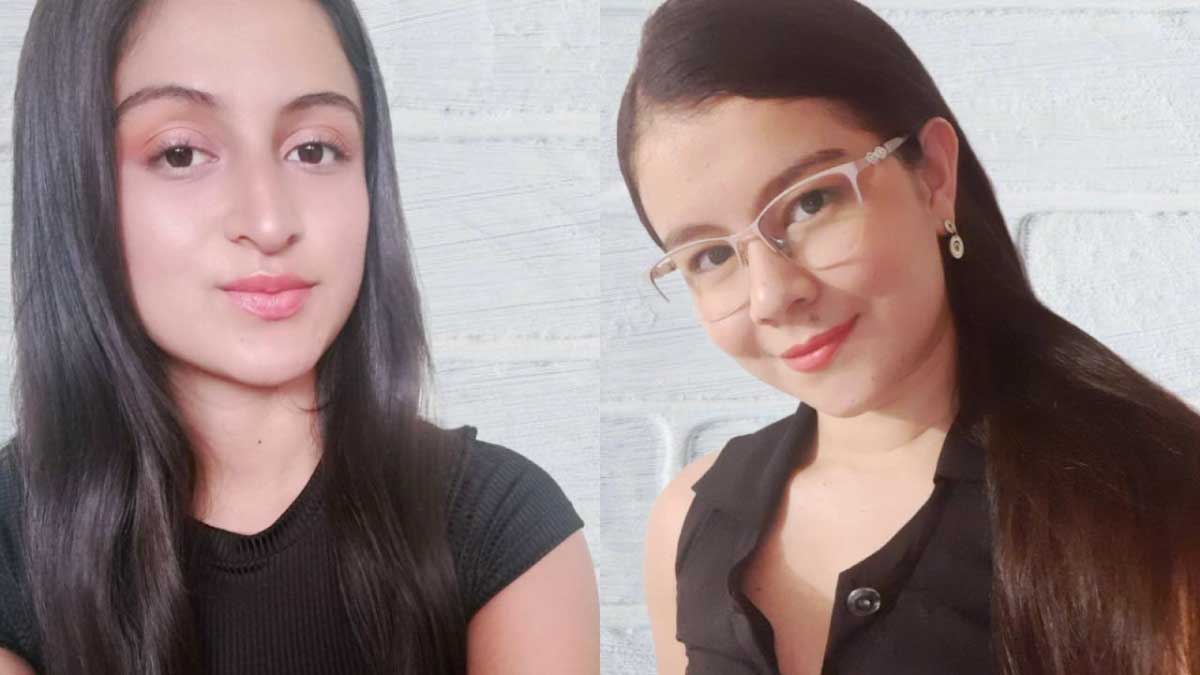
Within the framework of the SIPAV research group, eighth-semester nursing students Melany Julieth Méndez Vargas and María Gladys Céspedes Espinoza tell us about their academic experience with a project that aims to provide quality health care to people belonging to the deaf community.
UCundinamarca: We are very happy to welcome you to this space. Tell us about your project.
Melany and María: Our project is titled: “Educational Material as a Strategy for Humanizing the Care of People with Hearing Impairments in the City of Girardot.” We are developing it under the guidance of Professor Lady Carolina Díaz Jurado. It involves creating a technological tool to help nurses provide humane and high-quality care to deaf people when they access healthcare services.
UCundinamarca: How did you come up with the idea to implement this project?
M&M: I (Melany) had the opportunity to attend high school in Fusagasugá, a school with an inclusive education approach and a community of deaf students. There, I had some contact with them. I learned that for deaf people, Spanish is their second language, which is what English is for most of us. Because of this, hearing people often make communication errors when interacting with a deaf person. The same thing happens when a deaf person seeks healthcare. Those providing care will very likely make the same mistakes, preventing the person from receiving quality care.
UCundinamarca: Tell us a little more about the errors that can occur in the care of a patient with a hearing impairment.
M&M: It's very likely that the listener, in our case a nurse, will start trying to make themselves understood by exaggerating gestures, speaking more slowly, or raising their voice. None of this is necessary or effective. Furthermore, it takes a long time to achieve a reasonable understanding of what the deaf person needs when one hasn't received adequate training in this area.
UCundinamarca: What solution to this problem do you propose in your project?
M&M: The educational material is a technological tool that will allow students to improve communication with deaf people, thus contributing to providing more humane care. It's not a booklet with signs drawn on it and arrows indicating the movements to be made. Our idea is for it to be a collection of GIF-style videos, making the procedures explained to the patient much clearer.
This tool is not intended to replace any existing inclusion projects or substitute for any of the sign language learning materials that are readily available in educational settings or on the market. Nor will it be an electronic application as such. Its format will be solely and exclusively for academic use in the field of nursing, and students will be able to carry it in digital format on any electronic device.
UCundinamarca: At what stage of project implementation are you currently?
M&M: We'll soon begin developing the booklet itself. We're currently selecting the procedures we'll include. It's a team effort, and we're consulting with several professionals. The Office of Institutional Inclusion at UCundinamarca has provided us with guidance, which has been key to structuring the project.
UCundinamarca: We know that you presented your project at a REDCOLSI (Colombian Network of Research Seedbeds) meeting. What was that experience like?
M&M: Indeed, on September 4, 2020, we attended a REDCOLSI regional meeting via the ZOOM digital platform to present our project. We were nervous. The projects presented before ours were not approved by the demanding jury. We presented our project, and the jury approved it, making only one comment regarding the title of the work. They even mentioned the possibility of applying for a patent.
It was a great achievement for us in our professional careers. Furthermore, on September 25th, we have been invited to participate in the 1st International Nursing Congress, the 1st International Meeting of Research Seedbeds, and the 1st Colloquium on Health Research, organized by the School of Nursing Professionals and the Jorge Basadre Grohmann National University (UNJBG) in Peru.
UCundinamarca: Congratulations on that achievement!
M&M: Thank you very much. We hope to contribute to humane and high-quality care for all people in the field of nursing.
News
News
News
News