News
2026-09-24
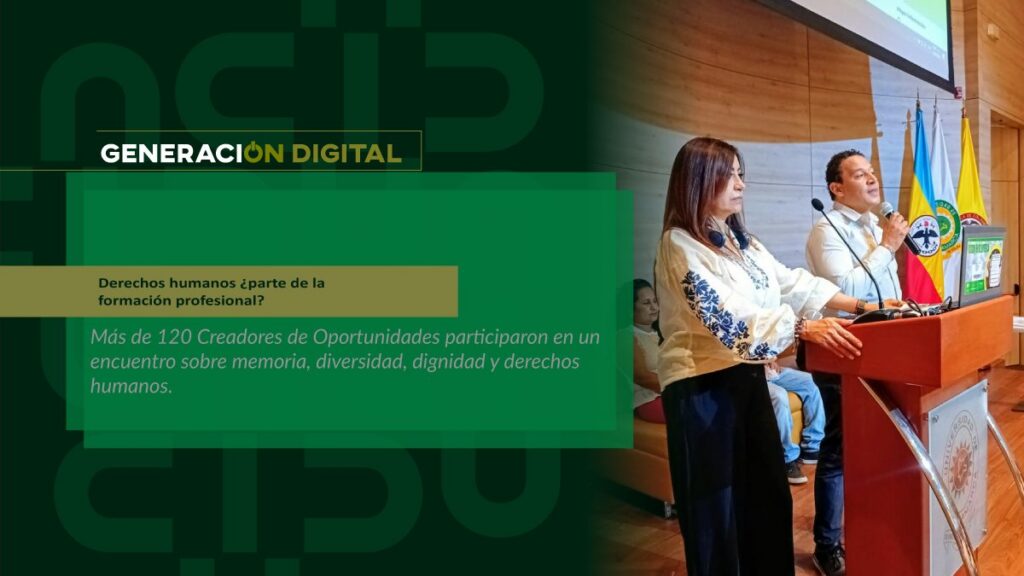
Human rights: part of professional training?
By: Alejandro García Suárez – Advisory Office of Communications



I am your virtual assistant, here to help you quickly and easily.
▲ Back to Top
“If a person is experiencing sleep disturbances—sleeping too much or too little—changes in appetite—overeating or decreased appetite—and also has recurring thoughts of harming themselves or others, extreme changes in habits, anxiety, distress, fear, irritability, or mood swings, they should seek help,” stated the teacher, who also affirmed that a mental illness identified early can be treated sooner and more easily.
According to the World Health Organization (WHO), more than 800,000 people die by suicide each year, making it the second leading cause of death among people aged 15 to 29. In Colombia, the situation is no different. In 2019, the National Institute of Health (INS) reported 30,539 cases of attempted suicide in the country.
The psychology professor explained that one of the main reasons why people stop going to psychological or psychiatric treatment is "the lack of knowledge, since many do not find or do not know what the difference is between a psychologist and a psychiatrist, in addition people tend to overlook the warning signs and have normalized some situations that do not indicate mental health.".
Apparently, for many people, seeking mental health treatment to cope with grief, for prevention, or due to some warning sign, is shameful, but for others in Colombia it can be impossible. “Health services don't always provide good service; they are negligent, slow, and most people end up paying for private treatment, and very few Colombians have the money for treatment or even just a consultation,” the teacher explained.
Although we normalize the symptoms of mental health illnesses, we become accustomed to this type of problem, and the worst part is that those who seek help to cope with their problems are labeled as "crazy" or incapable.
“To solve many problems in Colombia, people often expect magic formulas, faster solutions, and that's why they consult with spiritualists, witches, shamans, everything that is superstitious, and they don't realize that the money would be better invested if they went to a psychologist,” said Vigoya Reina.
Family support
The teacher also asserted that mental health is not an individual issue and that families should pay special attention, for example, "couples should be alert and when they argue a lot, when relationships no longer generate well-being, when there is jealousy, suffering or any type of violence, it is necessary for them to make the decision to seek help."“
He also spoke about children and the elderly, who often experience depression, memory loss, lack of concentration, become aggressive, or, in the case of young people and children, lose interest in academic matters; help must also be sought in these cases.
Support from the U.
At UCundinamarca, we take care of the mental health of teachers and students through the Friendly Unit, where professors from the Psychology program provide psychological intervention, as well as through the University Welfare Directorate with its BU Orienta strategy, which provides guidance and support in this area virtually.
In addition, Vigoya recommends that good sleep hygiene, proper nutrition, and daily physical activity are the three pillars that help to achieve optimal mental health.
The teacher also said that it is essential to rely on logistical support (physical support), psychological support (therapy), and social support (family and friends) to overcome any difficulty. She also stated that young people and adults should ask for help, no matter how mild the warning signs may be.
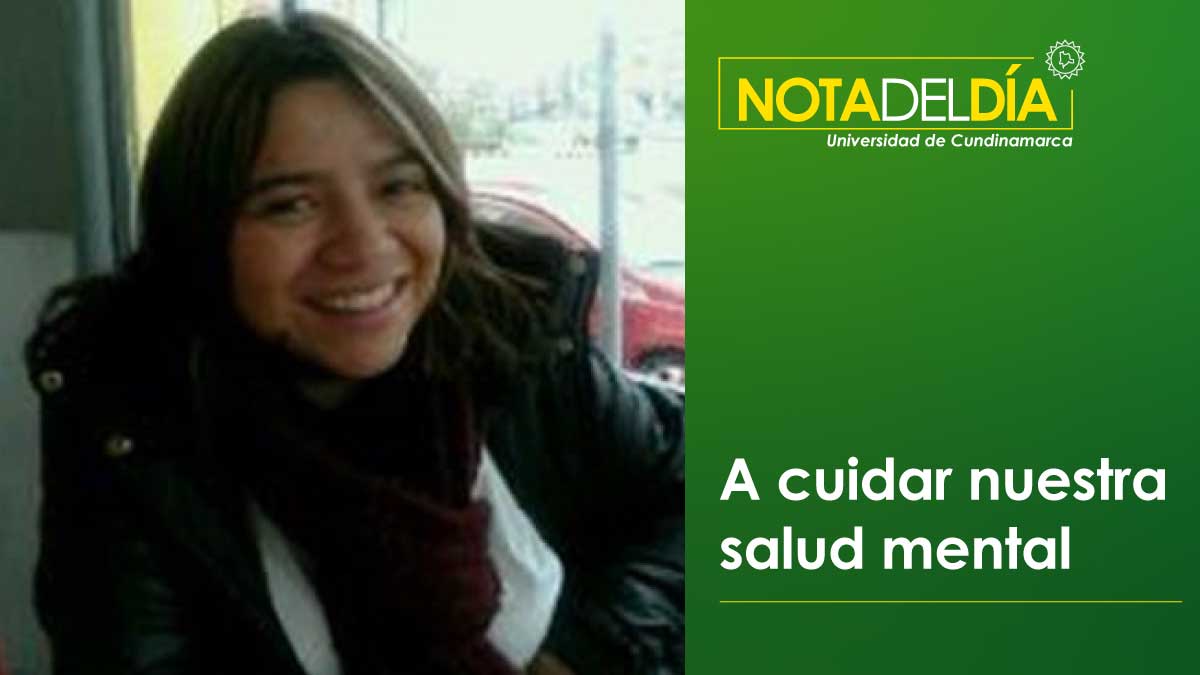
Diana Vigoya Reina, a professor in the Psychology program at UCundinamarca, is a psychologist from Universidad Santo Tomás, a specialist in sports psychology, a Master in clinical psychology, a Master in health psychology, and has 19 years of experience in psychological assessment and intervention.
News
News
News
News