News
2026-09-24
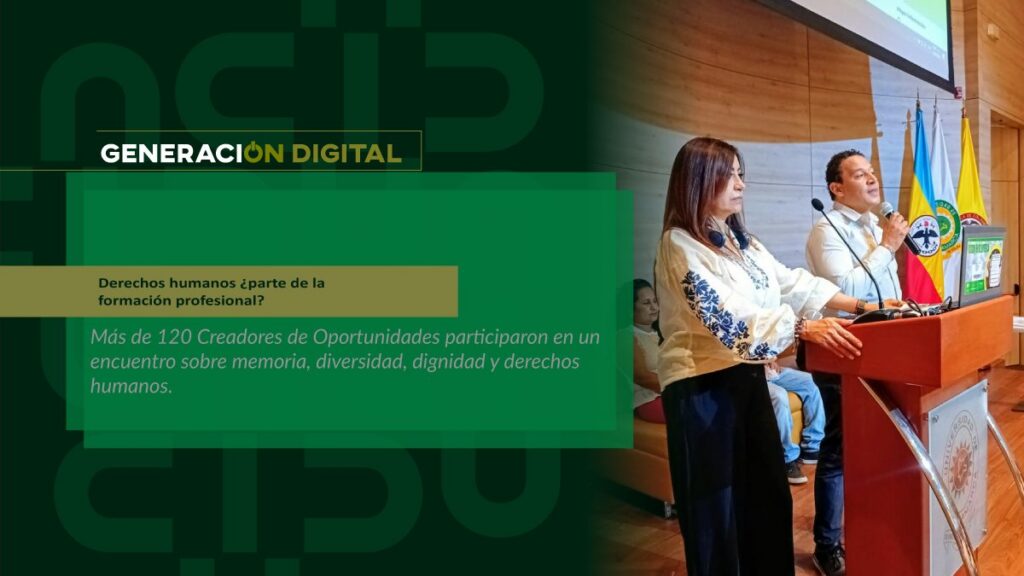
Human rights: part of professional training?
By: Alejandro García Suárez – Advisory Office of Communications



I am your virtual assistant, here to help you quickly and easily.
▲ Back to Top

By: Juliet Carolina Castro Morales
Lecturer, Psychology Program.
As many have already stated, virtual learning is here to stay. According to experts, the pandemic accelerated technological progress by six years in just one year, significantly impacting organizations and higher education institutions that had to adapt their methodologies to technology-assisted education.
One of the advantages of this approach is that it expands the possibilities for collaborative learning. Digital interfaces and applications developed for this purpose allow both students and teachers to work on interactive models or discussion boards in real time on the same project, either synchronously or asynchronously, saving time and capturing all opinions.
Another advantage is the ability to use much more accurate digital models more frequently. For example, learning how bacteria reproduce or how viruses infect healthy cells is much easier using digital models and gamified processes than using drawings or analog strategies.
This is because simulated models can be explored from multiple perspectives, and the processes can be reverse-analyzed. In this sense, digital models allow for better visualization and enabled students to test different alternatives to see how microorganisms behave.
However, it's not all rosy. While technology-assisted education has brought us advantages, it's essential to recognize the benefits of in-person education and its continued importance, especially for human scientists and those studying health and/or environmental fields, as contact with humans or other species is crucial for successful interventions.
In that sense, we should not think in a dichotomous or exclusive way; virtual and face-to-face education are both necessary, and each has its advantages and disadvantages.
Distance education and mental health
Let's keep in mind that it's not technology-assisted education itself, but rather the lack of social interaction with peers and family that affects our mental health. Mandatory lockdowns and excessive restrictions to prevent contact have had repercussions on our mental well-being. Among the most common manifestations in the last year are high levels of anxiety, paranoia, and an increase in diagnoses of conditions such as depression.
The university population is not exempt; in fact, it is a highly vulnerable group, not only because of the current situation caused by COVID-19, but also because of the bleak outlook they face, filled with a sense of insecurity, socioeconomic problems, and uncertainty in terms of employment and socioeconomics.
How do we deal with this?
Like all animal species, we must act intelligently. This means understanding the dynamics of our immediate context, identifying risks, and finding ways to optimally utilize nearby resources for our survival and continued existence, always striving to protect the group and the species. This includes promoting care and self-care as soon as possible and strictly so that we can soon resume physical social contact.
But in addition to this collaborative effort, we can work individually, strengthening our bodies and executive functions. It's important to focus our attention on the circumstances we can change and control, and those we can't. Once you've made this distinction, you can create a short-term action plan to improve or strengthen the controllable aspects through daily actions.
One of the things that can improve your health and give you a sense of freedom is being able to control your body, your sensations, and how it functions. Based on this, regular physical activity is an excellent way to increase motivation, generate positive emotional states, boost self-esteem, and strengthen the immune system.
Another way is to maintain mental strength through reading, learning new things, and playing board games. Additionally, be selective about what you feed your brain; this means filtering out content that generates negative states and avoiding it or reducing your consumption of it. Use your brain's energy to direct it toward productive activities that generate pleasure, a sense of fulfillment, control, tranquility, and restore your confidence.
Talk to friends and family, even if it's just through a video call. Expressing your feelings and emotions to those around you will allow you to see and hear yourself, realize that you're not the only one feeling unwell, and a reassuring voice will restore your sense of belonging and social support.
Finally, adapt your surroundings, make them welcoming; it will be your place for a few months, so don't torture yourself with spaces you dislike. Harmony and organization in your spaces influence mental organization and creativity.
Students, you are not the generation of the future, you are the generation of the present in whom the world relies to create urgent and real solutions to the accelerated changes that are coming; it is education, science, research and technology, the tools available in your environment, that must be used optimally so that we can soon turn this bitter page that marked the life of an entire generation.
News
News
News
News