News
2026-09-24
Human rights: part of professional training?
By: Alejandro García Suárez – Advisory Office of Communications



I am your virtual assistant, here to help you quickly and easily.
▲ Back to Top
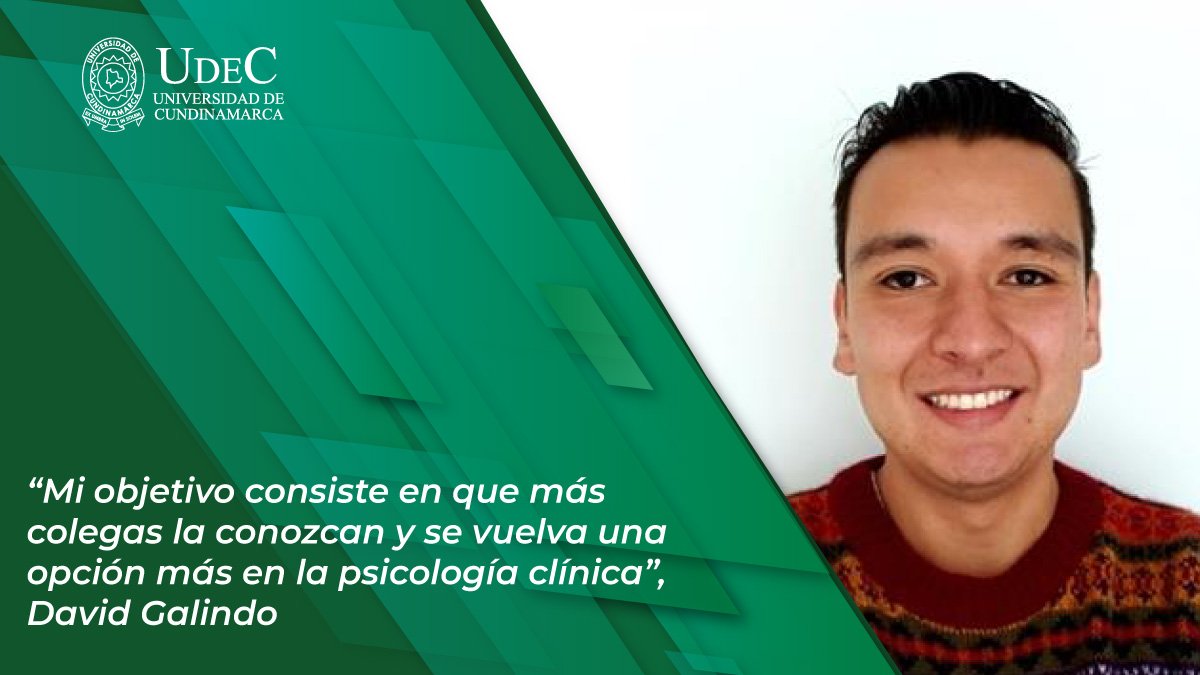
David Galindo is a psychologist and professor at UCundinamarca, where he not only teaches sixth semester classes at the Facatativá extension, but also leads a research group where he inspires his students to generate knowledge and go beyond the classroom in order to contribute to the changes that current society requires.
The idea of using video games for psychotherapy originated as a thesis for my master's degree in 2017 at Santo Tomás University. "At that time, I set out to investigate how video games can serve as narrative resources and generate context in the psychotherapy process with pre-adolescents.".
Video games have been demonized. Today, the World Health Organization (WHO) has classified addiction to them as a disease, which it calls gaming disorder. However, David took the risk of giving them a different connotation because at UCundinamarca, he has always been taught about translocality, a term that refers to how new communication technologies have been disrupting social relationships and daily life.
“I conducted this research with a focus group of young people from a school in Bogotá who had behavioral problems. For this purpose, I used a very popular game called Minecraft. It is a world full of cubes in which they must build, for example, houses or buildings from a toolbox that has a hammer, wood, nails, among other elements.”.
The psychotherapy he uses consists of five sessions. “In the first, the parents and the young person fill out an informed consent form, and then in the office I show them the game on my computer, explain what it is, and tell them how to download it to their cell phones. After that, I play with them and while we're playing, I ask them key questions, such as what brought them to the office and other more important ones.
With this technique, unlike older methods where psychologists used paints, brushes, or stories as tools for psychotherapy, David discovered it was easier to connect with these children's minds. “I noticed they opened up more when speaking. For example, I had a patient referred to me because he was very withdrawn, but when I applied this methodology, he was able to open up because play allowed him to construct his own world while simultaneously opening him up to dialogue within a school and family system that had silenced him.”.
But that's not all. "I've also involved parents in psychotherapy sessions so they can play with their children, which surprises the children but also helps to gain a more complete understanding of the individual and family problems that arise.".
For now, she divides her time between private practice and teaching, leading a research group and lecturing on Measurement and Evaluation III and Social Records, among other subjects. “My goal is for more colleagues to become familiar with her and for her to become another option in clinical psychology,” she concludes.
News
News
News
News