News
2026-09-24
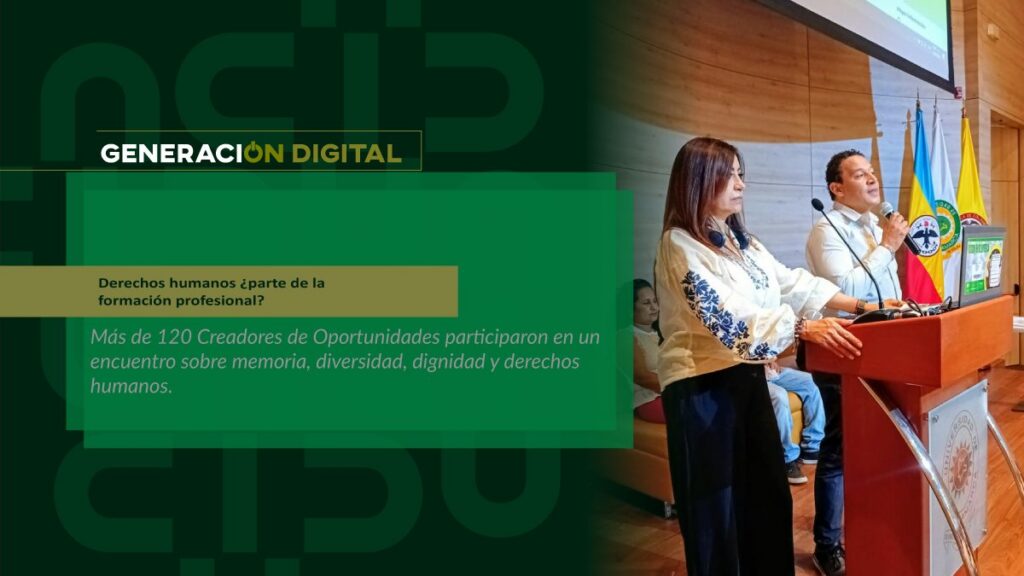
Human rights: part of professional training?
By: Alejandro García Suárez – Advisory Office of Communications



I am your virtual assistant, here to help you quickly and easily.
▲ Back to Top

The current situation of public university funding with contributions from the Nation shows a progressive underfunding of state institutions, since at the time Article 86 of Law 30 of 1992 intended to guarantee the Nation's contributions at constant prices, that is, the funding model for public higher education started from the budget of expenses and revenues from that year, and subsequently the year-to-year transfers are not increased, but updated so that they do not lose their monetary value.
The transfers made by the Ministry of Education to public universities during the validity of Law 30 of 1992 do not correspond to the needs of the universities, since they present significant inequities by not taking into account factors such as coverage, preparation of programs for high quality accreditation and the specific needs of the universities in the region.
The Ministry of Education announced at the time that it would distribute an additional 3.5 points to strengthen the budget base, equivalent to $110 billion; however, the MEN proposed 2.5 points based on historical distribution and one point on closing gaps.
As Cajiao says, the problems of public education are more complex and structural and cannot be reduced to plugging the leaks with a couple of billion pesos to quell the uproar generated by student leaders and rectors of public universities.
Thus, it is worth remembering that the MEN proposed four groups for the distribution of additional resources for the 2019 term: Group 1) accredited per capita high 30%; Group 2) other accredited universities 25%; Group 3) non-accredited universities +25% accreditable programs 25%; Group 4) non-accredited universities -25% accreditable programs 20%.
On the other side of the coin, the group of so-called large universities will receive 30% of the value to be distributed, that is, the largest portion, while group four, the non-accredited ones, will receive only 20%; thus raising the issue of closing gaps.
In the historical distribution, three universities (National University, University of Antioquia, and University of Valle) received 42.721 TP3T of the resources. In the current distribution of additional resources, these same three universities receive 35.651 TP3T of the transfers. Therefore, the percentage remaining for the other universities increased from 57.281 TP3T to 64.351 TP3T. In descending order of percentage participation, the University of Cundinamarca ranks 28th out of 31; that is, only three universities are below it.
This distribution remains flawed and inequitable. It creates inequality in the allocation of resources and is a legacy of Law 30, which perpetuates existing inequities. In the 1990s, without any justification, it was arbitrarily decided that some universities would receive more state funding than others, and this appears likely to continue.
This situation regarding the origins of the problem requires in-depth reviews. Cajiao points out that reality has exceeded the limits of the norm, as he indicated: “Public universities have a historical deficit that originated in Law 30 of 1992, which froze university income at a certain coverage level; at that time, we are talking about 1991 and 1992, when coverage did not exceed 101% of students, less than half of which was public. Today, public education has a coverage of 301% of students, not counting SENA, which has 201% of students. Today, the current needs of education are different.”.
Furthermore, it is worth remembering that the University of Cundinamarca has been claiming the historical debt owed by the Nation for the non-transfer of funds in the years 1993 and 1994. It also requested at the time that the Congress of the Republic include in the 2018-2022 National Development Plan “Pact for Colombia, Pact for Equity” two paragraphs to Article 86 of Law 30 of 1992 aimed at reducing the academic, social and budgetary gap that has been consolidated within the state university system, the state or official universities.
Finally, in this second part of the interview, Francisco Cajio Restrepo urges the Government to consider bringing to Congress a public policy on higher education for equity, establishing the instrumental and substantive aspects reflected in the kind of people that universities must train.
In the third part of this interview with the media of UCundinamarca, Francisco Cajio Restrepo will tell us: “The University is an institution that enriches the culture of a country.”.
News
News
News
News