News
2026-09-24
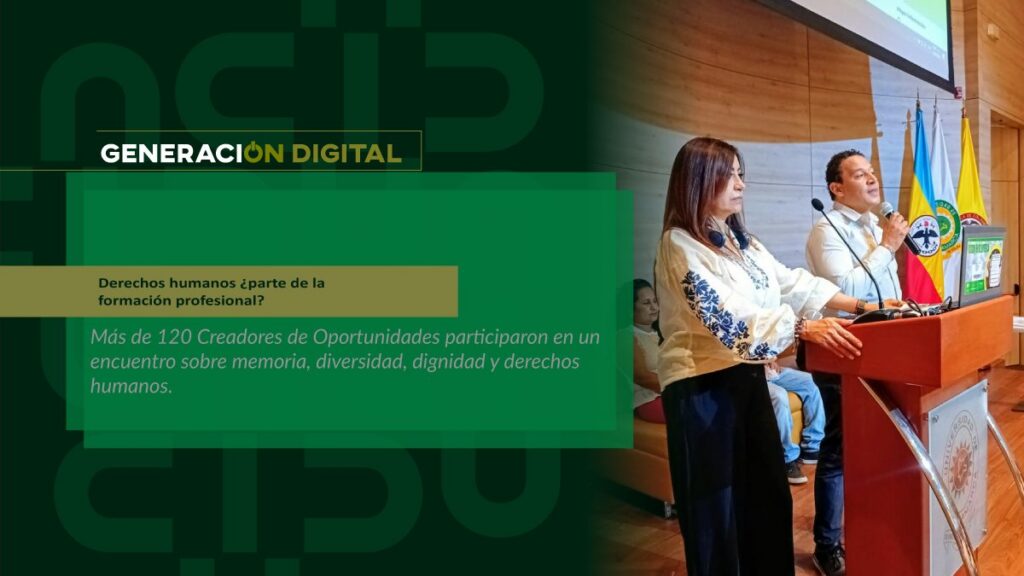
Human rights: part of professional training?
By: Alejandro García Suárez – Advisory Office of Communications



I am your virtual assistant, here to help you quickly and easily.
▲ Back to Top

The current pandemic has generated an abrupt psychological change for many people, leading families to rethink their attitudes, upbringing, and characteristics.
While this is a current situation caused by a disease and the fear of being infected, it is a concept that has always been present in the development of human beings and is how these physical or psychological growths occur at a personal or family level.
Do these changes hurt? The answer is yes. Although there are two groups of people, those who feel that growing up hurts and those who don't, both should be respected.
With these premises in mind, the student welfare department at the Facatativá campus of the University of Cundinamarca organized the discussion "Growing Up Hurts," a talk led by Paola Beltrán, a psychologist specializing in human resource management at the Konrad Lorenz University Foundation. The event was broadcast via the university's social media channels and was moderated by Diana Pedraza, a nurse at the Facatativá campus, and María Alejandra Bonilla, a psychologist from the student welfare department.
To understand this issue and generate a change in people's thinking, psychologist Beltrán explained that there is indeed pain in human beings when growing up, even though many perceive that this is not the case.
A clear example is in children, as there are times when they feel pain in their limbs, and when they go to the doctor, there is a clear explanation: they are in a growth stage, and that is why the pain exists.
“It is necessary to believe and pretend that this will not happen is a mistake, because growth in them (the children) is necessary to generate maturity in their lives, not only physical but also emotional,” Beltrán stated.
And he added: We human beings have found ourselves trapped in a script imposed by society—I call it the grand script of life—where we've been taught a series of steps for how our lives should be. They say you have to grow up, go to school, then to university, you have to do a postgraduate degree, get married, buy an apartment, have children or pets, and when you accomplish all of that, you'll be happy. The problem is that many of us have bought into it, because it's one thing to be taught something, and another to actually accept it.
However, there will be people who, even with these examples, still don't believe that growing up hurts, so the expert recommends that if that feeling exists, "maybe life today is preparing you to be that emotional support that someone might need.".
María Alejandra Bonilla, a psychologist at the Facatativá extension, stated that to cope with such emotional or physical burdens, it is important to have support networks, which can be family or social.
Today there are two types of support networks, formal and informal. The first refers, for example, to the welfare areas of universities, employee groups, mental health services of health providers, and interdisciplinary care; while the second refers to groups of family or friends.
However, these latter situations become a problem when they begin to create a toxic environment. “If there is a toxic environment, it is best to be more open to the opportunity to access a formal support network. When I was training, going to a psychologist or to the mental health area was stigmatized, and that is not the case,” stated psychologist Beltrán.
Therefore, we can recognize that growth is necessary because when we don't grow, stagnation is worse. Furthermore, the physical growth stage is painful, and the same is true for our emotional and psychological well-being.
News
News
News
News