News
2026-09-24
Human rights: part of professional training?
By: Alejandro García Suárez – Advisory Office of Communications



I am your virtual assistant, here to help you quickly and easily.
▲ Back to Top
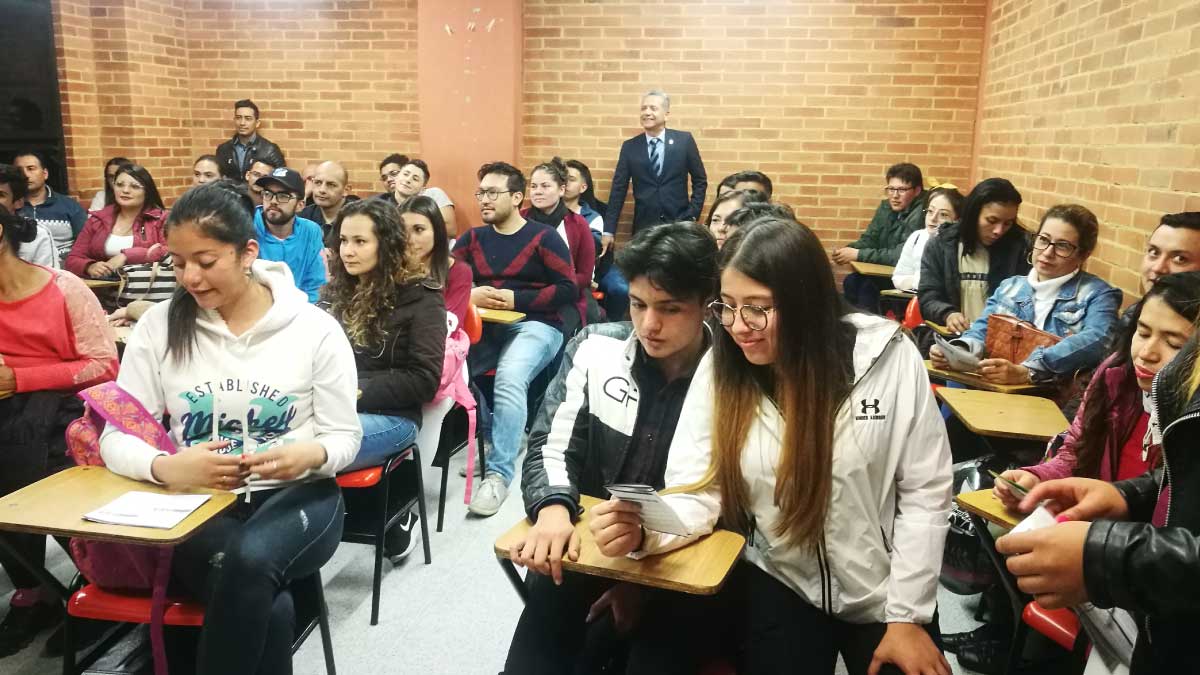
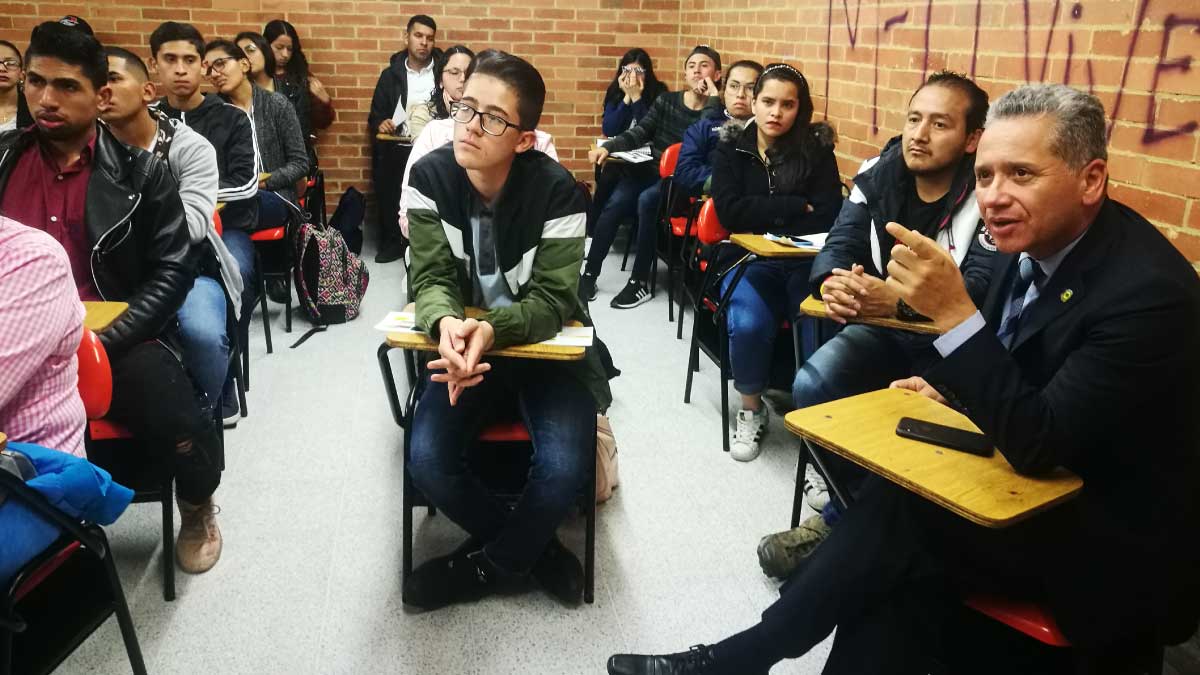
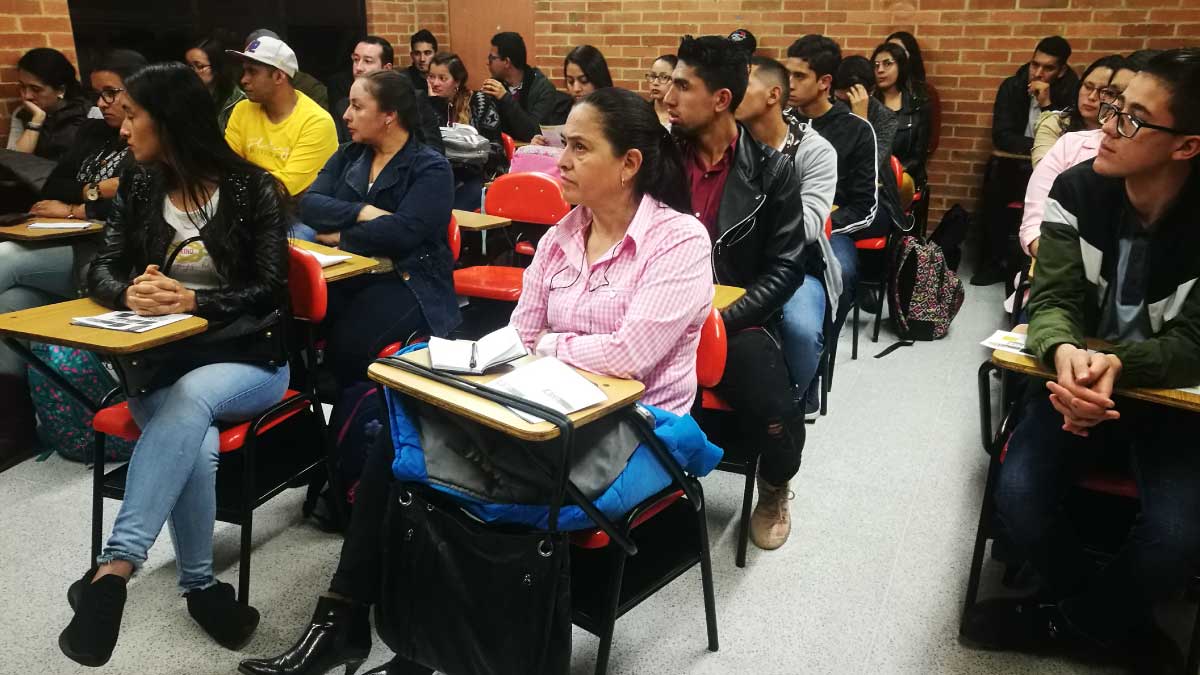
The meeting took place on March 4th with the active participation of students from the academic programs of Psychology, Public Accounting, Business Administration and teachers from different areas of knowledge, who emphasized the importance of strengthening the School of Teacher Training and Learning to leave behind the traditional teaching model and reengineer education.
“The classroom is not the only learning environment; the individual, culture, the institution, the family, nature, and society also play a role. This principle is precisely what is presented in the educational model, which emphasizes the need to prepare students for life,” stated Adriano Muñoz Barrera, rector of UCundinamarca, during the meeting with the educational community.
For his part, the dean of the Faculty of Social Sciences, Humanities and Political Science, Darwin Andrés Díaz Gómez He emphasized: “The respect and constant, constructive, and formative dialogue that the institution maintains with people is the indelible mark that permeates the development of our regions and the guarantee of being more humane in order to address the needs of a society that requires constant transformation and innovation. For this reason, the 2020-2023 development plan of the University of Cundinamarca, Translocal and Transmodern, is consolidated as a social and educational transformation project for the region, the department, and the nation.”.
Contributions from teachers
-Manage the acquisition of greater resources for the University.
-Increase resources to have more teachers within 11 months, with a view to generating greater stability and improved working conditions for teachers.
-Facilitate the allocation of hours for class preparation and research.
-To create spaces for social interaction projects.
-Review and update Academic Council agreement 006 on teacher recruitment.
-Strengthen teacher training in ICT topics.
-Modernize the technological infrastructure of the Extension.
-Administrative, academic and financial restructuring with a view to becoming more efficient.
-To manage change in all the processes that the University carries out.
– Guarantee the participation of the university community in decision-making that affects them, through dialogical and constructive planning processes.
-To build new and better cultural and sports spaces for Facatativá and for all regional units in general, taking into account coverage, thus guaranteeing equality.
-To encourage academic and administrative integration.
-Decentralization of administrative and academic functions, thus providing incentives for organizational efficiency.
-Modernization and simplification of administrative processes.
-Easy access to the formats and the platform.
-Integrate academia to provide solutions to administrative processes.
-Improve maintenance in accounting laboratories.
-Acquisition of software licenses.
-Expansion of the computer rooms.
-To link academia with the business sector.
-Create a "zero paper" policy in teaching and administrative work.
-Generate transdisciplinary projects focused on solving environmental needs, articulated with the regional agenda.
-Use of user-friendly technologies and reduction of formats.
-To encourage and reward the best environmental practices.
-Provide smart recycling and ongoing environmental education.
-Digitize the administrative processes to 100%, implement the digital signature.
-To coordinate the environmental management of agro-environmental study centers.
-To raise awareness of environmental issues within the university community.
-Generate research projects on clean technologies.
-Seek national and international clean certification from the University.
-Implement a clean mobility system such as the use of bicycles.
-Socialize the Environmental Management System in the Extension.
-Strengthen research and research incubators.
-Conduct international presentations as knowledge transfers.
-Increase the number of publications in indexed journals by teachers.
-Create the ethics committee.
Student contributions:
-Establish dual degree programs.
-Promote co-tutoring with the option of graduation.
-Promote joint research from research incubators.
-Promote transnational learning through the application of ICTs.
-Implement the mirror classroom strategy to promote internationalization.
-Create joint international research projects based on academic mobility and in the context of the participating countries.
-Build networks with other universities and organizations to improve student education.
-Involve students in projects with society and the regional government.
-Flexible class schedules to allow students to develop practical experience with the community.
-Strengthening the seedbeds and providing feedback on their weaknesses and strengths.
-Expand communication channels to publicize internationalization, research and well-being.
-Decentralize processes and improve communication between offices
-Reduce bureaucracy in academic and administrative activities.
-Provide spaces for students to plan program actions from the first semesters.
-Hire a teacher during the academic holidays to do strategic planning of the practices.
-Extend the duration of the psychology degree to 10 semesters.
-Make greater use of digital media to reduce paper consumption to zero.
-Encourage environmental projects that are led by environmental engineers.
-Digitize academic, administrative and research processes.
-Conduct awareness campaigns for the entire university community regarding environmental management.
-Create the language center
-Promote multilingualism.
-Analyze teacher evaluation.
-Invest more resources to improve technology in Facatativá.
-Conduct a market study to open postgraduate programs in Facatativá.
-Study of the decentralization of resources with equitable allocation according to the number of students.
-Reformulate the allocation of laboratory resources to make them more accessible.
-Improve internet connectivity because the library and virtual resources cannot be accessed.
– Create an administrative policy for treating people as human beings.
-To strive to equalize the services and benefits of the daytime shift.
-Extend the library's nighttime hours, including Saturdays.
-Improve communication of activities for the night shift as well as the services provided during the day.
-To make use of and visible access to technologies and virtual classrooms.
-At the business fair, have a covered space available.
-Review the logic that the platform uses to assign rooms, taking into account intersections and room size.
-Locate a space for student parking.
-Monitor the teachers' improvement plan and share this monitoring with the students.
-Improve the evaluation process when hiring teachers.
-Promote agreements with companies in the region to carry out internships.
-Train and motivate students each semester in the use of the library and virtual resources.
-Improve the maintenance of computers and their peripherals (chargers, cables)
-Implement an environmental and ecological day.
-Have a dedicated wall for graffiti.
-Promote a campaign to optimize the use of energy and water resources.
News
News
News
News