News
2026-09-24
Human rights: part of professional training?
By: Alejandro García Suárez – Advisory Office of Communications



I am your virtual assistant, here to help you quickly and easily.
▲ Back to Top
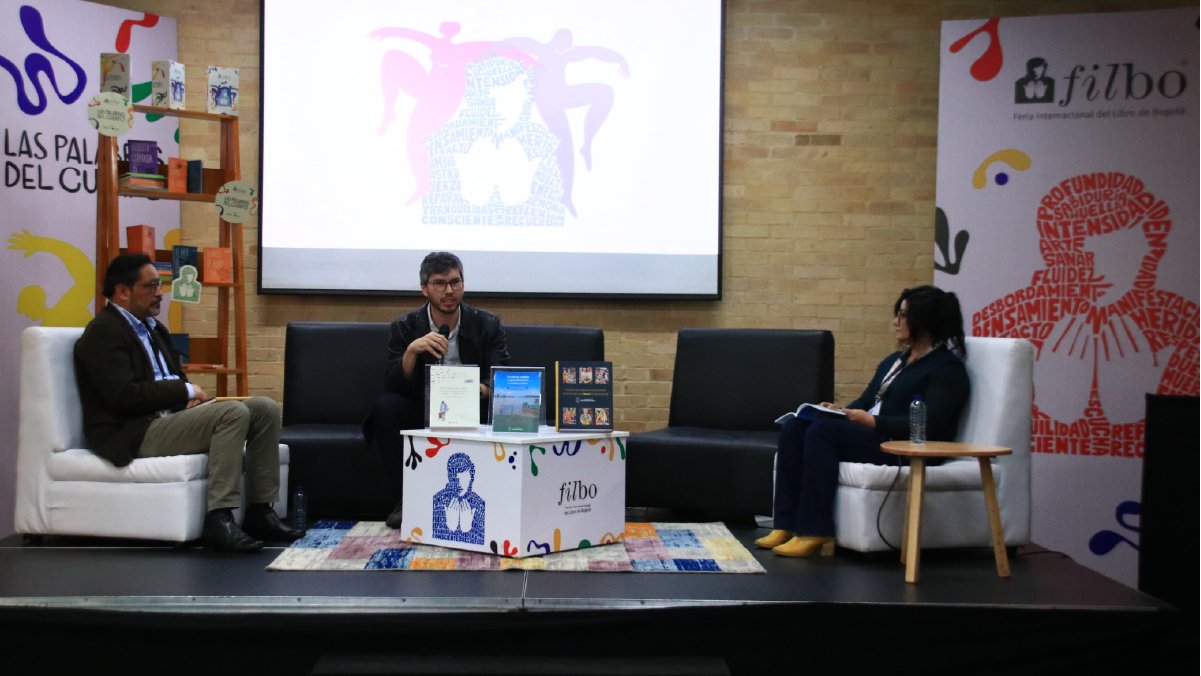
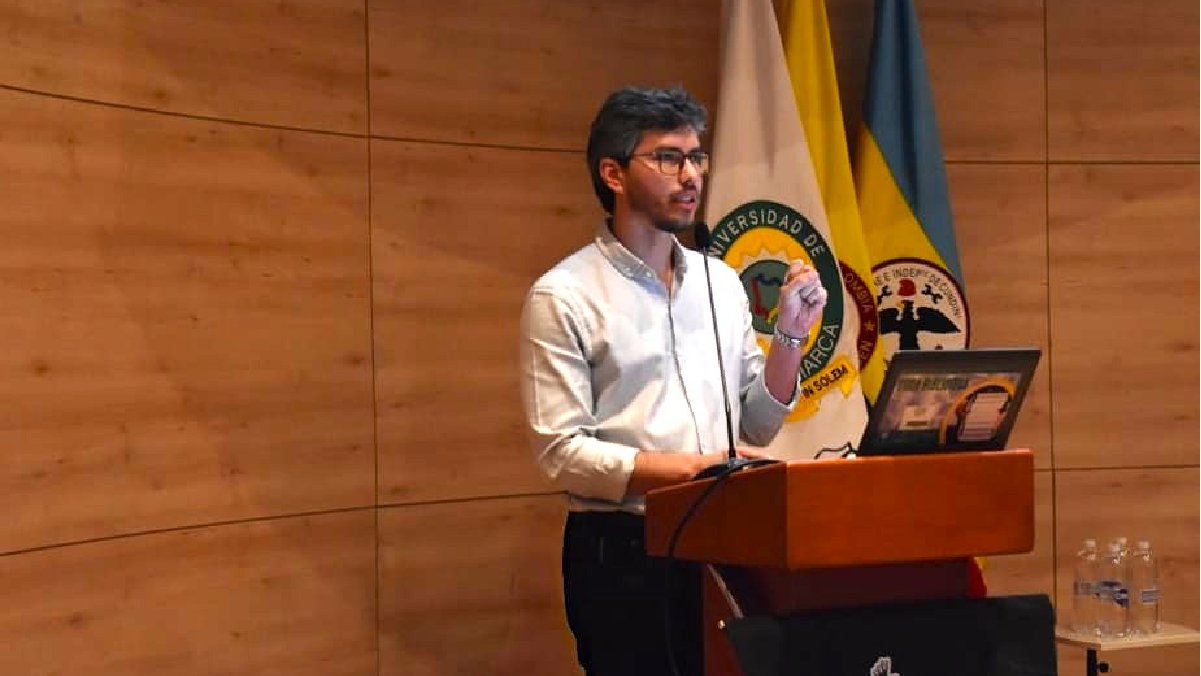
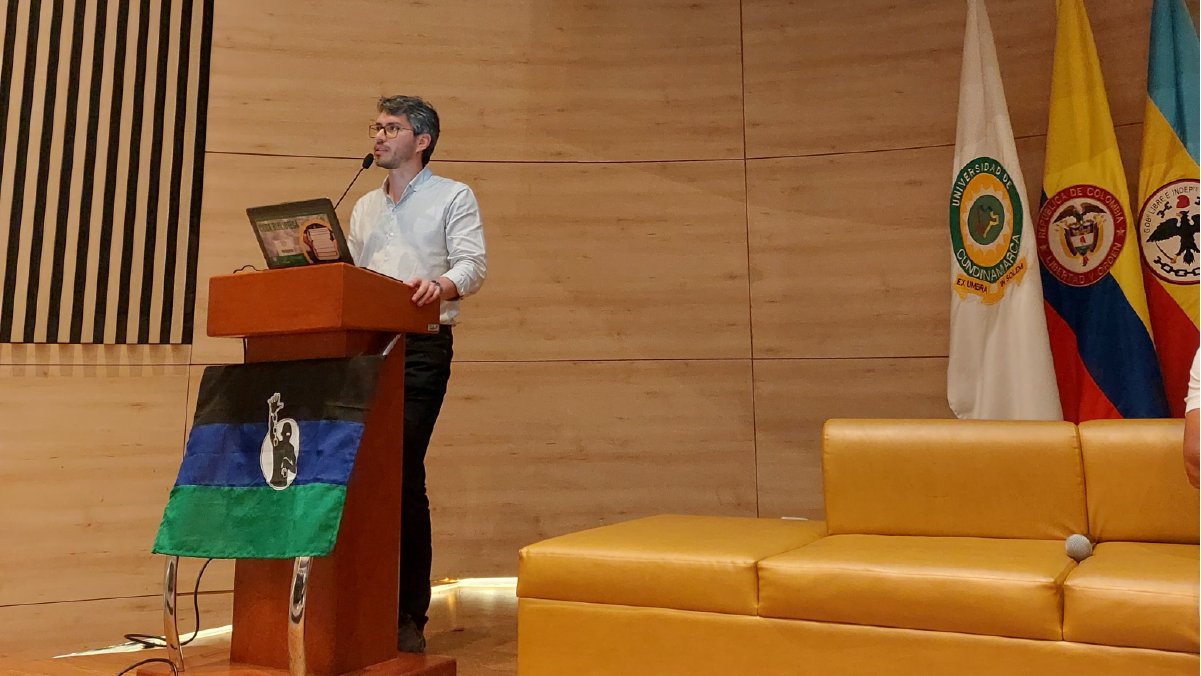

By: Cristian Abad Restrepo, knowledge and learning manager of Social Sciences, political scientist, Master in Habitat and Territorial Studies and PhD in Geography.
In Colombia, murders happen daily; it's a harsh reality. Just days have passed since the attempted assassination of a Senator. Guns are readily available on the streets, used to achieve economic and political ends. Weapons were created to be fired according to political interests, hegemonic narratives, and the motivations to maintain or seize power.
According to data from the newspaper El Tiempo, as of 2024, there are more than 3 million illegal firearms in Colombia. This equates to approximately one in every 300 Colombian citizens wielding a weapon. These firearms are used by armed groups and paramilitary structures to protect their territories. A paramilitary group is understood to be an organized power structure that exerts control, even legitimate control, over a territory. The guerrilla movement, for example, is also considered paramilitary due to the prefix "para," which signifies that an illegal structure can operate in a way that resembles a state institution, particularly in its monopoly on the possession and control of weapons.
In a context of insecurity, where fear is rampant, owning a weapon becomes almost a matter of human survival. All socioeconomic strata in Colombia possess firearms, whether legal or illegal. All are readily available and can be used regardless of the social or political context; all have the sole purpose of injuring or eliminating an adversary. What the attack against the senator reveals is the fragility of democratic processes in the face of growing insecurity throughout the country. Political affiliation is irrelevant: anyone can be a victim of this violence, even a senator.
Post-truth: the invention of reality and political opportunism
El intento de asesinato del senador, ocurrido el 6 de junio, tiene resonancia política por el contexto preelectoral. Por supuesto, toda afectación contra la dignidad humana debe ser rechazada; sin embargo, dada la coyuntura actual, aflora la hiperbolización de la noticia, que adquiere proporciones mayores debido a la saturación de información presentada por los medios dominantes de comunicación, en coherencia con la oposición, que permanece alerta a los fallos institucionales y a los actos de quien gobierna y ejerce el control del Estado, con el fin de deslegitimarlo, criticarlo y mostrarse como una alternativa nueva y real ante la inseguridad.
Bajo este escenario, es relevante recordar que “los hombres se conducen principalmente por dos impulsos: o por amor o por miedo”, como nos recuerda Maquiavelo.
This situation has been exploited to manipulate beliefs and emotions in order to influence public opinion. The mainstream media insists on constructing a specific reality to instill terror and anxiety, and to shape political attitudes against the current establishment. They do this by presenting a line of truth—or rather, a published truth, rather than a public one—in other words, a dominant actor imposes their version of the truth, and it is considered public without any filter.
The opposition's main objective is to delegitimize the current government without any certainty about the outcome of the investigation being conducted by the Attorney General's Office. In other words, regardless of the investigation and its potential conclusions (it's unknown when the findings that determine responsibility will be available, as is often the case in Colombia), a view considered true is gradually being shaped into a subjective belief.
Here, social media plays a significant role in promoting post-truths according to political interests. Of course, every political faction calibrates its strategies, makes rational calculations of political choice, seeks to win over disaffected voters, and reinforces criticism of the current government.
This calamitous event for democracy has been exploited by the opposition to reinforce narratives that stage fear and a bleak future, selling a false sense of security and establishing the idea of a democracy in crisis (it should be noted that political crises are generally manufactured when a subjective perception arises that things are going badly). Similarly, certain political sectors are taking advantage of the situation to argue that consensus is impossible, that there is a deep division, and that a systematic obstruction of the government is necessary.
On the other hand, the current government is developing a series of actions aimed at reinforcing the need for national reconciliation, calling on different political sectors and generating governability, such as, for example, avoiding issuing the Decree of popular consultation, generating empathy through discourse, speaking of hope and de-escalating hate speech as several ministers have stated.
En definitiva, al crimen se lo utiliza para polarizar las verdades y creencias de cómo se debe gobernar a una sociedad, de allí la disputa por los sentidos politizados en la administración del Estado. Ahora bien, en estos tiempos de extremos es inevitable la polarización porque ésta además de ser ideológica, es desigual en términos materiales. El actual momento político y los que vendrán, siempre serán de extremos y de radicalidades.
Las concesiones políticas para cogobernar no son más que impedimentos políticos para realizar cambios sociales y económicos en una nación, porque lo que se negocia son privilegios e insignias de clase que por historia se conoce que son innegociables. Lo mejor que define hoy al Estado es ser un espacio de disputa: el crimen y la posverdad está a su servicio.
Stalled society: how limited options trigger social crises
When freedom is defined by access to common goods (those public resources inalienable to human beings and which cannot be alienated, such as water, mountains, air, food, among others) and the guarantee of human rights, we can say that society is progressing. But when access to the rights necessary to uphold human dignity is restricted, a series of undesirable situations arise, such as the murder of the senator.
La carencia de tener una vida digna es la expresión de una inmovilización social que no propicia cambios. La forma de liberarse de esta inmovilización, esto es, no tener educación primaria, segundaria y universitaria, salud, saneamiento básico, espacio público adecuado, transporte público eficiente e instituciones transparentes, va propiciando distorsiones de seguridad, porque se va instituyendo la idea que, para sobrevivir, cuando los bienes son escasos, se recurre a medios más expeditos de lograrlo.
Tampoco se está diciendo que la carencia produce inseguridad de forma absoluta, pero en las palabras del niño de 14 años alude presuntamente a la presión por sobrevivir. En su declaración “lo hice por mi familia”, alude precisamente a esto. Por otro lado, cuando no se tiene acceso a los derechos es fácilmente manipulable y, por tanto, hay menos libertad.
It is important to understand that the senator's death is not an isolated incident; it is the culmination of a series of relationships that have led to this situation. The blame lies with the very society that has been built over decades of armed, violent, and symbolic conflict. It reflects that society has failed to expand its life options, nor does it reflect access to human rights. On the contrary, this event demonstrates that ideological and political agendas with external interests are being prioritized over society, rather than a human rights-based agenda that would ensure a good life for everyone.
El intento de homicidio contra el senador y cualquier persona de Colombia, como el asesinato del líder indígena del pueblo Awá Luis Aurelio Araujo ejecutado el día 3 de junio de 2025, debe recordar que aún tenemos problemas sin resolver. Las expresiones de violencia sistemática siempre son el resultado de las múltiples desigualdades existentes en el país.
Los ciclos de violencia aún no desaparecen de los territorios y que parecen no acabar. Aún falta por construir un proyecto de sociedad nacional. Las ideologías políticas recuerdan que no todos caben dentro de este proyecto de nación. Gestionar los conflictos parece ser la mejor manera de administrar las contradicciones sociales y políticas para no desencadenar en estos acontecimientos tan lamentables donde la vida está en perpetuo riesgo.
News
News
News
News