Fusagasugá Branch
2026-09-24
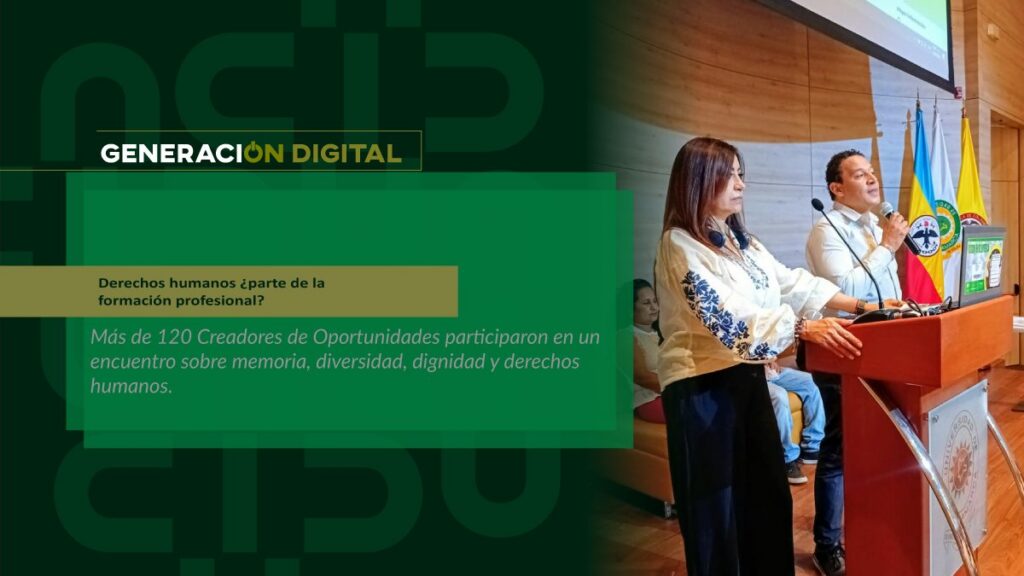
Human rights: part of professional training?
By: Alejandro García Suárez – Advisory Office of Communications


I am your virtual assistant, here to help you quickly and easily.
▲ Back to Top
During the week of MEDIT's birth, the seven Faculties presented topics on high-quality accreditation processes, curriculum redefinition, learning fields, among other mission-related topics.
Faculty of Engineering
The Faculty of Engineering presented the challenges and opportunities within the MEDIT framework, and also shared the experiences and training activities in its "Cyberculture" Cultural Field within the context of MEDIT implementation.
The Faculty's directors presented the chapter of the book entitled "Emerging Technologies and ICT towards a dynamic and participatory education, inverted hybrid mobile learning", from the book "Transmodern and Translocal Education from the MEDIT Model. Theoretical foundations and success stories".
Other topics covered by the Faculty included remote and virtual laboratories using software (Siemens TIA Portal) and hardware with remotely operated workstations. They also presented significant end-of-semester experiences through integrative projects.
The Faculty presented the strategy for strengthening the family dimension within the MEDIT parental control framework, focused on strengthening the culture of computer security for parents and caregivers of children.
As a strategy for tracking these actions, an interactive website ciberculturaudec.bookmark.com was developed where experiences can be shared and contributions made in the pursuit of continuous improvement through dialogue.
Faculty of Social Sciences, Humanities and Political Science
The Faculty announced the strategy “Working together for the challenges”, innovating and engaging in personalized dialogue in the implementation of MEDIT, and also presented the process of curricular redefinition of the Psychology program and the Music program, the latter with a view to high quality accreditation.
Likewise, it demonstrated progress in the design and implementation of the Institutional Learning Field and the Cultural Learning Field:
CAI: Communication and Critical Reading.
CAI: Citizenship S.21
CAI: Foreign Language.
CAC: Serenade for Cundinamarca
Furthermore, the Faculty launched the "Psychological Tele-orientation" strategy, focused on areas of action such as promotion and prevention, counseling, personalized attention, psychosocial support, and a psychology observatory, among others.
The directors also presented the launch of the lecture series strategy and the Language Center to respond to the Translocal and Transmodern needs that the current world demands.
The Faculty highlighted the relaunch of the strategy: Udec Talks, a dissemination space led by students linked to the English program that supports topics of universal culture, environmental problems, mental health, mental disorders, social networks, among other current topics of a 21st century university culture that is projected in the MEDIT.
Faculty of Education
The academic unit presented the high-quality accreditation process and curricular redefinition of the Bachelor of Social Sciences program, and the strategy for implementing MEDIT by the Faculty, as well as the challenges.
On the other hand, the progress and design of the implementation of the Peace-Science Culture Learning Field and the Institutional Learning Field Logical and Quantitative Reasoning were announced; the Transborder Dialogues strategy among other structural projects of the Faculty.
Faculty of Agricultural Sciences
The Faculty outlined the strategies for adopting the MEDIT model through the strategic fronts of the 2020-2023 Development Plan. “We hope to soon become the leading Faculty in the country in Agricultural Sciences through this model that teaches from different fields of learning, from the dimensions of person, classroom, culture, institution, nature, family and society. What will stand out and characterize this model is education for life,” highlighted Dean Vilma Moreno.
In the Multidimensional Learning Field area, the Faculty presented the reinterpretation and experiential learning outcomes. The coordinators highlighted the curricular transformation resulting from the renewal of the qualified registration for the Animal Science program at the Fusagasugá campus, the Agronomic Engineering program at the Facatativá extension, the Environmental Engineering program at the Girardot branch, and the Agronomic Engineering program.
Fusagasugá; and the presentation of initial conditions of the Zootecnia program Fusagasugá Headquarters.
Another aspect highlighted by the Faculty is the modernization of the microbiology, chemistry and animal nutrition laboratories, facility improvements, supply of inputs and provision of equipment, among other structural projects of the faculty that go hand in hand with the agro-environmental units.
Faculty of Administrative, Economic and Accounting Sciences
The Faculty presented the curriculum redefinition process and the process of presenting initial conditions with a view to the high quality of the Business Administration program at the Fusagasugá campus.
“Likewise, following the new trends in the discipline at the national and international level, the curriculum renewal was carried out, proposing 158 academic credits, with a duration of nine semesters, which focus on leadership skills with training for life, civility and freedom; and on the pillars of innovation, entrepreneurship and research in the organizational management processes,” emphasized Dean Félix Gregorio Rojas Bohórquez.
Similarly, the unit showcased the redefinition of the Public Accounting program Facatativá Extension and the Tourism and Hotel Management Technology program Girardot Section.
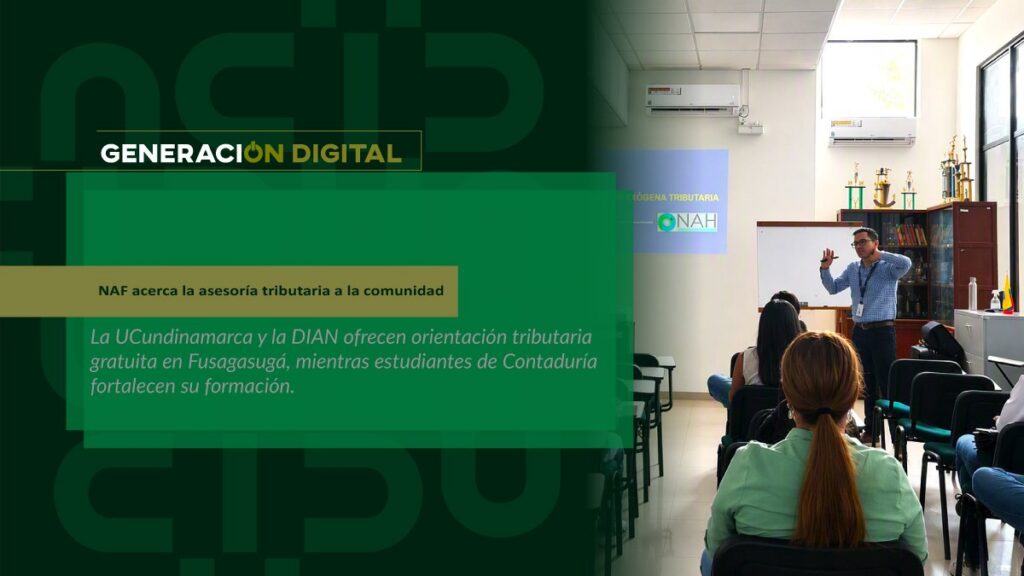
The Faculty announced the disciplinary and institutional learning fields, presented the CITGO Center for Entrepreneurship and Innovation and the “NAF UDEC-DIAN” Tax and Accounting Assistance Center.
At the end of the presentation, the Faculty introduced the IV International Congress on Organizational Management “The Company of the 21st Century”, an event that for this version will address topics in economic, social and entrepreneurial development.
Faculty of Health Sciences
The Faculty's academic leadership highlighted the 45th anniversary of the Nursing program. “There are 1,928 professional nurses who have graduated from our institution, and 163 who are technologists; therefore, we can proudly say how the program has strengthened, and is currently integrated into MEDIT. We train nurses in health and life care with management skills and the ability to solve health problems for families and community groups with a translocal approach,” stated Sandra Carmona, program coordinator.
Subsequently, the Faculty demonstrated the science, innovation, and technology component through MEDIT in the Nursing program with the Tatamasalud research group, a public-private health approach, and its research groups: aging and chronic diseases.
population; health and safety at work; collective health; healthy environment and surroundings; sexual and reproductive health throughout the life cycle, among others.
The Faculty announced MEDIT as a catalyst for university interaction within the nursing program and the future scenarios of the University of Cundinamarca, MEDIT for clinical simulation.
Faculty of Sports Science and Physical Education
“The MEDIT Transmodern Digital Educational Model, by having the possibility of developing its training processes in different fields of learning, becomes a path that generates social, organizational, personal or family transformation from the resolution of problems in a dialogical way, rescuing the cultural leadership of the members of each community,” said Pedro Quintero, dean of the Faculty during his speech.
The Faculty presented the redefinition of the professional program in Sports Science and Physical Education of the Soacha Extension, the MEDIT and the administrative processes, the MEDIT with the communities, and how it developed its training and learning process through information and communication technologies, in times of the COVID-19 pandemic.
News
News
News
News