Fusagasugá Branch
2026-09-24
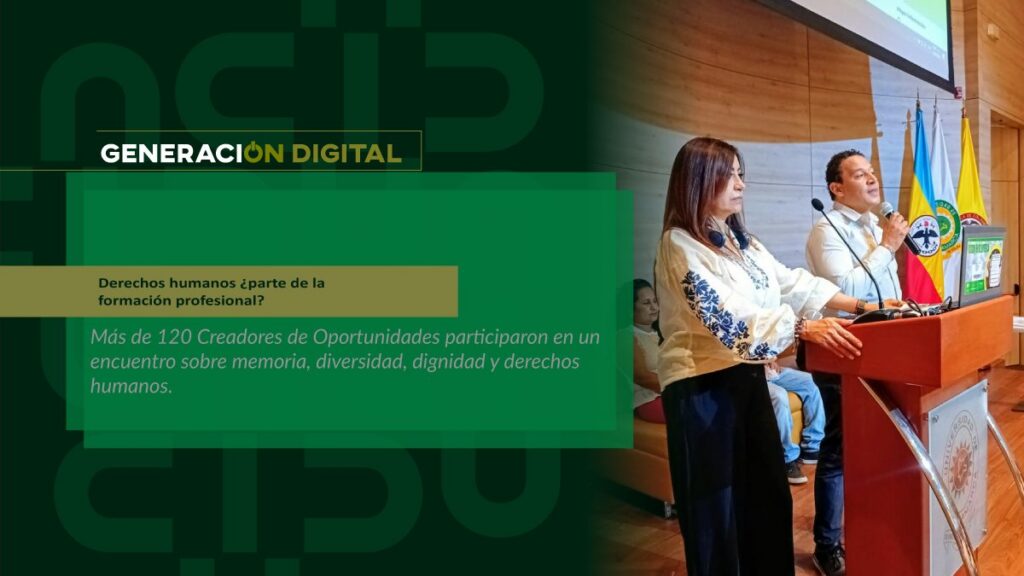
Human rights: part of professional training?
By: Alejandro García Suárez – Advisory Office of Communications



I am your virtual assistant, here to help you quickly and easily.
▲ Back to Top

As a result of 10 months of hard work, the research groups ARADO and TEMCON, belonging to the Faculty of Administrative, Economic, and Accounting Sciences, created the Management Model for the competitiveness of the nursery subsector within the framework of the project: “Strategies for strengthening the competitiveness of the Fusagasugá-Region nursery subsector to improve productivity and marketing levels, towards the sustainability of the organizations.” The sample selected for the research consisted of 370 nurseries from the municipalities of Arbeláez, Silvania, and Fusagasugá.
As a result of this study, a booklet-style instruction manual was developed with strengthening strategies, case studies, and practical exercises that contributed to marketing and sustainability. The Faculty of Engineering (Professor Miguel Antonio Ojeda) collaborated on this project, developing the ASOVIZ Administrative and Accounting Software and presenting the communications strategy.
This research also provided applicable methodologies in an assertive and easily understood language for producers and marketers, based on the identification of sensitive factors for continuous improvement within small organizations that are measured in finding product differentiation, social responsibility, good practices, marketing strategies; making visible, through constant action, strategic planning and risk control.
It is worth highlighting the organizational strengthening resulting from this research work of the productive units that make up the Association of Nursery Growers of Sumapaz (ASOVIZ) and also of the non-associated ones that voluntarily adopted the model or the proposed strategies.
The nursery sector is considered one of the most promising in the development of the Sumapaz region, boasting competitive advantages such as: a variety of climates and biodiversity of flora and fauna, topography, fertile lands, and proximity to the Capital District of Bogotá, which favor the production and marketing of plants. (Escobar, Velásquez, Escobar, Gálvez, & Gutiérrez, 2019).
It is worth noting that the researchers based the study on the competitiveness theories of Esser Klaus, Michael Porter and Peter Drucker, taking into account the experiences and knowledge of the nursery owners, who contributed their knowledge, inputs that were related to the variables identified in the proposed model.
The team, comprised of research professors, student research assistants, and seedbed workers, traveled directly to the region's nurseries to gain a true understanding of the production and marketing processes of ornamental, fruit, and forest plants through structured observation. The purpose was to provide nursery owners with the strategic tools, skills, and managerial and financial knowledge necessary to design a management model for the sector's competitiveness.
You might be interested in seeing: Note on the model for competitiveness as a strategy for strengthening the nursery subsector in Fusagasugá-Region
Elizabeth Ann Escobar Cazal
María Cristina Velásquez Ardila
Gonzalo Escobar Reyes
Olga Liliana Gutiérrez Castaño
Jean Fernanda Gálvez
In Fusagasugá, agriculture represents 1.81% of GDP according to CNC calculations based on the municipal GDP for 2007, estimated by the Cundinamarca Planning Secretariat, Local Employment Plan, Business Development for Fusagasugá. (2012).
In Cundinamarca, the branches of the economy that had the greatest participation within the total value added of the department were the manufacturing industry with 21,27%, agriculture, livestock hunting, forestry and fishing (nurseries are part of this economic activity) with 13,78% and the social, community and personal service activities with 13,12%”. (Bogotá Chamber of Commerce. CCB, 2010).
News
News
News
News