News
2026-09-24
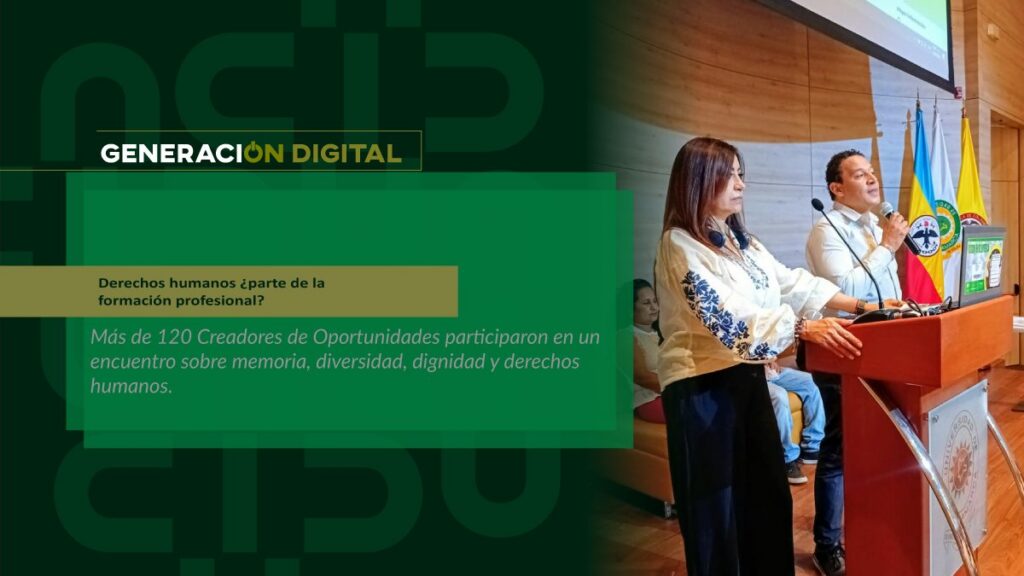
Human rights: part of professional training?
By: Alejandro García Suárez – Advisory Office of Communications



I am your virtual assistant, here to help you quickly and easily.
▲ Back to Top
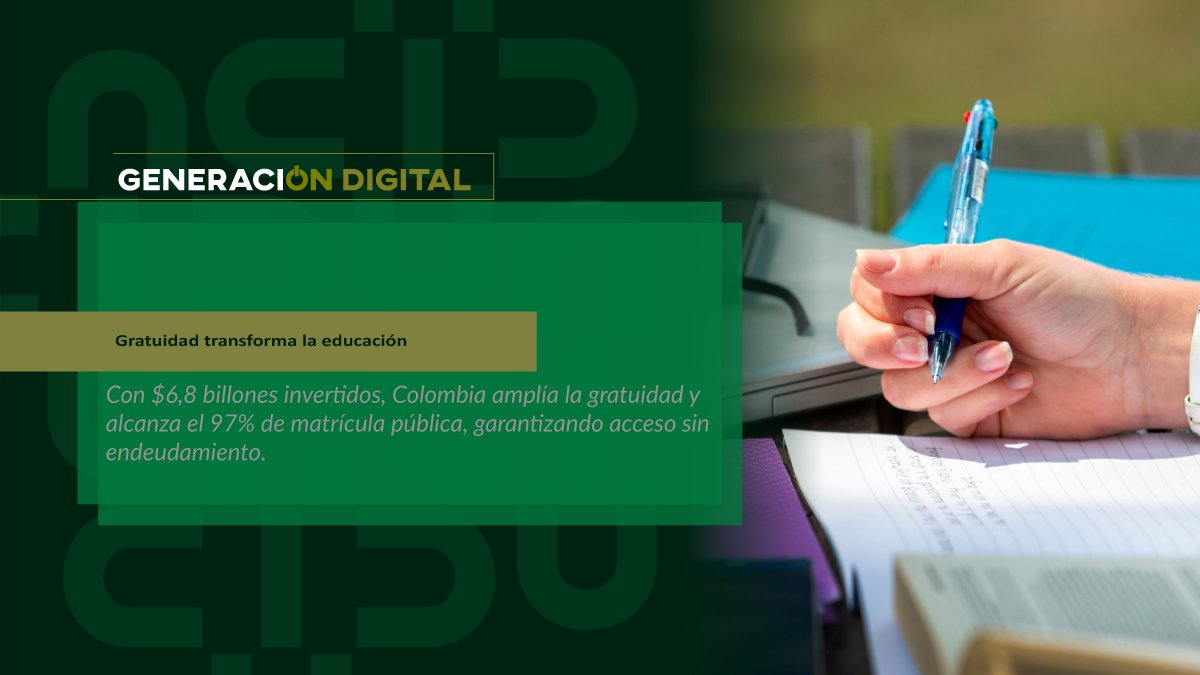
The National Government is making progress in transforming access to higher education in Colombia. Between 2023 and 2025, 1.4 trillion pesos have been invested to consolidate the new policy of free public higher education, benefiting thousands of young people throughout the country.
According to the Ministry of National Education, the number of students benefiting from the program increased from 690,000 in 2023 to 930,000 in 2025, reaching 971% of public school enrollment with free tuition. This growth represents one of the greatest advances in educational coverage in the country's recent history.
The new funding model structurally strengthens public institutions, allowing them to expand their academic and financial capacity. This enables more students to access undergraduate programs without resorting to debt.
The impact of this policy extends to universities, university technical and technological institutions (ITTU), SENA and special regime entities, consolidating real conditions to guarantee higher education as a right.
One of the most significant milestones is the projected increase of 347,000 new students enrolled in undergraduate programs at public institutions by 2025, the highest figure ever recorded. This growth has allowed access to quality higher education in areas where it was previously unavailable.
To achieve this, an additional 1.1 trillion pesos were allocated to the operation of Public Higher Education Institutions, resources that strengthen the expansion of coverage and remain in the budget base year after year.
Likewise, the funding model for tuition-free education was adjusted to ensure stability. By 2026, 1.4 trillion pesos are projected to be incorporated into the operating budget, benefiting more than 950,000 students. Previously, these resources depended on investment allocations, which generated uncertainty.
The Ministry also compared this model to previous programs such as Ser Pilo Paga and Generación E Excelencia, which were primarily aimed at financing private education and represented high costs per student. According to the entity, the current model, from a supply perspective, is more efficient and sustainable.
Furthermore, previous schemes involved forgivable loans with strict requirements. Many young people who failed to meet them ended up with millions in debt that affected their financial stability for more than a decade.
By strengthening public education and reforming Articles 86 and 87 of Law 30, the Government seeks to ensure the system's long-term sustainability. The goal is clear:
To consolidate higher education as a guaranteed right for present and future generations, expanding opportunities and closing gaps throughout the national territory.
Source: Ministry of National Education.
News
News
News
News