Fusagasugá Branch
2026-09-24
Human rights: part of professional training?
By: Alejandro García Suárez – Advisory Office of Communications



I am your virtual assistant, here to help you quickly and easily.
▲ Back to Top
By: Alejandro García Suárez – Advisory Office for Communications.
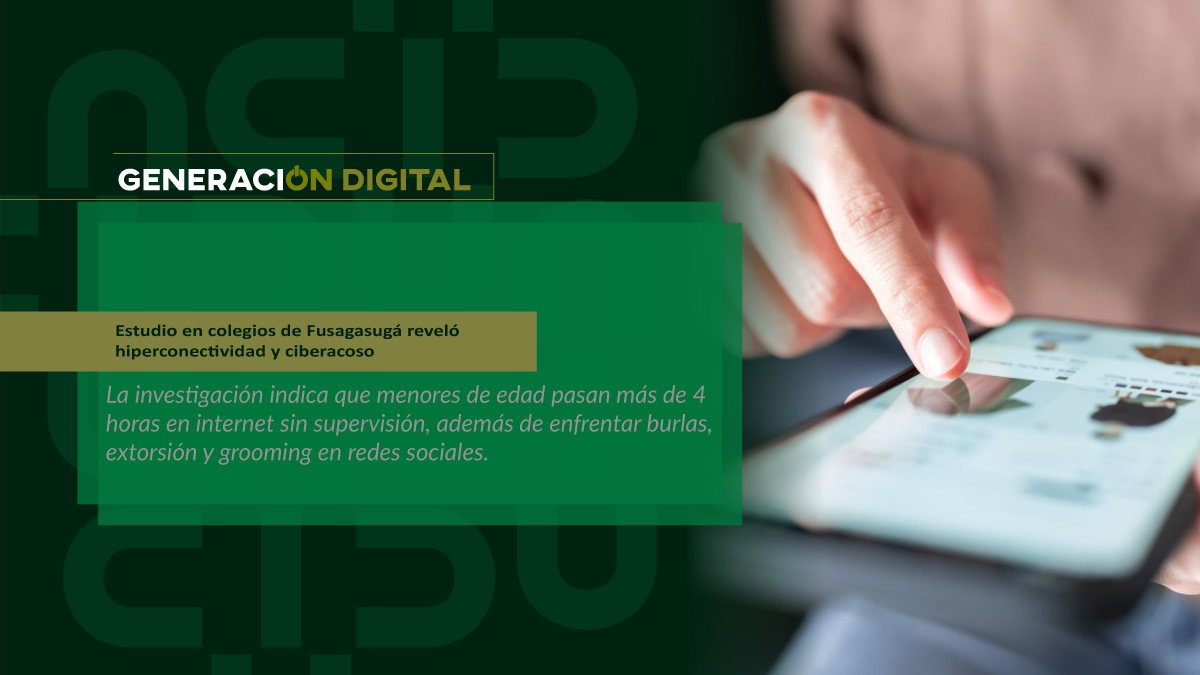
Cell phones and tablets have become part of the daily lives of children and adolescents, but they also expose them to serious digital risks. A study conducted through University Social Interaction (ISU) in schools in Fusagasugá revealed a troubling reality: minors are unprotected on the internet and their parents do not know how to protect them.
Germán Mauricio Rodríguez Fernández, knowledge manager of the Systems Engineering program in Fusagasugá, explained that the project identified a critical gap: “Adults do not know how to protect their children from cyberattacks. By allowing the use of devices without supervision, they compromise not only the safety of the minor, but of the entire home; an attack can affect the entire network.”.
The survey administered to 6th, 8th, and 9th-grade students shows a concerning picture:
Hyperconnectivity: Most people use their personal cell phone more than four hours a day to browse the internet.
Frequent cyberbullying: Many have been victims of mockery, offensive comments about their appearance, origin, or religion. Several reported that content was posted in their name without permission or their photos were shared without authorization. Cases of threats, blackmail, extortion, and pressure to send intimate content were recorded, clear signs of grooming and sexting.
Unprotected: Although students know basic tools like blocking users, a large proportion browse without parental controls.
For her part, Gina Paola Suárez Ávila, knowledge manager of the Software Engineering program in Girardot and project member, pointed out that these results are “an urgent call to adults.” Therefore, the University created a free online course for parents on cybersecurity. The objective is to teach them to recognize risks, define time and content limits, install parental controls, promote safe digital habits, and know the school response protocol for cases of cyberbullying.
Legal consequences
Researchers warn that many students are unaware that laws exist which can result in legal consequences for their parents, who are responsible for the actions of their minor children. Furthermore, many fail to comprehend the emotional damage they cause with seemingly innocent “games” on social media.
The message is clear; the digital safety of minors depends on informed and responsible adults. Prevention starts at home.
Listen to our podcast:
News
News
News
News