News
2026-09-24
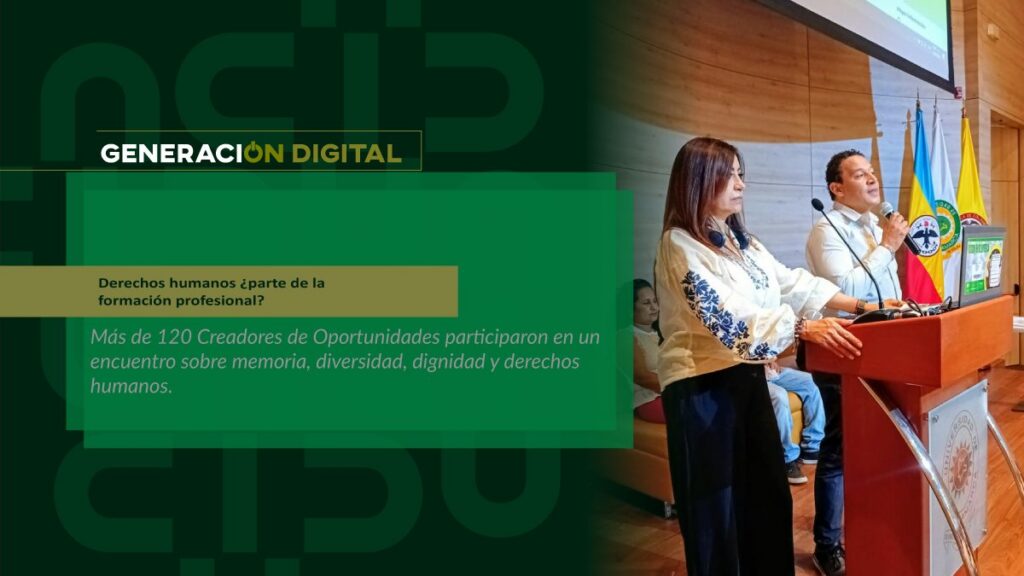
Human rights: part of professional training?
By: Alejandro García Suárez – Advisory Office of Communications



I am your virtual assistant, here to help you quickly and easily.
▲ Back to Top

By: Alejandro García Suárez – Advisory Office of Communications
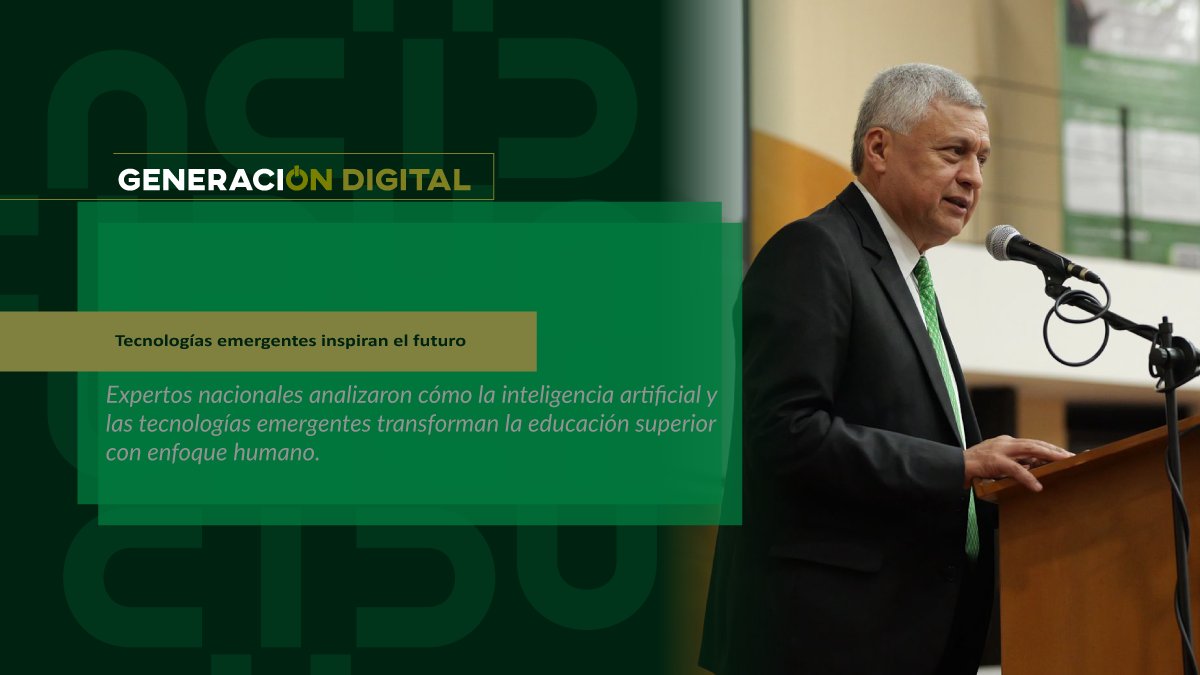
Within the framework of the lecture series “Cultivating the UCundinamarca We Are and Dream Of” and as part of the collective construction of the Strategic Plan 2027–2037, the Institution developed the academic experience at the Chía Extension “Emerging Technologies in Higher Education: Good Practices”, a space for reflection on the challenges and opportunities that digital transformation and artificial intelligence bring to educational processes.
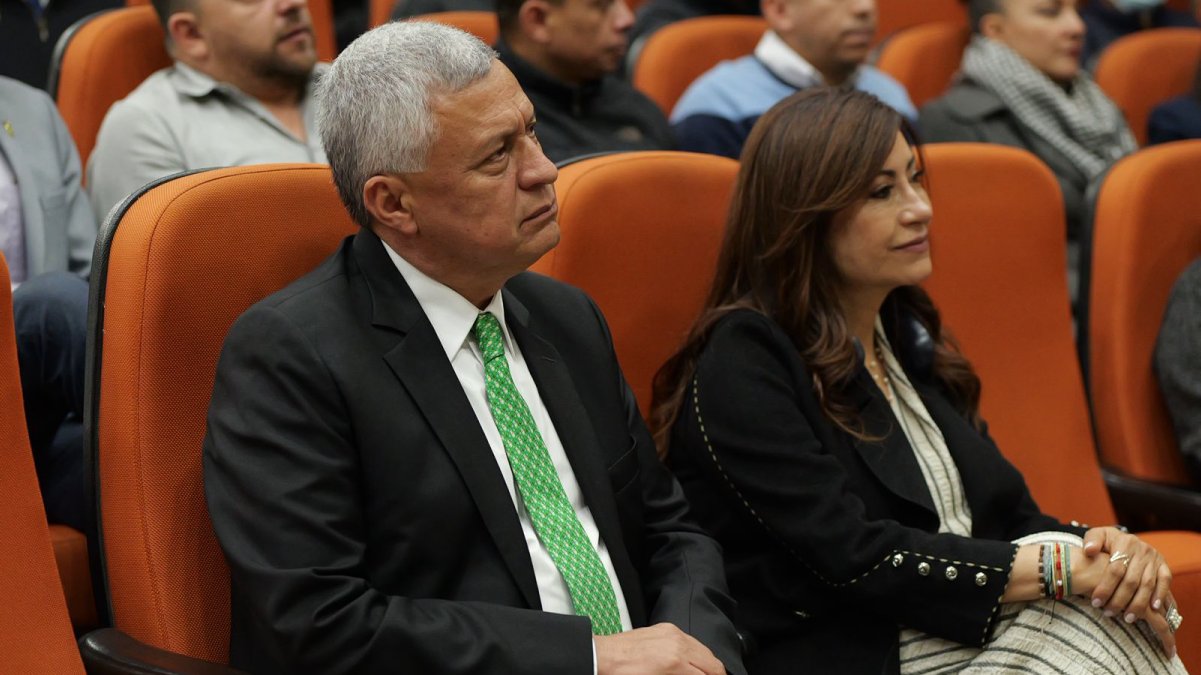
The event included the participation of the institution's senior management, led by the rector, Dr. Adriano Muñoz Barrera, as well as experts in higher education, who shared experiences and perspectives on the role of emerging technologies in the education of 21st-century citizens.
During his address, the rector emphasized that the University of Cundinamarca, based on its Transmodern Digital Educational Model (MEDIT), conceives of education as a process that extends beyond the classroom and traditional curriculum. “Human beings remain the center and leaders of the educational process. Emerging technologies are tools that allow us to understand, explain, transform, and improve reality more effectively, but always at the service of the individual,” he stated.
He also highlighted that the Institution is consolidating itself as a Multidimensional Learning Field (MLF), oriented towards training for life, freedom, civility and democratic values, integrating technology as one of the fundamental pillars to face the challenges of the present and the future.
During the conference “The Impact of Digital Transformation and the Intensive Use of Artificial Intelligence in Higher Education,” Dr. Edgar Guillermo Rodríguez Díaz, representative of the Advisory Committee to the National Council of Rectors of the State University System (SUE), emphasized the importance of incorporating emerging technologies with a clear pedagogical purpose. “Technology must serve education, not the other way around. The real challenge is to build educational processes where technological innovation is integrated with pedagogy and human development,” he stated.
The academic emphasized that higher education institutions have a responsibility to strengthen digital skills that allow them to respond to the changing dynamics of today's world, without losing sight of the formative and transformative meaning of education.
For his part, Dr. Leonardo Emilio Yunda Perlaza, Vice-Rector of Media and Pedagogical Mediation at the National Open and Distance University (UNAD), shared the experience of this institution in the implementation of virtual and distance learning models supported by digital learning ecosystems.
During her presentation, she explained how the integration of technological platforms, digital resources, and artificial intelligence tools has expanded access opportunities, strengthened academic processes, and consolidated international partnerships for the training of students and teachers. “The strategic use of artificial intelligence allows us to optimize time, strengthen processes, and generate new learning opportunities. Artificial intelligence does not replace teachers; on the contrary, it empowers them and expands their capacity to support students,” she stated.
The speaker also highlighted the importance of building educational ecosystems capable of integrating innovation, research, and global collaboration, allowing universities to respond more efficiently to the challenges of an increasingly digital and interconnected society.
In turn, Dr. Ana Lucía Chaves Correal, a psychologist specializing in university teaching, with a master's degree in university management and a member of the academic-technical team of the Colombian Association of Universities (ASCUN), presented a strategic vision on the impact of artificial intelligence in higher education. During her presentation, she emphasized that this technology poses significant challenges for institutions in terms of ethics, knowledge generation, and university governance.
“Artificial Intelligence challenges us from three major fronts: ethics, with challenges related to authorship, privacy, and fairness; epistemology, which transforms the ways of creating and validating knowledge; and governance, which demands institutions capable of regulating, evaluating, and learning together,” the academic explained.
He also shared the results of a study conducted with institutions associated with ASCUN, noting that AI should be understood as a comprehensive institutional phenomenon that impacts areas such as teaching, research, administration, students, outreach and data governance, becoming an opportunity to strengthen quality and educational innovation.
The experience allowed attendees to learn about trends, success stories, and best practices that are transforming higher education today, generating an enriching dialogue about the role of emerging technologies in the training of critical, creative citizens committed to the transformation of their territories.
These spaces strengthen the collective construction of knowledge and provide strategic inputs to project the institutional future, reaffirming the commitment of the University of Cundinamarca to a relevant, innovative education connected with the needs of society.
From the Transmodern Digital Educational Model (MEDIT), the University continues to promote scenarios of reflection and learning that integrate technology with human development, understanding that digital transformation only makes sense when it contributes to the formation of people capable of generating well-being, knowledge and transformation for life.
News
News
News
News