Soacha Extension
2026-09-08
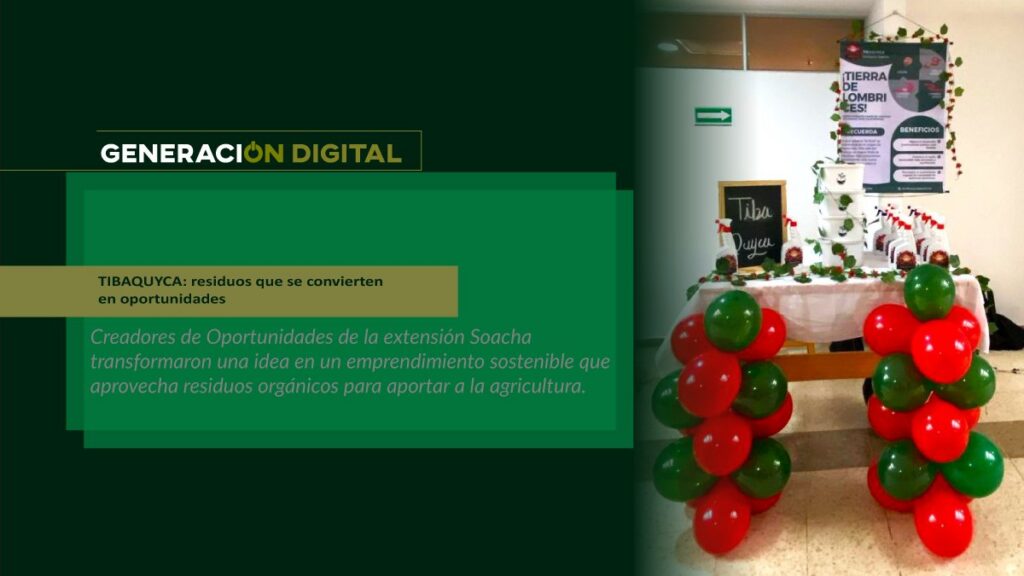
TIBAQUYCA: waste that becomes opportunities
Opportunity Creators from the Soacha extension transformed an idea into a sustainable enterprise that uses organic waste to contribute to agriculture.


I am your virtual assistant, here to help you quickly and easily.
▲ Back to Top
By: Alejandro García Suárez – Advisory Office of Communications
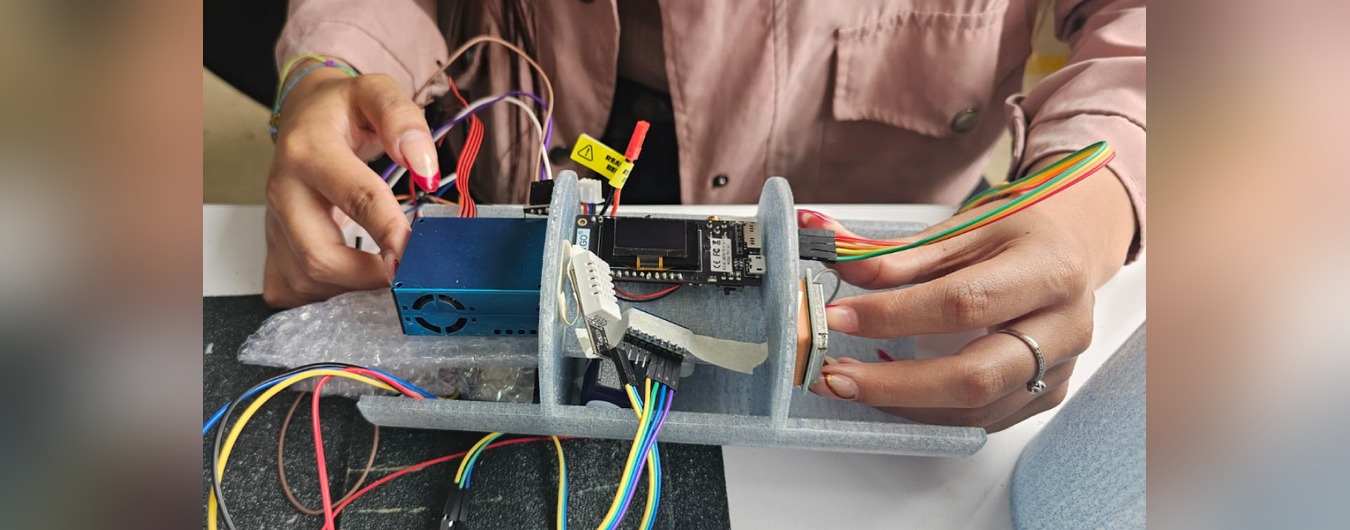
The Industrial Engineering program in Soacha celebrates an exceptional achievement with the “CanSat” project developed by two students. Angie Katherine Mahecha Prieto and Lesly Natalia Rojas Rico earned a meritorious thesis with this innovative research that revolutionizes agricultural monitoring using miniaturized satellite technology.
Jonathan Steven Vargas Cañón, Knowledge Manager and leader of the SOFTIC research incubator, explained that the CanSat system monitors atmospheric variables and air quality in real time. “In a context of climate change and the need for resource efficiency, it provides critical data on temperature, humidity, atmospheric pressure, solar radiation, and suspended particles,” he noted.
The methodology integrated specialized sensors with efficient communication via I2C and UART buses, developing software in the Arduino IDE to manage data acquisition, processing, and transmission every 2 seconds.
The process included calibration, sensor validation, and testing under controlled conditions to ensure reliability. The software architecture allows for synchronized data acquisition, handling of multiple communication protocols, and efficient transmission to remote stations.
Energy management was optimized through appropriate sampling frequencies and low-power components, ensuring operability during missions in harsh rural environments.
Angie Katherine Mahecha Prieto, who is graduating this second semester of 2025, described the project with emotion: “It’s a small can with a big purpose: to change the way we view agriculture. More than just academic work, it was a challenge that led me to grow and discover that satisfaction is found in every step of the way.” The new professional emphasized that “precision agriculture is the future, and this can, which measures temperature, humidity, and air quality, is my small contribution.”.
“The project was full of challenges that forced me to think creatively, work as a team, and learn how to fail and try again,” Angie expressed. Structural design, programming, and field testing became “a school of resilience.” For her, CanSat demonstrates that “innovation does not have to be expensive and that technology can democratize access to knowledge.”.
For her part, Lesly Natalia Rojas Rico, who is also graduating in this second academic period of 2025, described the experience as “a complete personal challenge that involved going beyond the ordinary.” The project required applying theoretical knowledge, learning programming, and integrating sensors to create a fully functional system. “The process was demanding but enriching, allowing us to develop technical skills in programming, electronics, design, and telecommunications,” she added.
Real impact in agriculture
Preliminary results show success in accurate data collection and reliable transmission. This platform allows farmers to adjust parameters such as irrigation and fertilization based on real information, contributing to the sustainable management of resources. The system represents an innovation in agricultural environmental monitoring technologies, promoting sustainable practices and the reduction of environmental impact.
The project contributes to STEM (Science, Technology, Engineering, and Mathematics) education and aligns with the current needs of Cundinamarca and similar regions. The female students see this work not as the end of a thesis, but as the “beginning of a new era for a more sustainable, smart, and equitable agriculture.”.
The materialization of ideas into tangible projects with a potential impact on precision agriculture and environmental care makes a difference in the comprehensive professional training offered by UCundinamarca.
News
News
News
News