News
2026-09-24
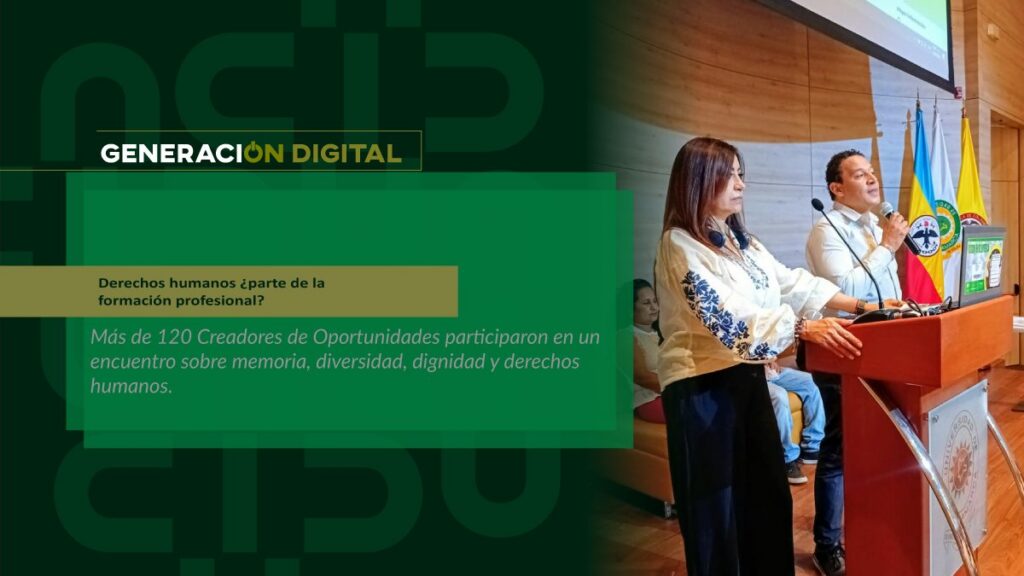
Human rights: part of professional training?
By: Alejandro García Suárez – Advisory Office of Communications



I am your virtual assistant, here to help you quickly and easily.
▲ Back to Top

Education is becoming increasingly inclusive, participatory, and equitable, as is the daily approach at UCundinamarca. To fulfill this mission, the Office of Institutional Equity and Diversity, led by Yehimy Caballero Rodríguez, formulates a series of actions and strategies that contribute to achieving Sustainable Development Goals (SDGs) 4, 5, and 10, which are related to inclusion.
“Tolerance and respect must prevail in building an inclusive society, one that also promotes values such as equality. However, the situations of disadvantage, discrimination, rejection, and exclusion that many communities have suffered demand that we go a step further. At this point, empathy must be strengthened to recognize the other, beyond their characteristics, labels, or conditions,” said Yehimy Caballero Rodríguez.
“Putting ourselves in someone else’s shoes,” reflecting and adopting a more conscious and receptive attitude is fundamental to understanding ourselves as a community, where our attitudes, words and behaviors reflect the value we place on people and the environment,” Caballero added.
At UCundinamarca, strategies are being implemented to promote gender equality (SDG 5), fostering women's participation and leadership in social, political, and economic spheres. An important step in this direction is identifying and reducing situations of violence and discrimination. "As a university, this process involves developing specific protocols and actions to address and reduce these issues within the institution.".
Likewise, regarding the goal of reducing inequality, the institution serves priority populations, including people with disabilities, which allows for reducing contextual barriers that guarantee access to different rights, including education.
“UCundinamarca has been implementing adjustments and updates to various processes and procedures to reduce barriers and facilitate the academic development of its students. Similarly, by characterizing its student population, the necessary support and technical assistance are defined,” Caballero stated.
This is how things are going in Colombia.
The country has tools to achieve gender equality and social inclusion. However, it is through education that a shift in beliefs and behaviors is made. “Colombia has a strength that should allow it to build a more just and equitable country: it has regulations and legislation that recognize the different populations, their characteristics and needs, establishing clear actions to address them.”.
However, Yehimy Caballero asserts that a reformulation of implementation strategies is needed to ensure the effective enjoyment of the community's rights and thus reduce inequality. Investment in technical, economic, and human resources is also essential.
The Office of Equity and Institutional Diversity is part of the campaign that University Social Interaction (ISU) and University Social Responsibility (RUS) are carrying out in order for the institution's community to embrace the SDGs.
News
News
News
News