News
2026-09-24
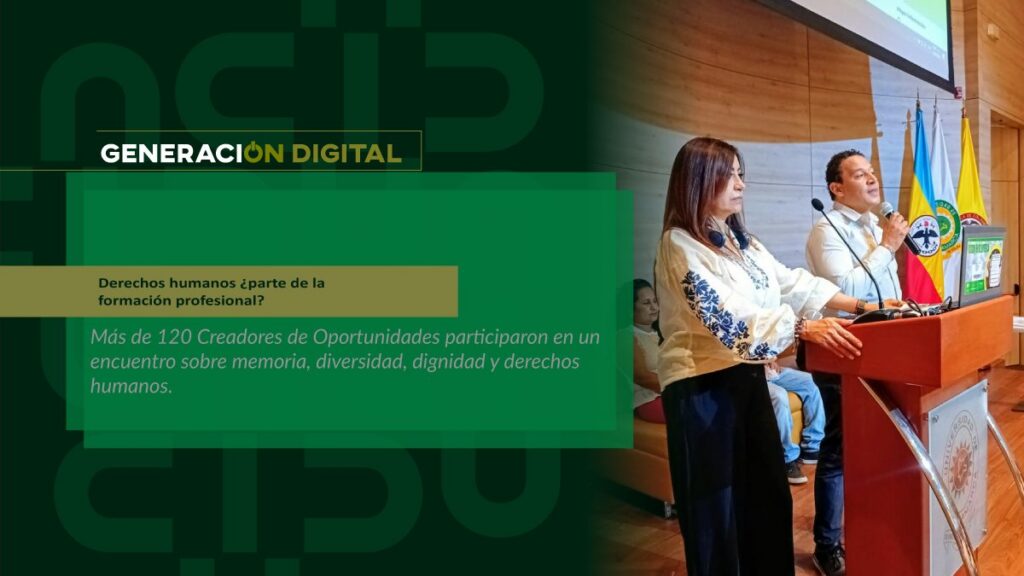
Human rights: part of professional training?
By: Alejandro García Suárez – Advisory Office of Communications


I am your virtual assistant, here to help you quickly and easily.
▲ Back to Top
The event will take place in the Emilio Sierra auditorium in Fusagasugá on April 25 at 8:30 am under the slogan "Open and Clear UCundinamarca Public Accountability Hearing".
This space aims to strengthen and consolidate participatory democracy through communication, dialogue and deliberation with the university community, after a year full of challenges in which the health emergency was faced from a virtual perspective, strengthening the Transmodern Digital Educational Model – MEDIT.
The action plan for 2021 included 1,435 tasks, of which 1,387 were completed, leaving only 48 pending. This demonstrates a cumulative achievement of 96,661 TP3T, a figure that highlights the excellent results in institutional management. The achievements by area are presented below.
Breaking down the first area, called the Multidimensional Field, it is worth highlighting that the Ministry of National Education approved the institutional quality standards for the seven campuses and extensions of UCundinamarca for seven years. This is important because it will allow the university to submit applications for accreditation in the different regional units. Progress was also made in implementing the 14 Cultural Learning Fields—an area that seeks to cultivate, strengthen, and create experiences, uses, symbols, customs, principles, and values in students. .
Regarding the Teacher Training School (EFAD), training centers were created for its graduates, and strategies for the integration of information and communication technologies were developed. At the Graduate Observatory, various events were organized to track graduates, such as the Entrepreneurship and Employability Pathway, which had 322 and 348 graduates respectively. Similarly, work was done on self-evaluation and accreditation of the programs and the institution.
Significant progress was made in the design of the Learning Support Centers (CADIS) – a resource used by faculty to support their classes – across faculties and programs. Regarding policy implementation, continuous monitoring was conducted on graduate programs, student well-being, and inclusion, among others. As part of the family engagement strategy, several activities were organized in which families actively participated.
On the second front, the Transcendent Mission in the Institutional Learning Field (CAI) stands out for its implementation across the various programs and faculties. A total of 3,000 students participated. It is also worth noting that the doctoral program in education received accreditation for seven years. Similarly, the student statutes were approved, and regarding the Science, Technology, and Innovation (STI) policy, significant progress was made, resulting in 87 new knowledge products and 131 human resource development products. Likewise, important progress was achieved in University Social Interaction, in the offering of undergraduate and graduate programs, and in the curricular redesign of these programs.
In the third area, Translocal Transmodern Culture, the Dialogic Encounters stand out, where management results were presented in terms of research, research groups, and improvement strategies. In institutional communications, the strategic plan was monitored, the Transmedia School was created, and institutional YouTube channels for graduates and faculty were launched. Campaigns were carried out focusing on values and human dignity, such as the prevention of gender-based violence. The Medit Week is highlighted, during which the academic and administrative staff collaborated to showcase this educational model.
The fourth focus area, "Well-being as a Foundation for Life and Freedom," addressed aspects such as inclusion and diversity, resulting in events that promote respect for these individuals. The "Bu orienta" strategy was implemented, allowing students and administrative staff to access mental health guidance with a single click.
In terms of socioeconomic support, scholarships were increased and SIM cards were distributed to students to facilitate their education, among other initiatives. A key achievement was the zero-tuition policy implemented during both academic periods, benefiting 10,261 students in the first period and 13,100 in the second. Additionally, progress was made in promoting healthy lifestyles, improving well-being, fostering a translocal culture, and strengthening a sense of belonging.
In the fifth area, called Cross-Border Dialogue, 1,200 people participated in digital mobility programs, and 51 mirror classrooms were established with various international universities, resulting in 110 students receiving certification. Regarding the internationalization of teaching, it is noteworthy that 51 faculty members led learning programs abroad, and 50 international faculty members did the same at UCundinamarca. Similarly, multilingualism was promoted with the creation of the Language Center. In terms of policy implementation, the "Dialoguing with the World" policy and the rationale for creating the corresponding office were presented.
Finally, the overall consolidated results of the 2020-2023 Development Plan show that in 2020 there was an advance of 22.6% and in 2021, of 48.7%, an aspect that denotes that last year, despite the pandemic, significant progress was made in meeting goals.
News
News
News
News