News
2026-09-24
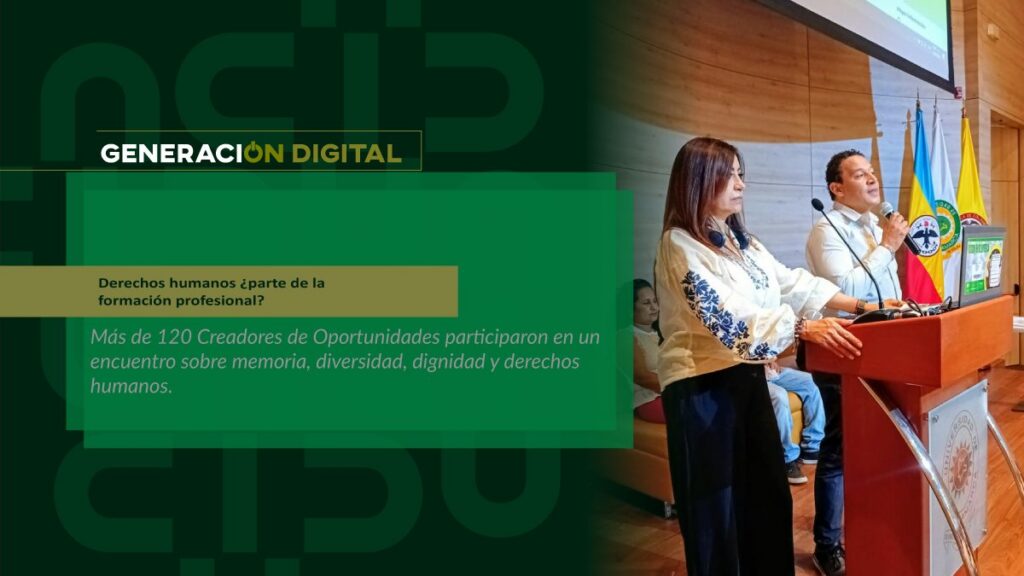
Human rights: part of professional training?
By: Alejandro García Suárez – Advisory Office of Communications



I am your virtual assistant, here to help you quickly and easily.
▲ Back to Top
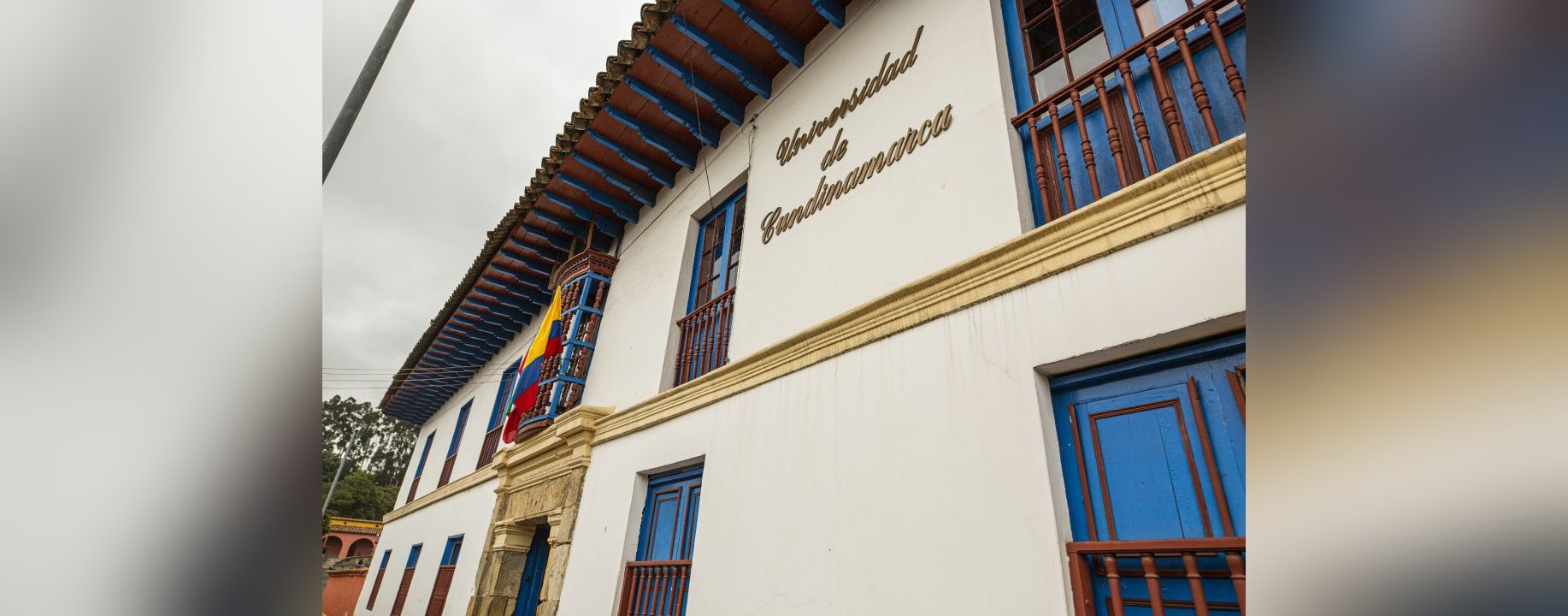
The program was created by the Higher Council agreement No. 0027 of December 29, 1999 to operate at the Fusagasugá headquarters with extension and by agreement with the municipal mayor's office of the city of Zipaquirá, and after its registration with the ICFES in the National Higher Education Information Service [SNIES] on September 15, 2000 with the code 121442529003100, it began operations on February 25, 2002.
In 2016, the Municipal Administration awarded UCundinamarca a 4,051 square meter plot of land. The new campus will include auditoriums, rehearsal rooms, a recording studio, and other academic spaces. The program's management is also working on projects to acquire specialized instruments and equipment for over 1,300 million pesos, as well as equipping the digital laboratory for 1,170 million pesos.
Likewise, contract No. FCTC 108 of 2018, valued at $542,711,400, is currently being executed, the purpose of which is to carry out the designs for the new headquarters.
The Music program currently has a staff of 78 teachers, responsible for guiding the thematic cores of its curriculum, where academic music coexists under three different currents: Central European character classical music, jazz, popular music; and traditional Colombian music.
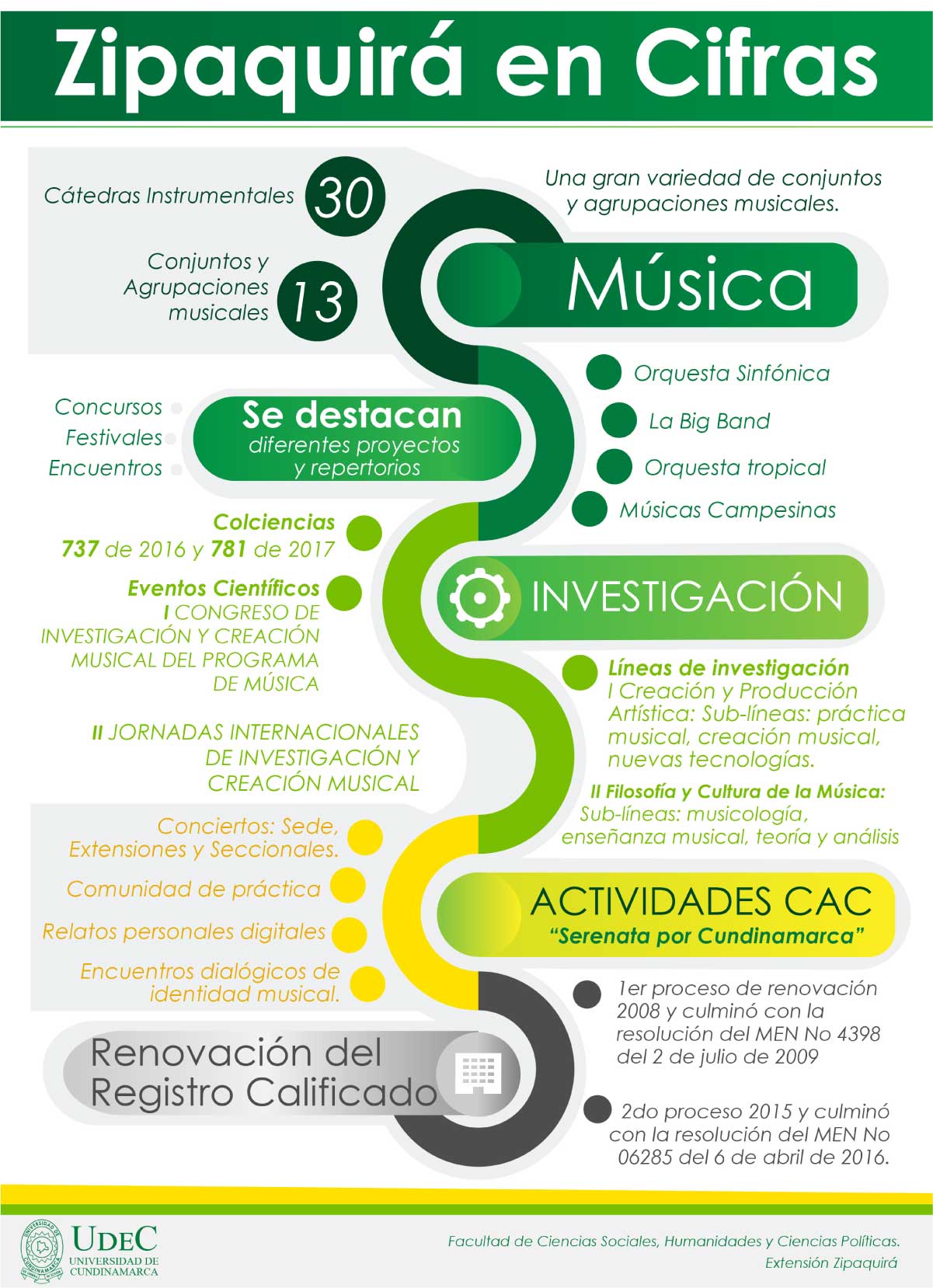
It has 30 instrumental departments and a wide variety of musical ensembles and groups, including the Symphony Orchestra, the Big Band, the Tropical Orchestra, and the Peasant Music group, among others; which semester after semester put together different projects and repertoires with which they have excelled in various competitions, festivals, and events they participate in through academic outings that are part of their training and learning process.
The Music program has the UDECARTE research group, recognized and categorized by Colciencias with the letter C, and two recognized and categorized Junior researchers; it also has 6 ongoing projects, is made up of 6 principal researchers, 6 co-researchers; and 20 students linked to the SEINMUS research group.
News
News
News
News