News
2026-09-24
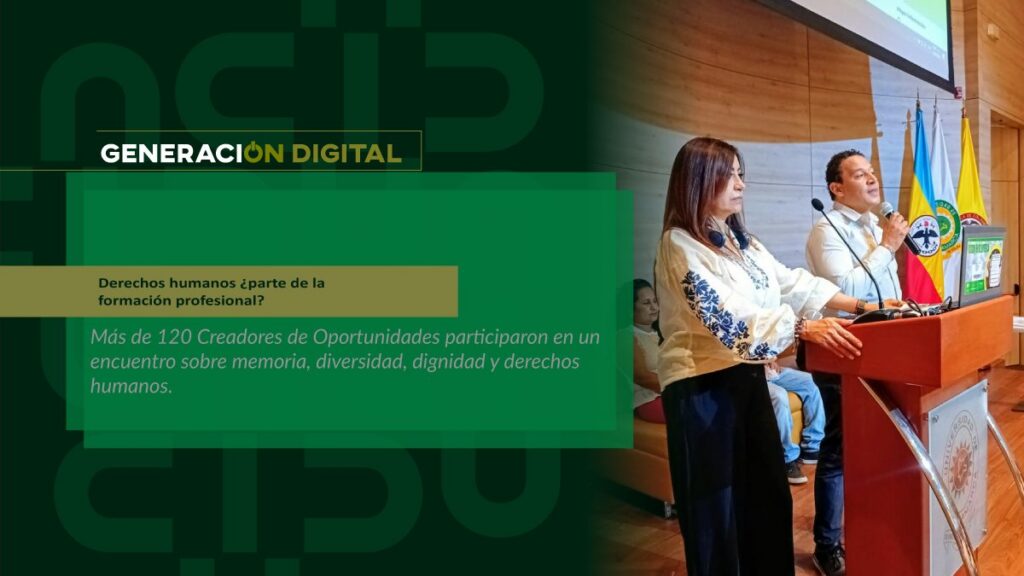
Human rights: part of professional training?
By: Alejandro García Suárez – Advisory Office of Communications



I am your virtual assistant, here to help you quickly and easily.
▲ Back to Top
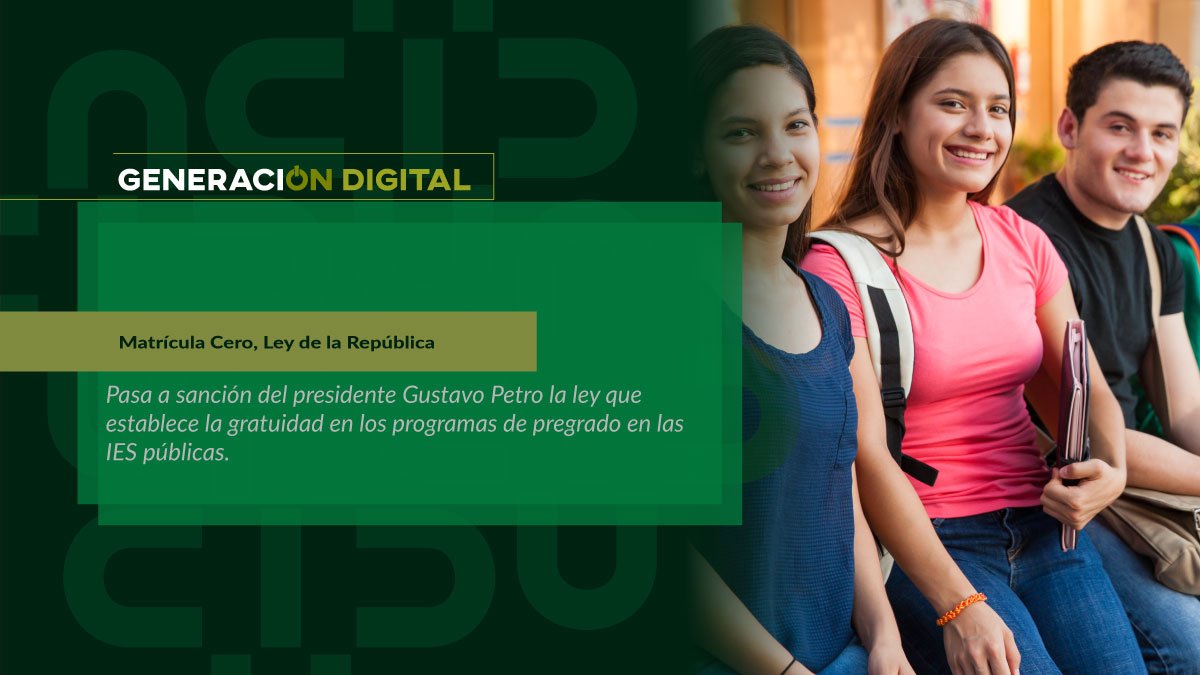
With the full support of the Senate Plenary, the law establishing free tuition in undergraduate programs at public higher education institutions is now sent to President Petro for his signature.
The rule states that the “Higher education institutions include technical, technological, or university institutions,”, This could lead to doubts in its interpretation, as it is unclear whether or not it includes universities, since Law 30 of 1992 specifically and distinctly refers to: a) Professional Technical Institutions; b) University Institutions or Technological Schools; and c) Universities. Later, with Law 115 of 1994, Technological Institutions were incorporated.
Although the Duque administration had already discussed the issue, it was implemented partially through decrees, but now it is a Law of the Republic, developed by a broad cross-party bloc, in which several congressmen supported it from their respective platforms, such as Senators Alexander Flórez (who put it in the final debate), María José Pizarro, Antonio Sanguino and Jaime Raúl Salamanca Torres, among others.
Bill 260 of 2022 had been approved in its first debate in the House of Representatives in June 2022 –Read the news of the approval in the first debate– and in the plenary session of the House last November –Read the news of the approval in the second debate., and in the Senate it obtained its first debate approved in April 2023 and now obtains its final approval in the Senate, before President Petro signs it, in the Senate.
Although the text does not mention "zero tuition," this is the generic name given to the state's free tuition policy. The law approved universal access to public higher education for young people from socioeconomic levels 1 to 3, including criteria related to food, transportation, and housing, and set a maximum limit of 15 semesters for undergraduate programs.
Text approved by the Senate Plenary
Article 1. Purpose. This law establishes the guidelines to regulate free tuition in undergraduate programs at public higher education institutions in the country, in order to eliminate barriers to access and guarantee educational retention.
Article 2. Free tuition. From the date this law comes into effect, the national government will guarantee the necessary funding to ensure free tuition for undergraduate programs at Public Higher Education Institutions.
Paragraph 1. For the purposes of this law, higher education institutions shall be understood to include technical, technological or university institutions as defined in Chapter IV of Title I of Law 30 of 1992.
Paragraph 2. The concept of total free tuition will include financing of the entire tuition fee, maintenance subsidy, including minimum criteria for food, transportation, and university residence.
Paragraph 3. The public policy of free tuition will be harmonized with the different educational public policies of the National Government.
Article 3. Progressivity and budgetary availability. The public policy of free tuition will be implemented progressively and in accordance with budgetary availability, the Medium-Term Fiscal Framework and the Medium-Term Expenditure Framework of the National Government.
Likewise, the National Government, through the Ministry of National Education, will progressively develop, according to annual budget availability, programs that will consolidate total free education for all Colombian students without exclusion, especially those belonging to population groups living in extreme poverty, victims of the armed conflict, those belonging to ethnic communities: indigenous, Romani, Raizal, Afro-descendant and Palenquera, as well as those belonging to the population with disabilities, single mothers, and young graduates from public schools located in rural areas of the country, and those classified in categories A, B and C of the Sisbén IV or the instrument that replaces it defined by the National Planning Department.
With regard to the population victimized by the armed conflict, priority will be given to those victims who are registered in the Victims Unit's registry of victims.
Article 4. Financing. The financing resources for this law will be provided by the General Budget of the Nation.
Paragraph 1. In no case may the provisions herein affect the annual budgets, nor the transfers that by law are made to the IES and their financing will come exclusively from additional resources provided by the national Government to comply with this law.
Paragraph 2. Municipalities, districts and governorships are authorized to transfer resources or co-finance the public policy of free tuition, as determined by each territorial entity.
Article 5. Requirements. The National Government, through the Ministry of Education, will be responsible for establishing the academic requirements for the continued enrollment of students receiving tuition-free education. It will also establish the measures to be imposed on students who leave their educational process incomplete and who have previously received tuition-free education.
Paragraph. No student may continue to be a beneficiary of this policy for more than 15 semesters of their undergraduate degree.
Article 6. Annual Report to the Congress of the Republic. The Ministry of National Education shall present to the Sixth Committees of the House of Representatives and the Senate of the Republic an annual report detailing the progress of the actions undertaken and the progress of tuition-free undergraduate programs, as well as the methodology used to identify the prioritization criteria and the beneficiary population.
Article 7. Regulations. The National Government will regulate this law within a period not exceeding six months from its issuance.
Article 8. Validity and repeals. This Law shall enter into force on the date of its promulgation and repeals all provisions that are contrary to it.
Criticism of the legislative decision
For Esteban Piedrahita, rector of ICESI in Cali, this is a “This is a regrettable initiative that diverts resources from the system (which would allow for increased enrollment) to benefit students from socioeconomic levels 4 to 6, who already receive subsidies upon entering state universities. Besides being inequitable, it is also exclusionary, as it will displace students from impoverished households.”.
News
News
News
News