News
2026-09-24
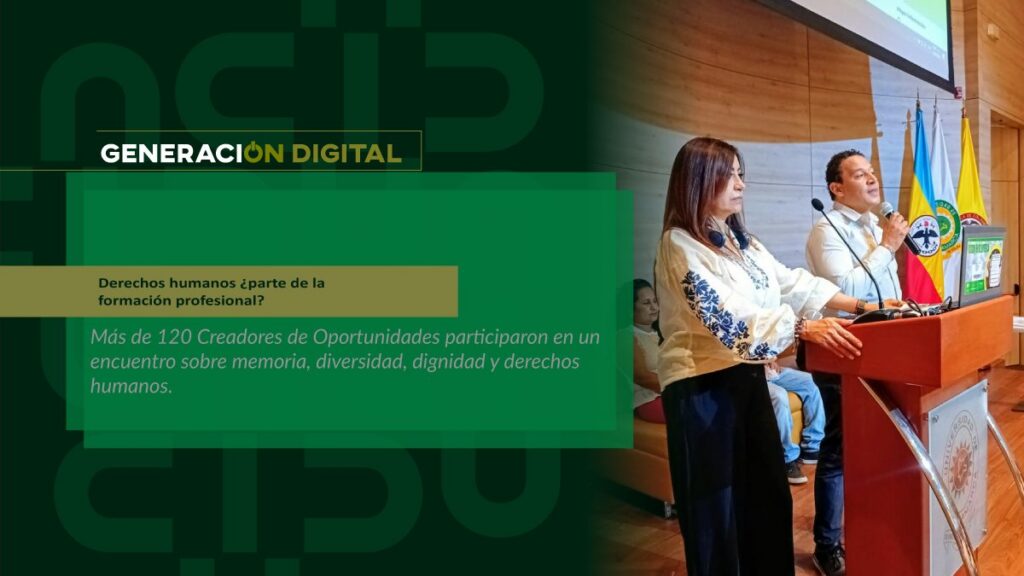
Human rights: part of professional training?
By: Alejandro García Suárez – Advisory Office of Communications



I am your virtual assistant, here to help you quickly and easily.
▲ Back to Top
Convinced of the importance of maintaining the peasant tradition in our department and our country, Luis Alfonso Aya Velandia, a professor in the Psychology program at UCundinamarca, decided to join a project involving peasant groups and some universities in three rural villages in the Ciudad Bolívar district of Bogotá.
“We work with the rural community of the Mochuelo, Quiba and Pasquilla villages, who are affected from the social, political and environmental spheres,” explained the teacher who learned of the initiative of Egnan Álvarez, a rural teacher who extols the peasant culture, 4 years ago.
According to Aya Velandia, these rural communities are very close to the city and are gradually losing their traditions with the new generations, which is why activities are carried out to promote rural culture and the knowledge of the grandparents is taken, systematized and transmitted to the children of the three schools in the area, in classes.
Although the educational model for a child in a rural area is the same as that of a child in the city, the group of teachers who are part of the project include in their lessons the knowledge of the countryside, planting and harvesting, and secrets that only the peasant grandparents have in their memory and have passed from generation to generation.
In addition to encouraging young people to learn about these traditions, the project has empowered the community to feel proud of being farmers; they have held festivals and competitions and are working to become entrepreneurs of rural memory.
“The idea is to keep rural traditions alive and to encourage fewer people to leave the countryside and migrate to the cities, to convince them once again that working the land is important for the planet and that they should not stop fighting for what they need,” said the professor from UCundinamarca.
Why migrate to cities?
According to Luis Alfonso Aya Velandia, for years the farmers of the Cundi-Boyacá region have been discriminated against and treated as ignorant, a serious mistake that has triggered social problems.
Furthermore, since peasants are not politically recognized in the same way as Black or Indigenous people, few fight for their rights, and only through occasional mobilizations.
They realized this, and that, for example, they are not yet counted in the census, which is why there is no exact data on how many farmers there are in Colombia.
“When we talk about farmers, we are referring to those who have traditionally worked the land and engaged in its various activities. Those whose parents, grandparents, and relatives made a living by caring for the land,” said Aya Velandia.
The migration to cities has been driven by a loss of identity, and in many cases, violence has been a determining factor. However, many farmers choose to leave the countryside in search of "better opportunities," and this shift in their roles creates a series of social problems.
In addition to the social and political problems, there is a particular issue affecting the communities of these three villages, the teacher explains: “The landfill has caused health problems for the inhabitants of the area; there is a lot of pollution and damage to the land, therefore affecting the crops. The land is no longer suitable for farming, and this has also caused many to give up and look for other ways to earn a living.”.
The community in this area has had to migrate to the city, opting to work in the landfill or in the brickyard located in the sector; however, the fact that they have to abandon the countryside affects the economy of these families and their living conditions change drastically.
“That is when our work to motivate them and empower them in their status as farmers is important; they must feel supported and recognize that farming work is important and that they must continue working on it,” said the professor from UCundinamarca.
The MEDIT
The professor from UCundinamarca assures that the more people who know about and support these types of projects, the more the Colombian countryside can be reborn. “This project is very beautiful because we are at the service of the people, of their real needs as mentioned by MEDIT,” said Luis Alfonso.
Currently, the teacher is involved in the work on the diploma program in Peasant Identity and Rurality that UCundinamarca will soon offer. Meanwhile, he continues to contribute to the rural community, working to systematize teaching practices with the rural population, while other teams of teachers are working to systematize the teachings of the peasant elders.
News
News
News
News