News
2026-09-24
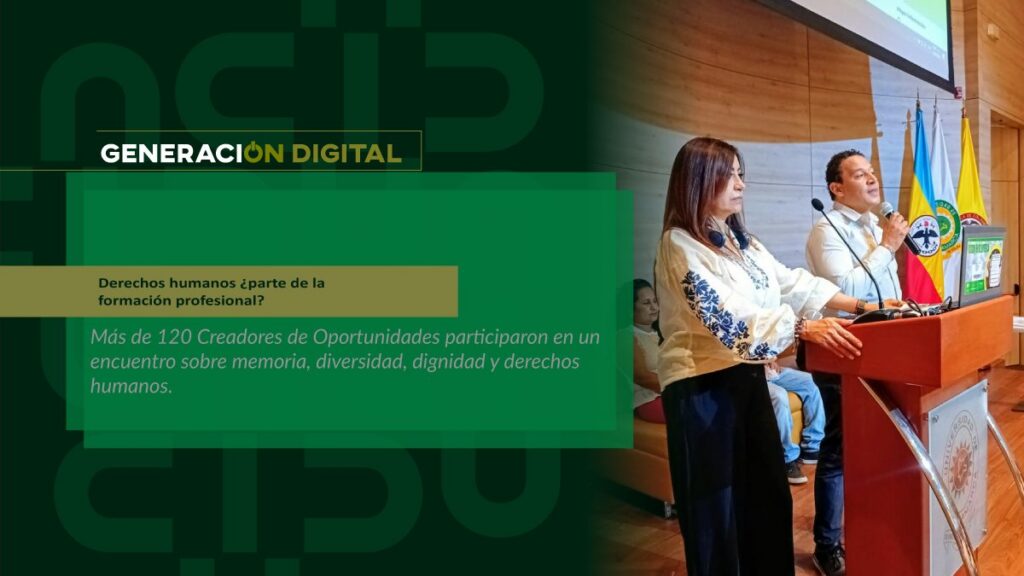
Human rights: part of professional training?
By: Alejandro García Suárez – Advisory Office of Communications



I am your virtual assistant, here to help you quickly and easily.
▲ Back to Top
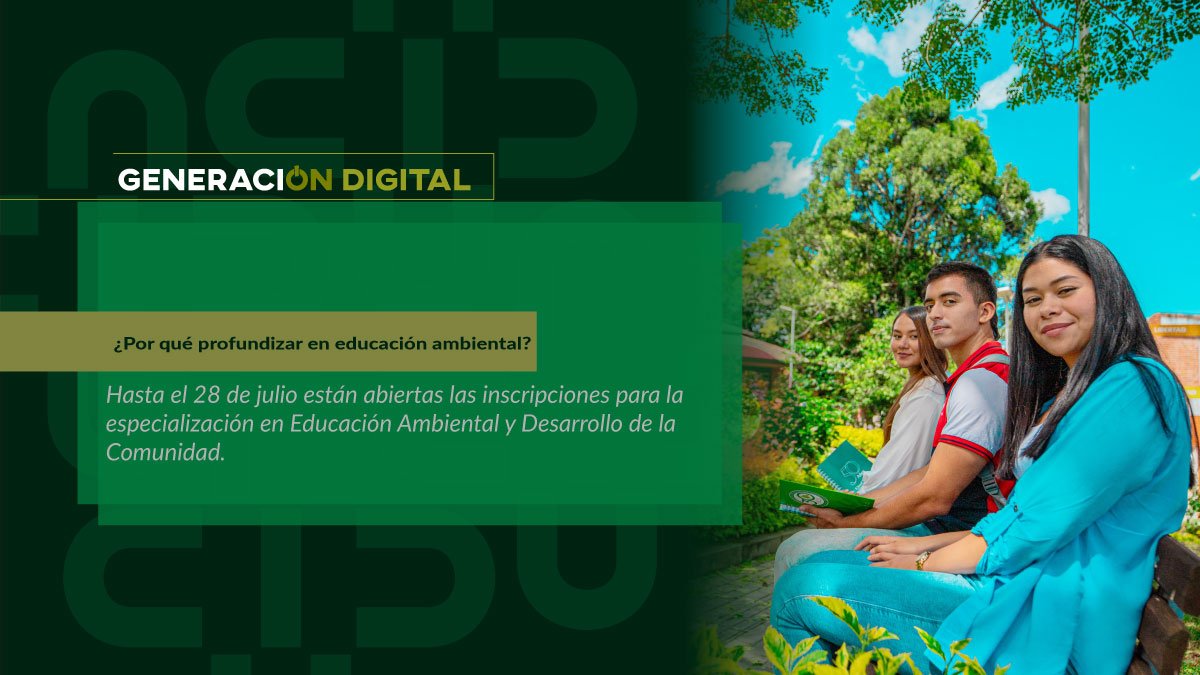
Currently, it is not necessary to be part of an NGO to defend environmental causes, but rather to be aware that if we do not live in balance with nature and other living beings, what kind of planet are we going to leave for future generations?
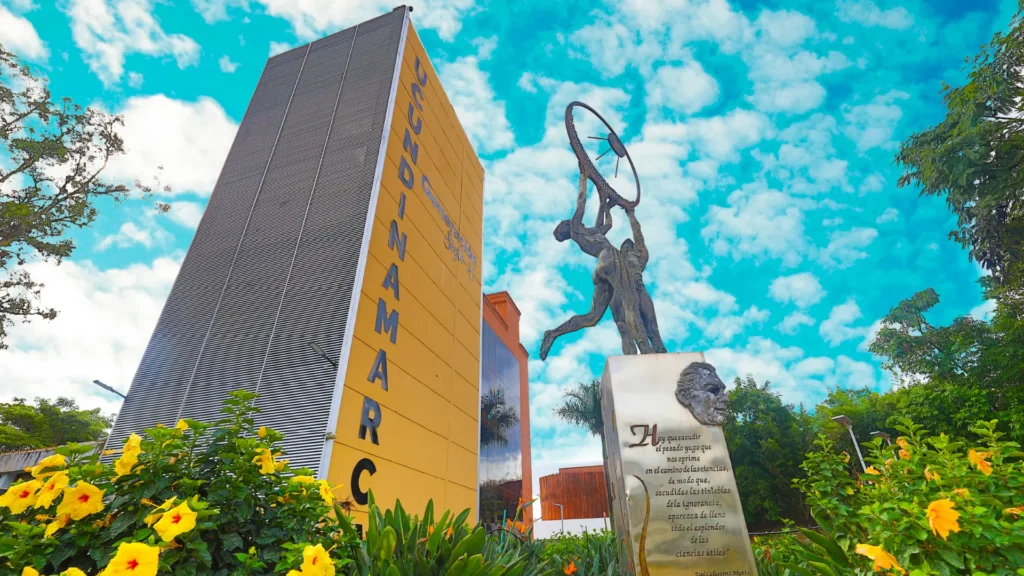
The University of Cundinamarca, as an agent of transmodernity committed to the defense of life and nature, promotes postgraduate training in environmental education for professionals who, beyond expanding their knowledge, wish to become transformative subjects of communities from this area of knowledge.
UCundinamarca News spoke with Fabio Andrés Pardo, coordinator of the specialization in Environmental Education and Community Development, about the scope of this educational proposal that seeks to empower the community about the importance of the environment and to assert their rights before the State.
UCundinamarca News: How did this specialization come about?
Fabio Andrés Pardo: It was born some time ago out of the need to connect two areas of knowledge: agricultural sciences and education. Based on that reality, this educational proposal was structured.
UCundinamarca News: How long does this specialization last and what does it consist of?
The program lasts one year, divided into three trimesters, and the cost is ten times the current monthly minimum wage. Four times the minimum wage is paid in the first trimester, and three times the minimum wage in the second and third trimesters. We offer two types of discounts: 20% for graduates and an additional 10% for anyone who presents their voter registration card. University employees can access a 30% discount. Financial aid is available for the second trimester, allowing for payment in installments. Registration is open until this Friday, July 28th, and classes begin in October.
UCundinamarca News: Upon completion of this specialization, what professional skills will the student have acquired?
Fabio Andrés Pardo: This postgraduate program aims to develop individuals focused on being, democratic values, civic responsibility, and freedom, as outlined in the Transmodern Digital Educational Model. Therefore, our goal is for participants to be trained to lead community organizing processes with the objective of defending life, territory, and culture.
This also allows them to participate in community engagement and take ownership of their local area, for example, in land-use planning, the protection of natural areas, and the defense of life and water bodies, among other things. To achieve this, they must develop skills such as argumentation in order to interact effectively with government agencies.
UCundinamarca News: Who is this specialization aimed at?
Fabio Andrés Pardo: This program is aimed at any professional. Since we work from the collective construction of knowledge, it's important for us to have a diverse student body. In fact, in past cohorts, we've had professionals from administrative sciences, accounting, engineering, advertising, and the healthcare sector, among others.
UCundinamarca News: Is a thesis required in this specialization?
Fabio Andrés Pardo: That's one option, but there's also publishing an article in an indexed journal and taking an advanced or refresher course. That's why we encourage students who choose the first option to start doing that from the beginning.
UCundinamarca News: What is the learning path like?
Fabio Andrés Pardo: We have it organized into three trimesters, with research as the central focus; that's why we begin with that theme. In the second trimester, we explore tools such as pedagogy for coexistence. In the third, we cover community organizing processes and networks, as well as the national environmental system and environmental education policy. Finally, I want to emphasize something we have that doesn't exist in other similar specializations: social polygraphy, a methodology implemented by Fundaminga that fosters dialogue among different forms of knowledge.
UCundinamarca News: Why is it important for a professional to delve into these types of topics?
Fabio Andrés Pardo: Because the National Development Plan, Colombia: A World Power for Life, has a multi-year investment plan where this administration will focus on community development processes, which is a point we are addressing. The other thing is that climate change is no longer just talk, but a reality. So we need to control and mitigate it, and what better way to do that than through community participation?.
If you would like more information, please click on this link or write to the email address provided. [email protected] .
News
News
News
News