News
2026-09-24
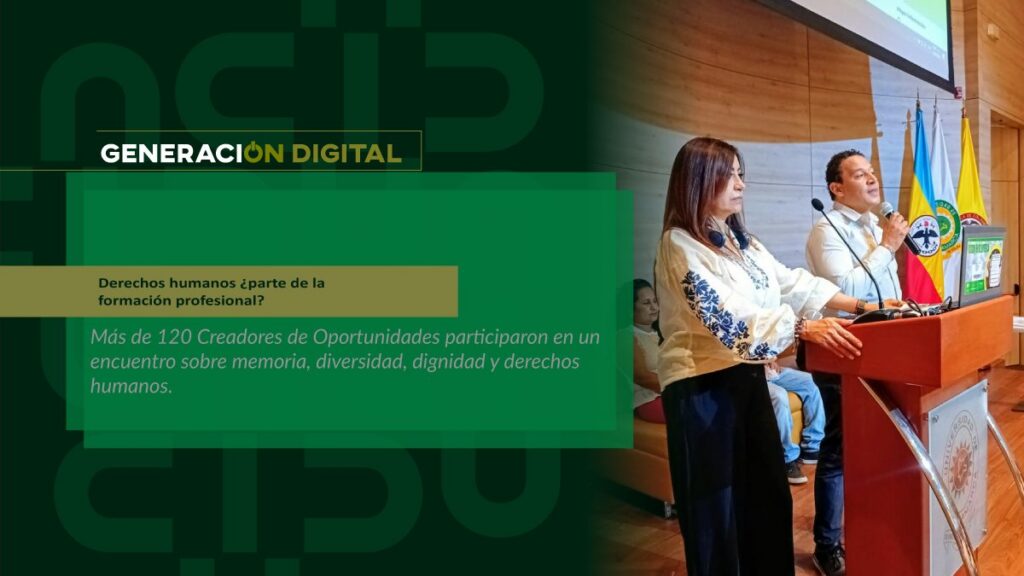
Human rights: part of professional training?
By: Alejandro García Suárez – Advisory Office of Communications



I am your virtual assistant, here to help you quickly and easily.
▲ Back to Top

During the discussion on Prevention of Sexual and Gender Violence organized by the University Welfare office of the Facatativá extension of the University of Cundinamarca, details were revealed about the institution's plans to prevent cases of gender violence.
The University Welfare Office announced that UDEC is creating a comprehensive protocol so that students know what to do when they suspect a case of violence, or when there has been an attack against a person, whether physical, psychological, and/or sexual.
To share details about this Colombian social situation, the University of Cundinamarca turned to three experts to learn more about gender violence.
What is gender violence?
“It is a series of actions, measures, forms, discourses, that have historically been built against women, generating a form of systematic oppression, based on gender because they are forms of violence that are exercised in social roles that are assigned at birth,” said Carmenza Pineda, a feminist activist, at the virtual event.
Edgardo Soto Tenorio, advisor and consultant on the issue of family violence and sexual violence in children, was present from Peru and indicated that "violence is the intentional use of physical force against women and that it will be exercised on them by those who have maintained a relationship, especially by men.".
Likewise, he explained that aggression can lead to violent acts with full use of reason, especially on the part of the man, who in the end could generate consequences in the woman such as trauma and psychological damage that alter her areas of functioning.
Forms of violence
There are different forms of violence against women, especially in recent years, where problems are being linked to economic and property issues.
“There are several types of violence, the main one being physical, which doesn't just mean a blow, for example; it relates to confining a person, not giving them food or drinks, actions that affect their physical stability,” said Mónica Natalia Otálora, a lawyer specializing in administrative law.
And she added: Psychological violence is the first to manifest itself; it is strong and marked, difficult to identify, subtle, and grows stronger day by day without the victim even realizing it.
comments, teasing in front of other people, excessive jealousy, controlling where she goes, who she is with, looking at her cell phone.
Revictimization
Mónica Natalia Otálora stated that there are cases where authorities or public officials, due to a lack of training in gender issues, doubt the victim, and that is when cases of revictimization occur.
Given this situation, the University of Cundinamarca encourages you to report any type of violence, keeping in mind that the first step is to notify the appropriate authorities. Furthermore, the university's protocol on how to proceed in these cases will be released soon.
News
News
News
News