News
2026-09-24
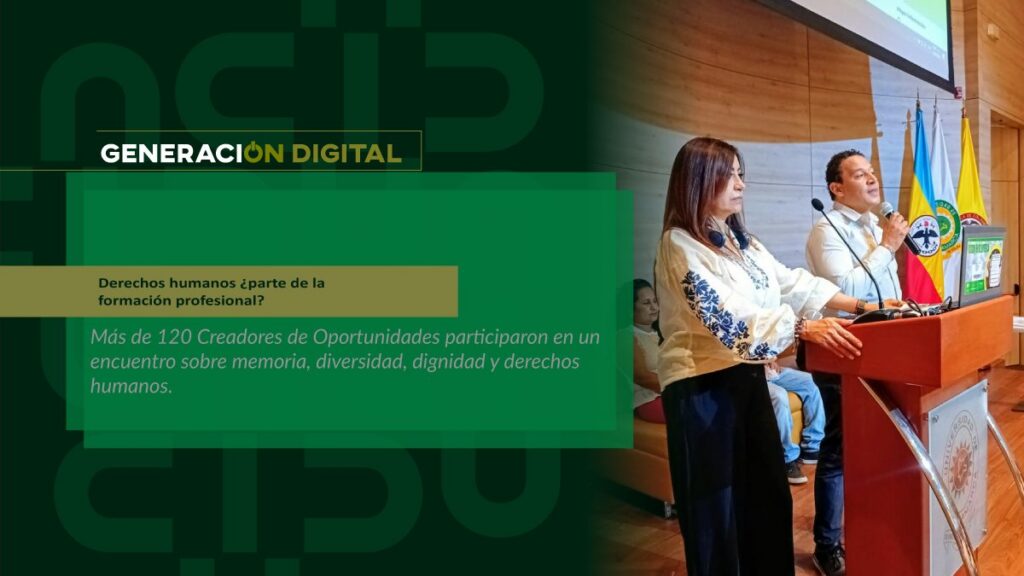
Human rights: part of professional training?
By: Alejandro García Suárez – Advisory Office of Communications


I am your virtual assistant, here to help you quickly and easily.
▲ Back to Top

The University of Cundinamarca announces the continuation of the development of strategies that strengthen institutional inclusion, and to this end presents the campaign United in Diversity, This will include the dissemination of advertising graphics, videos and infographics on the University's official social networks and, in turn, the publication of content and radio programs that will inform the university community about the importance of this topic in higher education.
In February we will be talking about native languages, as the Ministry of Culture has determined that the entire country will commemorate the International Mother Language Day and National Native Languages Day, next February 21st.
What do we know about Colombian native languages?
In Colombia, 69 native languages are spoken, not including Spanish: 65 indigenous languages; 2 creole languages (Palenquero from San Basilio and Creole from the islands of San Andrés and Providencia); Romani, spoken by the Romani people (Gypsies); and Colombian Sign Language, used by the deaf community. Together, these languages constitute an invaluable intangible heritage of the country. They bear witness to the immense cultural wealth and diversity existing within its borders.
However, the outlook is not promising for Indigenous peoples and their languages. Since the conquest, dozens of native languages once spoken throughout the country have disappeared, and this trend continues. Armed conflict and the invasion of territories that belonged to ancestral communities have caused their uncontrolled dispersal. The powerful phenomenon of acculturation has the effect of increasingly blurring the line between ancestral cultures and Western culture, causing these precious native languages to fall further into disuse, eventually becoming extinct.
Hence the importance of the State continuing to implement public policies that promote the visibility of Indigenous communities and the recognition and dissemination of native languages, thereby fostering linguistic diversity and ethno-education. Colombian society in general must become increasingly aware that ancestral linguistic and cultural traditions are thankfully still alive, invaluable, and must be preserved.
It's heartening to see that the ethnic communities, for their part, are fighting back, trying to use all the regulations enacted on the subject to their advantage and fiercely defending their customs, spirituality, traditions, worldview, and of course, their language. It's also pleasantly surprising to learn that some of these communities are located in Cundinamarca, such as the Muisca in the municipalities of Cota, Chía, and Sesquilé.
Trying to do its part in the arduous task of making the country's ethnic communities and their languages recognized and visible, the Unidos campaign took place during the month of February. in Diversity will be focused on the theme Native Languages. We encourage the entire academic community to follow our publications.
News
News
News
News