News
2026-09-24
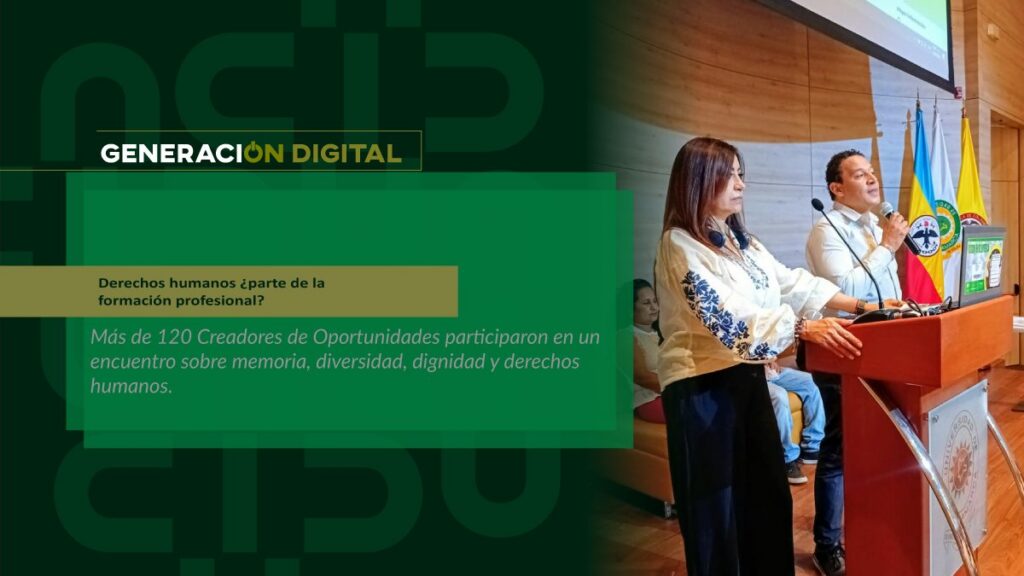
Human rights: part of professional training?
By: Alejandro García Suárez – Advisory Office of Communications


I am your virtual assistant, here to help you quickly and easily.
▲ Back to Top
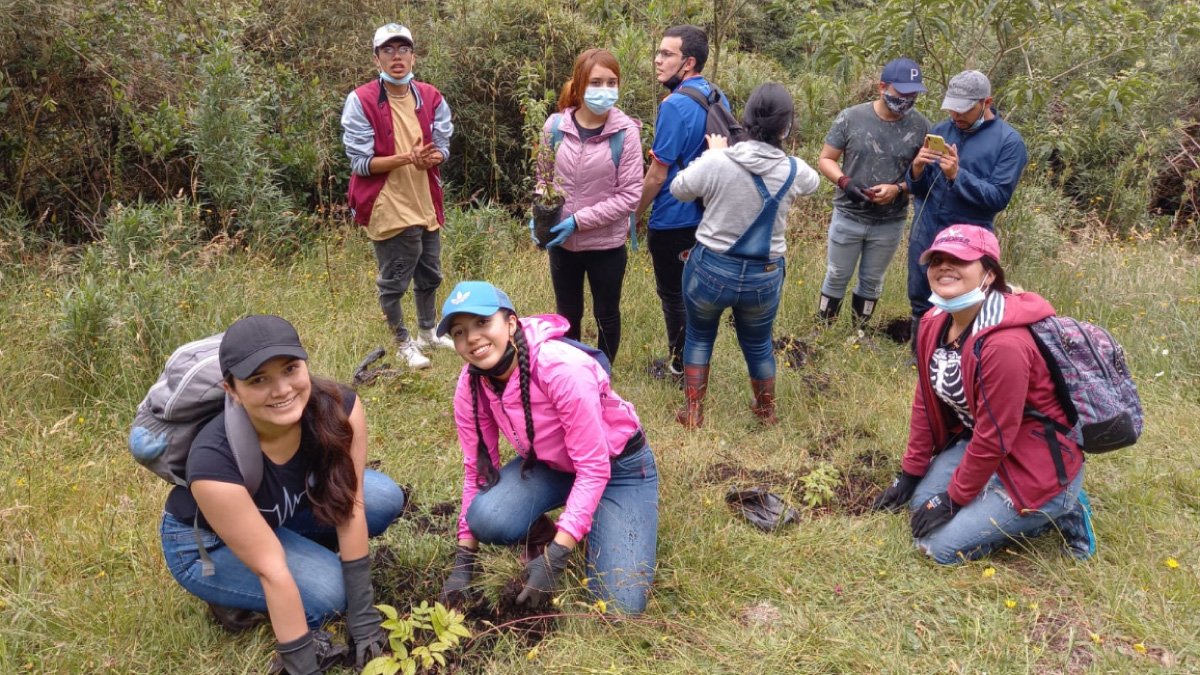
During the activity, a group of students, members of the army from the Communications School, representatives from the Aguas de Facatativá water company, and teachers from the Facatativá extension planted 425 native species at the El Vergel Agro-environmental Unit. “We planted lupins, oaks, walnuts, chicalá, trumpet trees, bear's paw, and borrachero,” explained teacher Fredy Augusto Duque Duque.
To date, approximately 4,000 trees have been planted on this land. “Before the university acquired it, these soils were degraded by livestock farming, so their recovery has been slow. However, we are on the right track, since the institution allocated a significant area for reforestation in 2019. That's why we are leading this entire process.”.
And so it is, since this space, which is part of the Multidimensional Learning Field through its nature conservation dimension, made this experience truly meaningful for the students. “In this project, they learned the technique for planting trees and how to lead a planting effort with a team of 20 or 200 people,” she notes.
Another key aspect was raising awareness. “The students really understood that planting a tree helps conserve water because trees improve soil quality, which in turn increases groundwater recharge zones. In the case of Facatativá, specifically, the Mancilla stream is located in the area where the agro-environmental unit is situated. This stream is vital because it supplies water to the municipal aqueduct, as the town is not connected to Bogotá's water network like Madrid is. That's why this work is so crucial.”.
These field trips, coordinated with the Extension's Environmental Management System, also bring other benefits. "This helps with biodiversity conservation. We've seen abundant wildlife in this Andean forest, such as rodents and rabbits, among others. We've also observed birds and insects that aid in seed dispersal.".
For Angie Paola Ochoa, an eighth-semester student, this experience taught her valuable lessons. “I had never planted a tree before. In this process, I learned that when planting trees, you should never plant the same species twice, but rather alternate them to promote better biodiversity. I was also taught how to dig holes of specific dimensions, and that the trees need to be fertilized regularly to grow quickly. Something that really stuck with me is that planting trees helps stabilize watersheds, which attracts a lot of wildlife to the area.”.
In this way, UCundinamarca seeks to develop its students cultivate, strengthen and create experiences, uses, customs, principles and values that distinguish them spiritually and materially as transhuman people who contribute to a better planet.
News
News
News
News