News
2026-09-24
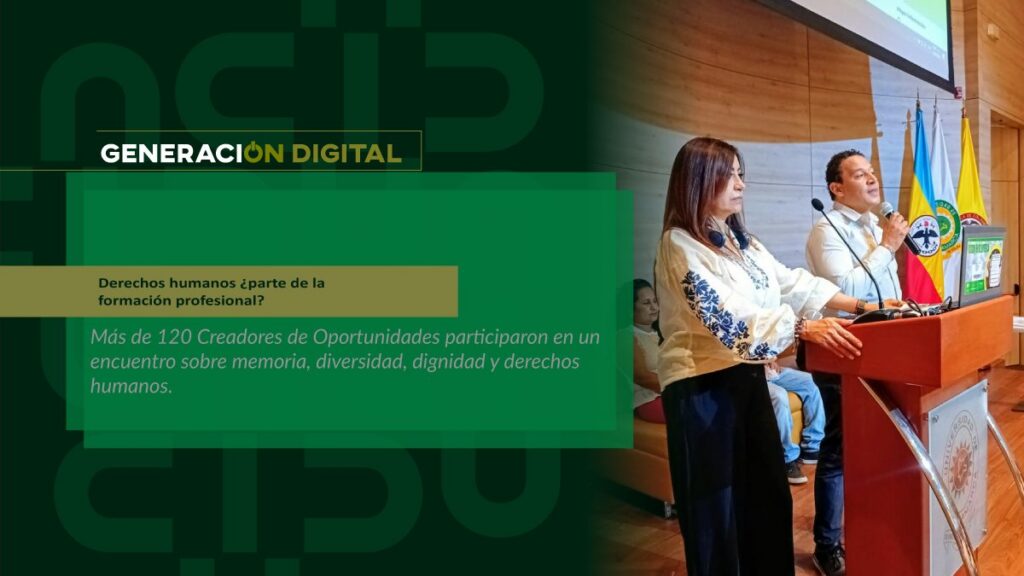
Human rights: part of professional training?
By: Alejandro García Suárez – Advisory Office of Communications


I am your virtual assistant, here to help you quickly and easily.
▲ Back to Top
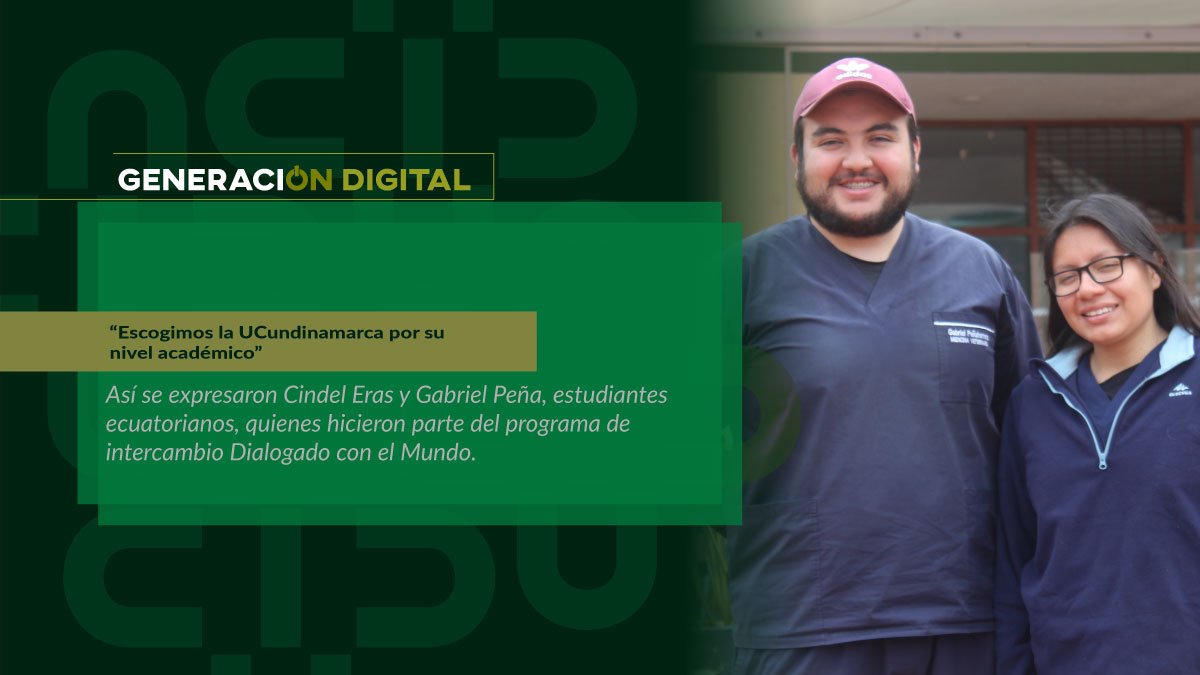
These two young Veterinary students at the National University of Loja in Ecuador, which has 13,841 students distributed across 37 academic programs, chose the University of Cundinamarca for an exchange program that brought not only knowledge but also life experiences relevant to their personal and professional growth.
Thanks to this initiative that seeks to have UCundinamarca engage in dialogue with other cultures, to strengthen training and learning processes and transcend the boundaries of knowledge, these two students were in Fusagasugá and Ubaté learning about the Zootechnics program and Colombian culture.
UCundinamarca News interviewed them a few days after their departure. We spoke with them about their assessment of this educational and cultural experience, in which they lived experiences, solved problems, and made decisions through interaction with the teacher, as outlined in the Transmodern Digital Educational Model, MEDIT.
UCundinamarca News: Why did they choose UCundinamarca for this exchange?
Gabriel Peña: Since our university has an agreement with the University of Cundinamarca, I chose it because of its educational level and because I wanted to get to know this country.
Cindel Eras: Because I wanted to delve deeper into several topics, and UCundinamarca, as my colleague mentioned, had an agreement with our institution that I took advantage of. Also, because of the opportunity and the project in the field of Animal Science, and since we are neighboring countries, this circumstance compels us to learn about the realities of both nations. Furthermore, the academic level is very high.
UCundinamarca News: Gabriel, what differences did you find in relation to the Animal Science program in your country?
Gabriel Peña: At the National University of Loja, we used to offer a Veterinary Medicine and Animal Science program, but we don't anymore. So, one change is that veterinarians now focus on pharmacology. Otherwise, they are very similar from the perspective of practicing the profession.
UCundinamarca News: How was the internship at UCundinamarca?
Cindel Eras: It was very interesting, as my colleague and I visited the El Tibar Agro-environmental Unit. We saw the sheep, cattle, and beekeeping areas. We were able to learn in depth about the program and what it offers to students.
UCundinamarca News: What did you like most about working at the El Tibar Agro-environmental Unit?
Gabriel Peña: What I liked most was the organization they have there and the clear differentiation that exists with other programs in the same area of knowledge.
Cindel Eras: The knowledge I acquired on the subject of agriculture, since it is of interest to me, due to my training, as a future veterinary doctor.
UCundinamarca News: Cindy, do you believe that the university has all the necessary elements for students to receive a good education?
Cindel Eras: Yes. I realized that the university has all the pedagogical tools to make the learning process successful. It can be improved in the future, so that there are increasingly more elements that contribute to training better professionals.
UCundinamarca News: Of the entire learning experience, what did you like the most?
Gabriel Peña: Well, I've been practicing ultrasonography on different species. The professors were a great help in that regard, as we practiced with various animals. We also performed coprological examinations and microbiological tests, which were very beneficial.
Cindel Eras: I was pleasantly surprised by the good combination of the practical and theoretical parts.
UCundinamarca News: What has been the most difficult thing about adapting to Colombia?
Gabriel Peña: The food is very similar. Perhaps some words they don't understand, but otherwise, we haven't had any problems.
UCundinamarca News: Where did they stay and what has the reception been like there?
Gabriel Peña: In Fusagasugá at the CAD and in Ubaté at the university student residence, places that have been comfortable for us.
Cindel Eras: The people in charge of these places treated us very well. They gave us everything we needed.
UCundinamarca News: What anecdote do you have to share?
Cindel Eras: I think that in this experience we've had here, there are cultural aspects, such as the food. I had never tried head cheese before, and I found it delicious.
Gabriel Peña: There's a fruit you don't see in Ecuador, and that's the feijoa. I tried it. I found it very pleasant. In fact, I want to take some seeds with me to grow it in Loja.
UCundinamarca News: What message do you send to your Ecuadorian colleagues?
Gabriel Peña: I want to invite students from the National University of Loja to come to the University of Cundinamarca for several reasons. It has a very good academic program that effectively combines theory and practice. It also boasts excellent facilities for learning.
Cindel Eras: Don't hesitate to come; the people are very friendly and open. That helps a lot in the learning process. Ultimately, this country has a beautiful culture.
News
News
News
News