News
2026-09-24
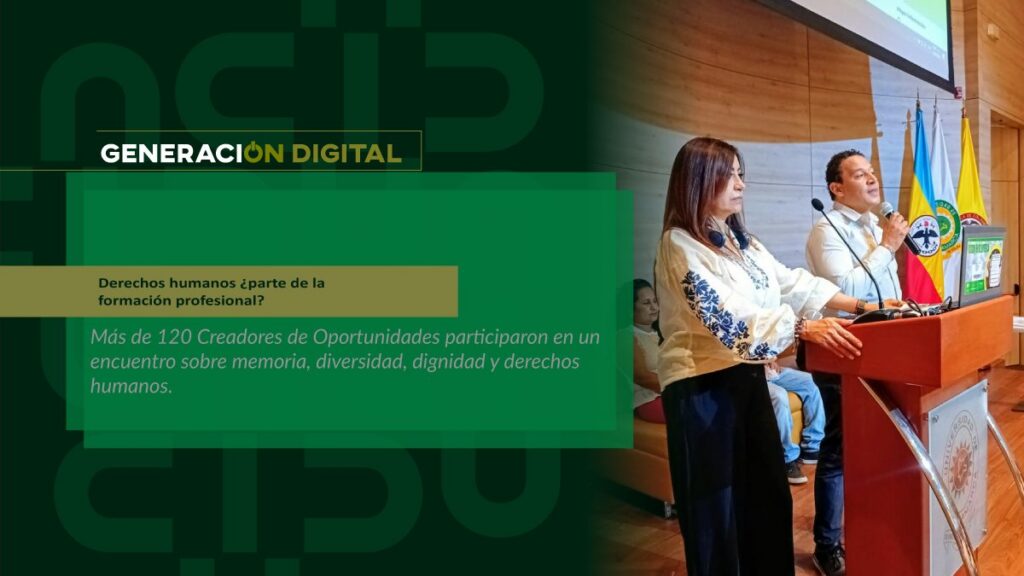
Human rights: part of professional training?
By: Alejandro García Suárez – Advisory Office of Communications



I am your virtual assistant, here to help you quickly and easily.
▲ Back to Top
By: Alejandro García Suárez – Advisory Office of Communications
The leadership, dedication to service, and social commitment of students at the University of Cundinamarca continue to shine on national stages. This time, Jamer Yulian Horta Lozano, a nursing student at the Girardot campus, was invited by Profamilia to participate as a panelist and representative of Colombian youth during the launch of a major health promotion and prevention initiative in Bogotá.
On May 21 and 22, the National Museum of Colombia became the stage where the Creator of Opportunities shared experiences, reflections and proposals on sexual and reproductive rights, HIV prevention and the strengthening of youth leadership in the country.
For Jamer Yulian, representing Colombian youth meant assuming a collective responsibility that goes beyond the personal. “It was about bringing the voice of diverse, rural, and historically marginalized youth to a national platform. My participation wasn't individual, but rather as a member of the Profamilia Youth Network, a network made up of more than 800 young people working to promote sexual and reproductive rights in Colombia,” he stated.
Her participation took place within the framework of the launch of “Hágale”, a strategy led by Profamilia that seeks to strengthen the response to HIV through combined prevention, self-care, education and community leadership.
During the meeting, the student emphasized the importance of creating spaces for dialogue on issues that still pose significant challenges for society, such as access to information, stigma, sexual health, positive pleasure, and the barriers many communities face in fully exercising their rights. “Participating in this forum was a profoundly meaningful experience. It allowed us to bring urgent conversations to the table and build responses from and for the communities,” he noted.
Jamer also highlighted the fundamental role that the University of Cundinamarca has played in building her social leadership. She explained that the training she received in the Nursing program has allowed her to understand health from a holistic and public health perspective, strengthening her ability to identify and address the realities faced by the most vulnerable populations.
“Academia cannot be an isolated space. It must be a living laboratory that connects the science of care with the social reality of the country. From the first semesters, we understand that health challenges go beyond the clinical and are related to social, cultural, and territorial factors,” he said.
This recognition demonstrates not only the leadership capabilities of the Opportunity Creators, but also the commitment of the Nursing program to the training of professionals sensitive to the needs of society, capable of promoting well-being, inclusion and social transformation through the care of life.
In accordance with the Transmodern Digital Educational Model (MEDIT), this participation strengthens the training of citizens committed to the transformation of their territories, capable of engaging in dialogue with different realities, leading processes of change and building collective solutions based on knowledge, human sensitivity and responsible social action.
News
News
News
News