News
2026-09-24
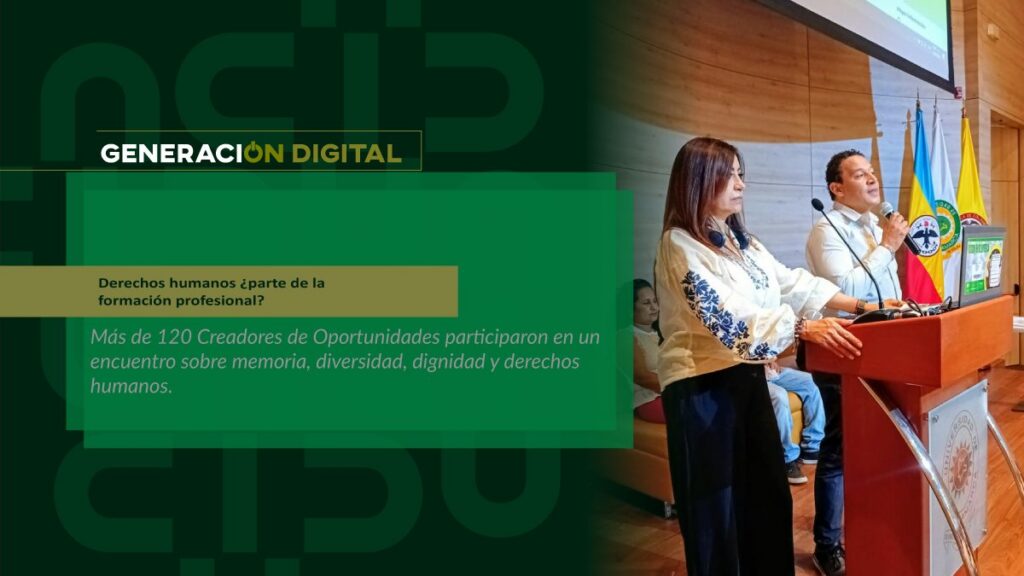
Human rights: part of professional training?
By: Alejandro García Suárez – Advisory Office of Communications



I am your virtual assistant, here to help you quickly and easily.
▲ Back to Top

Source: Ministry of Education
Bogotá DC, July 1, 2020. The Minister of National Education, María Victoria Angulo, in her capacity as president of the National Council of Higher Education (CESU), signed this Wednesday, July 1st, Agreement 02 of 2020, which updates the High Quality Accreditation Model for Higher Education Institutions and Academic Programs in Colombia.
The signing of the Agreement, which took place within the framework of the fourth and final day of the II International Meeting on Quality Assurance in Higher Education, is in compliance with one of the goals of the National Development Plan “Pact for Colombia, Pact for Equity” of the government of President Iván Duque.
For the Minister of Education, María Victoria Angulo, the entry into force of the Agreement represents a significant advance in the strengthening of Higher Education because it updates the High Quality Accreditation Model, taking as a reference the students, their learning and their integral development, as well as the positioning of the High Quality Accreditation process within the institutional culture according to the profile of the institution, the different training modalities and the commitments to scientific and regional development.
“This Agreement, which materializes the collective construction process of the actors of the Quality Assurance System, comes at an opportune moment for the sector, and it is very important to continue working in an articulated manner with all the institutions and bodies that are part of Higher Education and with the support of the CESU, the highest body that allows us to accompany the key decisions of the Sector,” said the Minister.
Within the framework of the II International Forum on Quality Assurance, with the members of Cesu, Agreement 02 of 2020 was signed, which addresses the objectives that have been assigned to Higher Education in Colombia since Law 30 of 1992 and focuses its interest in the recognition of the mission and organizational difference of Higher Education Institutions, responding to their nature and typology, in such a way that in the evaluation processes they can account for their continuous improvement and their interest in the search for High Quality of the academic offer, whatever its modality and the incorporation of learning results as indicators of achievement.
The Ministry of National Education, together with the actors and participants of the Higher Education system, after conducting 29 "Quality IS for Everyone" Workshops between October 2018 and June 2019, in which the contributions made by more than 600 participants from the academic communities of 247 Higher Education Institutions (HEIs) were collected, built a joint vision of the concept of quality of Higher Education in Colombia with the purpose of strengthening it and deploying the mechanisms that guarantee it.
These participatory exercises also highlighted the need not only to strengthen the Higher Education Quality Assurance System but also the National Accreditation System, in order to encourage consistent high quality from an institutional diversity perspective.
This work was supported by the Permanent Quality Commission, made up since November 2018 of members of the Ministry of Education; the CESU; the National Accreditation Council (CNA) and the National Intersectoral Commission for Quality Assurance in Higher Education (CONACES) with the objective of accompanying and advising the review of the concept of quality in Higher Education from a perspective with an integral and articulated vision of the System.
Key points of the Agreement
Agreement 02 of 2020 harmonizes the guidelines contained in Decree 1330 on Qualified Registration, sanctioned by President Iván Duque on July 25, 2019, with the purpose of providing young people with a comprehensive education, incorporating the dynamics of lifelong learning necessary for responsible professional and civic engagement. Therefore, it is expected that the learning outcomes will be aligned with the graduate profile established by the institution and the specific program.
In this regard, the process of updating the High-Quality Accreditation Model for Academic Institutions and Programs includes new evaluation factors such as Identity, Institutional Governance, and Transparency. These are complemented by factors such as Retention and Graduation indicators, Academic Aspects and Learning Outcomes, and the consolidation of Institutions' Internal Quality Assurance Systems, aligned with the principles of innovation and governance.
Another change introduced by this Agreement is that only Academic Programs with at least eight years of continuous operation will be eligible for High-Quality Accreditation, as a guarantee of at least one renewal of the program's qualified registration. Similarly, the validity period of High-Quality Accreditation is also modified, now to be 6, 8, or 10 years, to allow Programs and Institutions to organize, develop, and consolidate their improvement plans and indicators over a period exceeding six (6) years.
Likewise, the updated Agreement contemplates two High Quality Accreditation processes: the first is called “By place of development”, aimed at Institutions or Programs whose offer is concentrated in a single place of development registered as main address and of one or more other places of development; the second is “Multicampus”, and applies to Institutions with academic Programs in various places with integrated operation.
Accreditation recognizes the growth of institutions within the mission they have defined as a path for developing their educational, academic, teaching, scientific, cultural, and outreach activities, while remaining mindful of the emphasis the institution autonomously proclaims as a strategy that allows it to contribute to social development. Under the new accreditation model, this institutional identity is valued as the central axis for the self-evaluation processes of academic programs and institutions, and as a determining factor in identifying the achievements and impacts generated in academic communities and society at large, reflecting their capacity for transformation.
To find out the CESU Agreement 02 of 2020 click on this link.
Quality in Educ@Ted
To further strengthen the education sector, the Minister of Education also highlighted the Educ@Ted 2020 event as "an opportunity to interact and reflect on the quality of Higher Education in training modalities using technology.".
This virtual event, which runs until August 27, 2020, features the participation of Rectors, Teachers, researchers and representatives from the 18 member universities of the Redunete Network, who contribute their knowledge and experiences regarding quality assurance in technology-mediated education.
Educ@Ted 2020 features four immersive days of digital workshops, virtual plenary sessions, and thematic panels scheduled for June 30, July 2, 3, 28, 29, and 30; and August 18, 19, 20, 25, 26, and 27, 2020. To register and learn more about Educ@Ted 2020, visit the website: https://redunete.net/educated/index.php/inmersion1/
With these advances, the National Government is committed to consolidating a Quality Assurance System in line with the institutional diversity of Higher Education and with international trends that put the student and their learning outcomes at the center in order to strengthen academic mobility and contribute to the country's competitiveness.
Thus, the National Government seeks to ensure that students and their families have access to quality Higher Education so that young people can enhance their life projects and contribute to building a country with equity and opportunities for all.
See article mineducacion.gov.co
News
News
News
News