News
2026-09-24
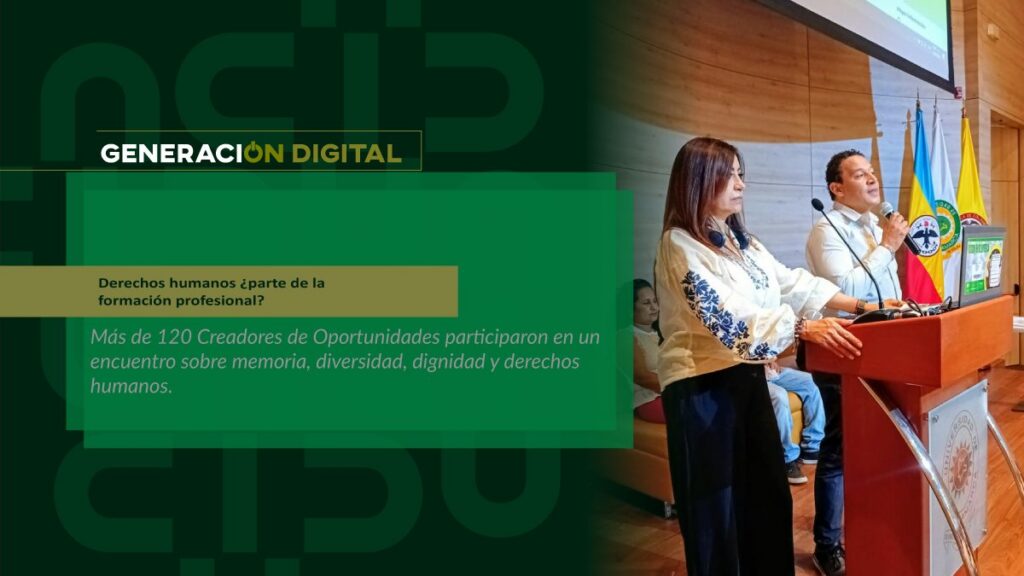
Human rights: part of professional training?
By: Alejandro García Suárez – Advisory Office of Communications


I am your virtual assistant, here to help you quickly and easily.
▲ Back to Top

The University of Cundinamarca, committed to transparency and good university governance practices, presented its accountability report to the institutional community and the general public on May 20th through a live session on Facebook Live UCundinamarca official and the online radio station UCundinamarca Radio.
The rector of the University of Cundinamarca, Adriano Muñoz Barrera, began by presenting the management report, which he summarized in three relevant aspects: strategic direction; the milestones, the before and after of his arrival at the institution, and the challenges that remain pending in the 2016-2023 development plan.
Regarding strategic direction, he stated, “In 2015, when we arrived at the university, it lacked strategic tools. Today, thanks to the work of the entire team and the entire institution, there is a clear path in place from 2015 to 2026. This was achieved by structuring the strategic plan, issued in the Transmodern Digital Educational Model (MEDIT), the action plans, the quality assurance models, the evaluation model, the digital operation model, the university educational project, and all the policies required to comply with the requirements of Decree 1330.”.
He also affirmed that the institution has been reinventing itself during the 2016-2019 period, implementing policies such as Inclusive Education, Science, Technology and Innovation, University Interaction, Dialogue with the World, and the Protection of Personal Data, as well as policies for Graduates, University Welfare, and the Autonomy Code. Regarding milestones, that is, the period before and after this administration, he indicated, “The 2016-2019 Rectoral Plan was completed in 95.49%, according to the monitoring carried out by the Directorate of Institutional Planning and Internal Control.”.
Regarding the remaining challenges, which are outlined in the 2020-2023 Development Plan, there is the materialization of the Transmodern Digital Educational Model MEDIT, which means that the multidimensional field of learning operates at one hundred percent by the end of the period, as well as the institutional, cultural and disciplinary learning fields.
The second challenge is to consolidate the quality management system, and for this it is necessary to advance in the path of program accreditation and institutional accreditation, ensure learning and diversify the academic offer; and finally, and great challenge, which gives the seal to this entire master plan that we call the University of Cundinamarca Translocal and Transmodena, is the person in himself, whom we call today the intelligent organization, with soul and heart.”.
For her part, the Academic Vice-Rector, María Eulalia Buenahora Ochoa, stated that “The Academic Vice-Rector's action plan, over these four years, achieved a 91.71% completion rate. It is worth highlighting that these positive results were due to the efforts of the deans, program directors, coordinators, professors, and students, as well as the work of the directors and heads of the various units within the Vice-Rector's office.”.
Conclusions
Clearly, the University of Cundinamarca has a strong presence at the territorial level with seven regional units, more than 13,000 undergraduate students enrolled, a faculty of more than 1,000 professors, and more than 9,606 graduates registered in the university's databases.
With the above indicators, the commitment exercised with all stakeholders is deepened in a management model that the university assumes in pursuit of its mission objectives, and in its strategic fronts derived from the same rectoral plan, which has a compliance of 95.49%.
It is worth noting that the institution is making progress in its administration in the search for institutional accreditation that is supported by indicators such as the quality certification in the ISO 9001:2015 model, the transparency indicator which is 89.9%, the dimensions of the MIPG, which have already been evaluated and the FURAG rating which for last year closed with an average rating of 64.3%, plus the institutional conditions plan which closes with a 45%.
In these areas, the institution is strengthening its commitment to establishing an administrative model that supports the academy in carrying out its mission, supported by process digitization, strengthening of networks, connectivity and computer resources.
In its mission-driven work, through training and learning, innovation and research, university interaction and social welfare, important milestones stand out such as:
-Increase in the number of categorized groups, going from 10 in 2015 to 33 groups in 2019; totally proportional to the number of researchers, which in 2015 was 7 and went to 63.
-Design of learning fields.
-Training circuits led by the teacher training and learning school.
-More than 6,600 students benefited from scholarships and 3,440 students benefited from socioeconomic support.
Regarding the pursuit of academic quality, the university highlights investments of more than $74,594,000,000 in physical plant; library, laboratories, student welfare, technological development.
Similarly, the achievement of obtaining reaccreditation for the Bachelor of Social Sciences degree is highlighted, with a percentage of progress in its improvement plan of 80% and self-evaluation of the programs, also with an advance of 80%.
Likewise, it is highlighted that between 2016 and 2019, 12 academic registrations were renewed and 31,25% of the programs are in curricular redefinition.
Regarding administrative and financial management, from 2016 to 2019, the following stand out: the definitive appropriation of research items, the budget for the occasional time teachers item, the management of stamps that help develop investment projects, and undergraduate tuition at the cost of a minimum wage.
Regarding the improvement process, compliance with 100% is reported in the proposed audit programs, which result in improvement plans and whose purpose is to satisfy the requirements of all our interested parties every day.
Finally, the University informs the public how it is adapting to changes in the environment, taking into account the current situation we are all experiencing, such as COVID-19, which has led to a reinvention of how to ensure learning through the guidelines issued by the Academic Council, which establishes directives regarding classes, the economic fund for contributions, the help desk, and the evaluation of learning.
News
News
News
News