News
2026-09-24
Human rights: part of professional training?
By: Alejandro García Suárez – Advisory Office of Communications



I am your virtual assistant, here to help you quickly and easily.
▲ Back to Top

By: Juan Carlos Monzón. Journalist, Communications Advisory Office
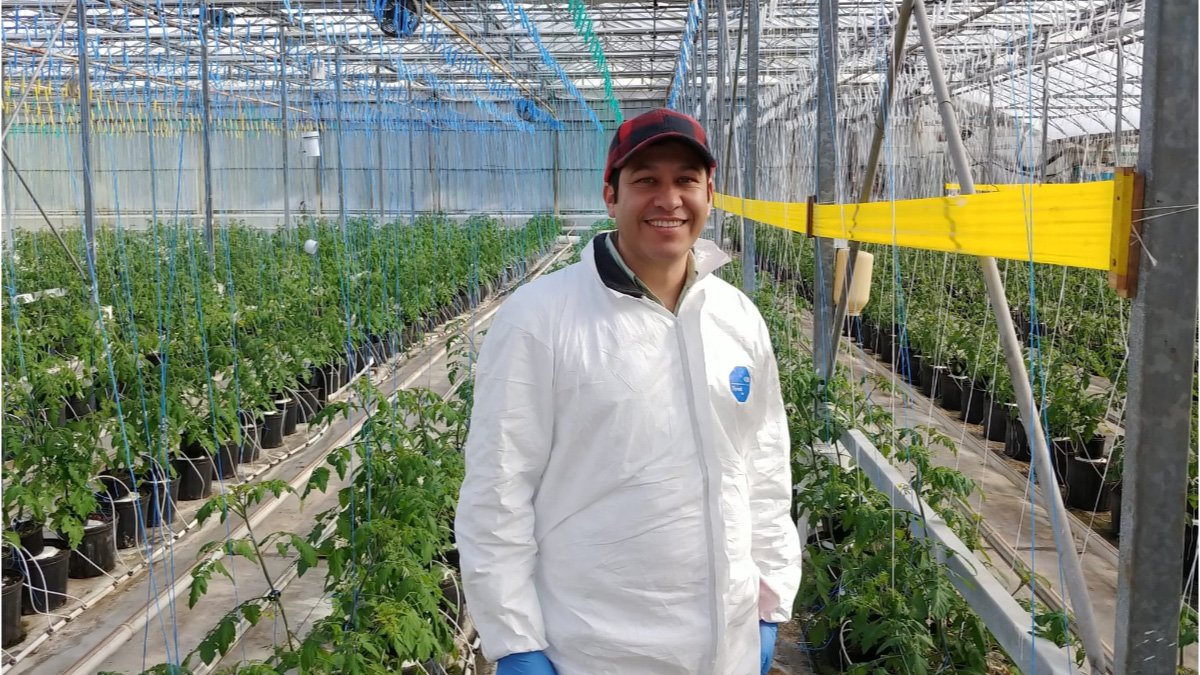
The career path of this graduate of the Agronomic Engineering program is closely linked to that of his wife. “At the time, she was working for a multinational company, and there was an opportunity to transfer to the United States or Canada. So we decided on the latter,” explains Eduard Comba, who acknowledges that his education at the University of Cundinamarca was relevant to his professional performance today in Canada.
Faced with the possibility of traveling, this couple enrolled in an intensive two-year French course at the Alliance Française, since they were going to live in the province of Quebec, specifically in the city of Montreal, where French is spoken. “I arrived with a scholarship I won to pursue a master's degree in water sciences, but to my surprise, when I started interacting with people, I understood very little. It was very frustrating, and the reason was that they speak a form of French called Quebec French, which is quite old. However, I had friends who helped me, and the university paid for an intensive course so I could learn it.”.
Thus, between classes, he gradually adapted to the educational system. “I did very well and found a job quickly because my mentor told me one day, ”You’re the only agronomist I have available. Would you like to work with me?’ I didn’t hesitate and accepted, since in my master’s degree I specialized in Geographic Information Systems, which in this case are used to identify crops from satellite images, and that was exactly what he needed.”.
She graduated soon after, and her academic record from the University of Cundinamarca was crucial for entering the job market. “I had to submit it to the Quebec Order of Agronomists. They reviewed it. I remember being afraid they would make me retake several subjects, as happened to some of my classmates, but that wasn't the case. They immediately sent me to take the proficiency exam, which I passed without any problems. My university was key in that regard.”.
Her career path has been filled with success thanks to her discipline. She had the opportunity to work with another professor identifying potato crops and the toxicity of fungicides used in the surrounding water. “Later, I worked as a consultant for an agricultural projects company in Canada and Europe, and that's when I realized that the training I received as an undergraduate was just as good as that of my colleagues.”.
He now works for the city of Montreal. “This region has fifteen districts, and I manage one as a coordinator for geographic information systems, analyzing images of the plantations to ensure they comply with pesticide use regulations. I have an immense responsibility here, as my job is like that of a kind of notary, certifying that the process meets all the required specifications. If it doesn't, there could be a risk to the health of people who consume those foods,” he explains with great seriousness.
Now the roles have been reversed. “We have a fifteen-month-old daughter, and my wife is studying while I'm working. We're also very happy because we just took our citizenship exams and passed. We're just waiting to be called for the oath ceremony.”.
Finally, when asked what message he would send to the students of UCundinamarca, he didn't hesitate to say: “I would encourage them to never give up on their dreams and to set short, medium, and long-term goals that they will achieve with discipline. Keep in mind that you, as a student, make the university what it is, regardless of where you come from.”.
At the University of Cundinamarca, we continue to strengthen our relationship with our graduates. If you would like to share your entrepreneurial or professional growth story and inspire others, please write to us at the following email address: [email protected]
News
News
News
News