News
2026-09-24
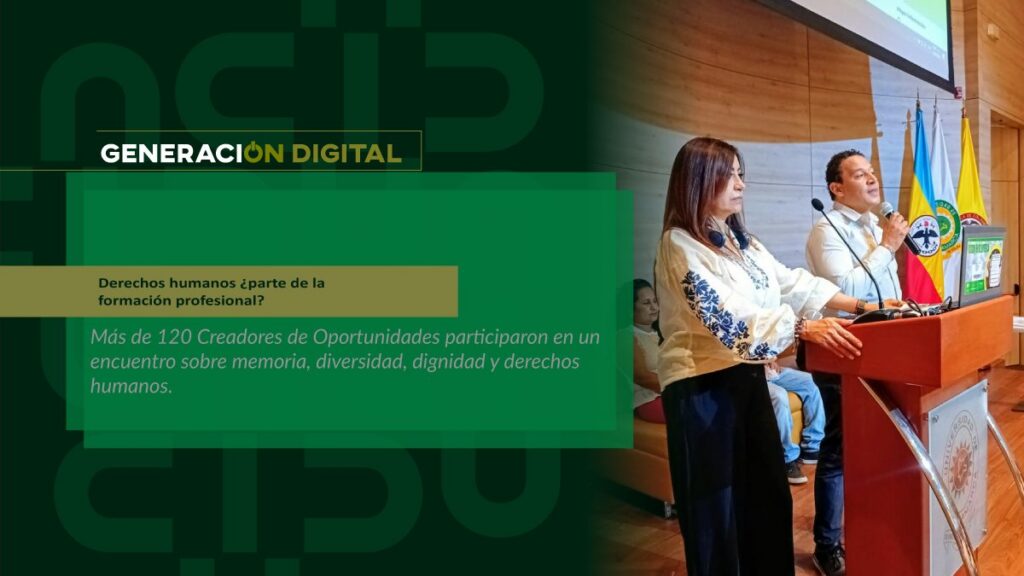
Human rights: part of professional training?
By: Alejandro García Suárez – Advisory Office of Communications



I am your virtual assistant, here to help you quickly and easily.
▲ Back to Top
The word disability is known to everyone, but the difference lies in the approach each person takes to it. Why? Because over the years, the connotation of disability has become negative for many and synonymous with exclusion in different areas of society.
Education is the most important area of human life, shaping it for life, and the University of Cundinamarca understands this clearly in its Transmodern Digital Educational Model (MEDIT). Therefore, respect is one of the qualities of the university community, and this is seen in different cases, one of them being that of Samuel Jiménez, a talented musician.
Professor Óscar Julián Alvarado, who has been at UCUndinamarca for 16 years and teaches in the music program at the Faculty of Social Sciences, Humanities and Political Science, shared an example of overcoming adversity to confirm that there are indeed teaching strategies for classical guitar for a student with a disability.
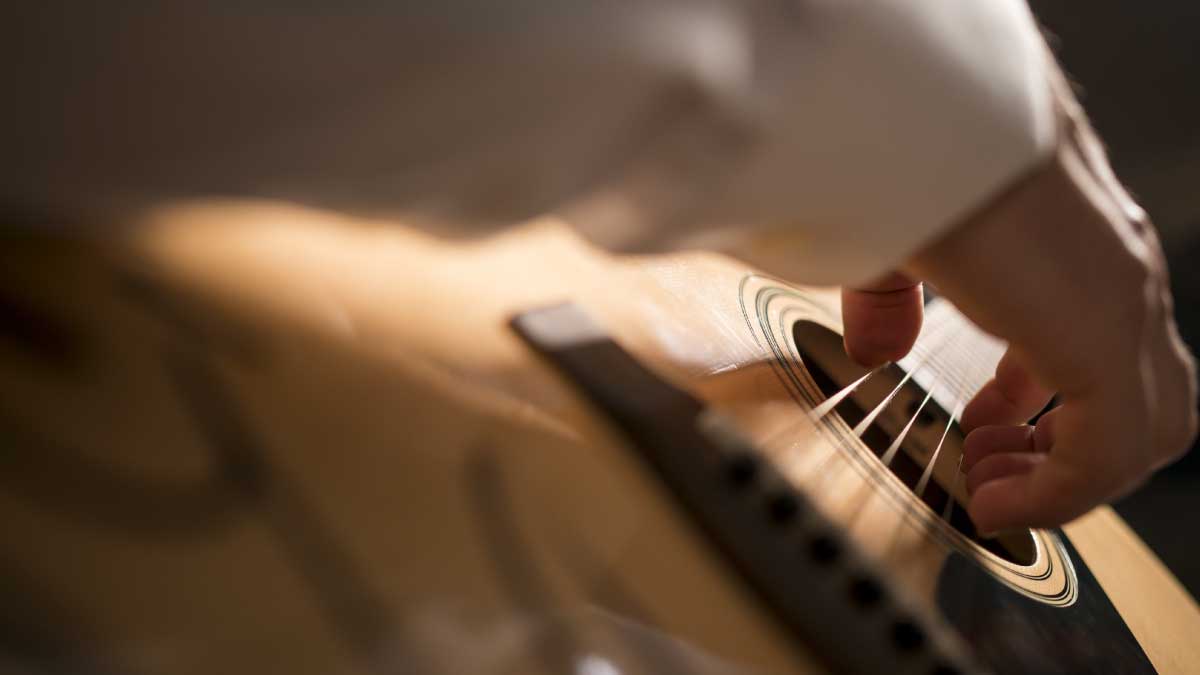
It all started when she met Samuel, a classical guitar student who only has the phalanx and nail of his thumb and the knuckle of his little finger on his right hand. The other fingers on this hand did not develop during his gestation.
However, despite the fact that Professor Oscar saw this situation, he made the decision to treat Samuel as just another student in the class.
“I’m not going to treat Samuel like a young man with a disability. He was missing fingers on his hand, but he was incredibly talented with his guitar. So I said, let’s look at how I can complete that chord so that he can play it with just one finger strum,” said the teacher, Óscar.
He added: "He had extra work to do compared to his classmates because I would tell Samuel, 'See how you solve this,' and he would do it, he would do something with his fingers or with whatever he had at hand. He was a very bright boy.".
When Samuel arrived at UCundinamarca, he had to take five rigorous exams required to enter the program, and among the nearly 100 applicants, he had the best results.
Thus began the teacher's challenge to train a guitarist, and the problems identified were, firstly, the absence of the fingers on his right hand, which prevented him from performing most of the technical elements required for guitar playing; and secondly, that a differentiated repertoire was necessary, since the existing repertoire did not take into account the technical restrictions faced by Samuel.
Therefore, arrangements were made to the musical repertoire required in the Syllabus, so that it would be possible for people with disabilities to perform its technical elements.
“In addition, there are three right-hand studies that allow the execution of techniques such as tremolo, legato over fixed positions, and two-part melodies,” the teacher explained.
The results of the process were excellent; today Samuel is a music teacher and classical guitarist at the University of Cundinamarca. He completed his final degree project based on his own experience of music, titled "Technical adaptations for the performance of the classical guitar from the perspective of the performer's disability," which received an honorable mention.
“He is currently pursuing a master’s degree in management and entrepreneurship of cultural projects at the International University of La Rioja (UNIR). He has been a coordinator and teacher at music centers of the Batuta Foundation since 2015 and is also the coordinator of musical training processes in the municipality of Soacha for the music for reconciliation program that serves victims of the armed conflict and extremely vulnerable populations in that municipality,” said the teacher, Óscar, with pride.
In this way, the University of Cundinamarca continues with the firm commitment to create learning environments and diversity under respect for the entire community.
News
News
News
News