News
2026-09-24
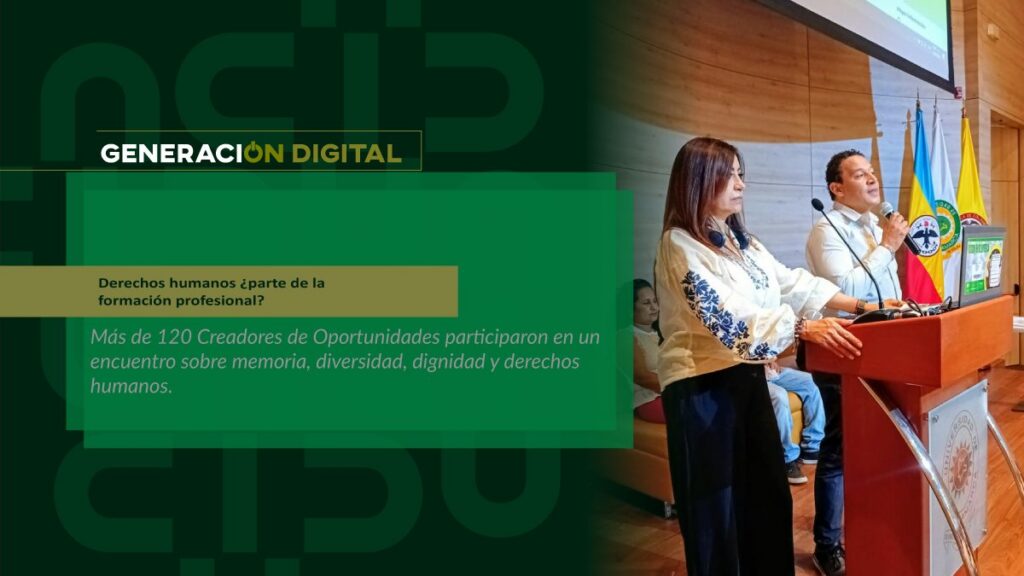
Human rights: part of professional training?
By: Alejandro García Suárez – Advisory Office of Communications



I am your virtual assistant, here to help you quickly and easily.
▲ Back to Top
By: Carolina Rojas Cendales.
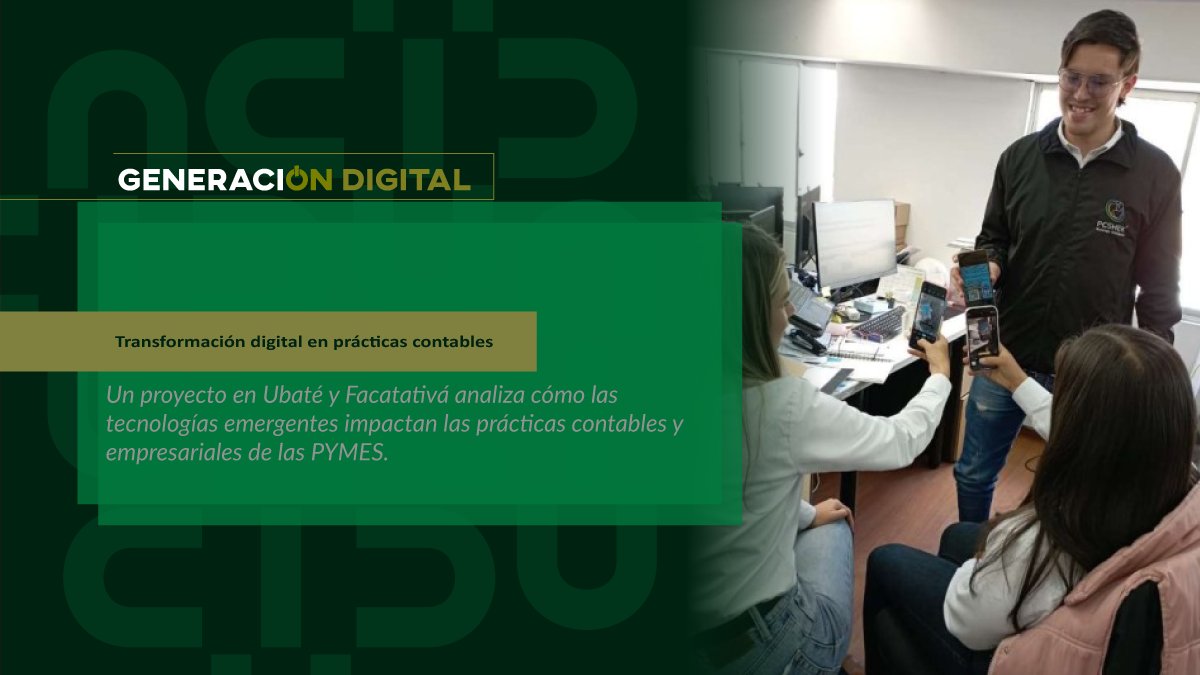
The Public Accounting program of the Ubaté branch and the Facatativá extension, leads the project “Analysis of the impact of emerging technologies and digital transformation on accounting and business practices in Facatativá and Ubaté”.
The team is made up of the research teachers Claudia Fanny Gutiérrez Navarro (principal investigator – GREICO), Dora Constanza Alonso (co-investigator – ADCODER) and Mary Luz Ahumada (co-investigator – ADCODER), along with students from the research groups Semillas de Facatativá and SEMICON.
The initiative arose from the need to understand the challenges faced by SMEs, the main drivers of the local economy, in the face of digital transformation. Many of these companies still lag behind in digitalization, which limits their competitiveness and sustainability.
The project employs bibliometric analysis in international databases such as Scopus, Web of Science, and Google Scholar, identifying global trends and research gaps regarding the use of artificial intelligence, big data, blockchain, accounting software, and ERP systems. Based on this analysis, it proposes strategies to optimize accounting processes, strengthen decision-making, and improve the competitiveness of SMEs.
Currently, the research is in its final phase, with three scientific articles submitted to indexed journals and presentations given at national and international conferences. One of the most significant achievements was receiving the award for Best Presentation at an International Colloquium, demonstrating the scope and relevance of the work.
The benefits reach three levels: business, by offering modernization tools to SMEs; academic-professional, by strengthening the skills of students and teachers in accounting 4.0; and institutional and social, by consolidating the University of Cundinamarca as a benchmark in applied research.
Its innovative nature lies in combining cutting-edge methods with a territorial approach, involving students in research and linking the proposal to the Transmodern Digital Educational Model (MEDIT). This fosters flexible, critical, and creative training that connects academia with regional development and international scientific debate.
News
News
News
News