News
2026-09-24
Human rights: part of professional training?
By: Alejandro García Suárez – Advisory Office of Communications



I am your virtual assistant, here to help you quickly and easily.
▲ Back to Top
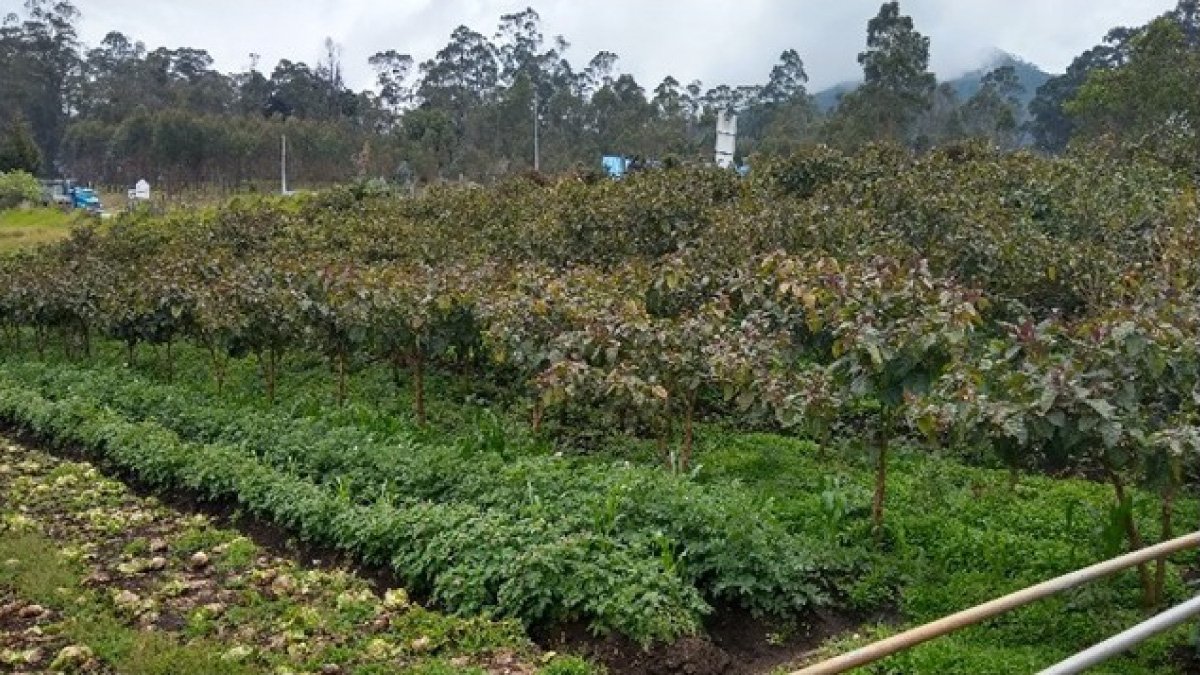
When they were still students, José Yair Fonseca, Andrés Estiven Castañeda and José Omar Escarraga, now graduates, but led by teacher Daniel Cubillos Pedraza, carried out a characterization of diseases on the El Reposo farm in the municipality of Facatativá in order to help the producer improve his agronomic practices.
“Tree tomato cultivation has been of great importance in recent times, being one of the main agro-economic and socio-economic activities in the western savanna in municipalities such as Facatativá, El Rosal, Zipacón and Subachoque, providing the inhabitants with a job opportunity to support their family's food basket,” said teacher Daniel Cubillos Pedraza.
Given the above, the objective of this research was to evaluate the percentage of disease incidence and severity in the crop. Additionally, the causal agents in the tree tomato crop were characterized in order to recommend a control method.
At the farm, which has a productive plantation of 1,500 plants, two visits were made. The first visit was to conduct a diagnostic assessment and establish a sampling system. The second visit involved sampling to collect data (disease plants, number of diseased leaves per tree, and diseased area per leaf). Additionally, foliar samples were collected. “From my perspective as a professional, the foundation of this project has been to develop good observation, analysis, knowledge, and experience for my professional life, as well as to seek out new strategies and management practices that arise every day,” explained Andrés Estiven Castañeda, a graduate of UCundinamarca who participated in the project in 2019 and 2021 while still a student.
Professor Cubillos stated that after the fieldwork, the necessary tests were carried out in the laboratory to characterize the causal agents. The lactophenol blue staining technique was used to identify fungi, the Gram staining technique was used for bacteria, and the Baermann method was used for nematodes.
“The results showed the presence of nematodes and pathogens such as Alternaria sp. and Colletotrichum sp..”These pathogens were characterized as the causal agents of the primary and secondary diseases. In addition, a high incidence was found in the crop, but a low severity, which allowed for the establishment of a management plan using copper oxychloride and the addition of organic matter in order to keep the young leaves healthy and to be able to care for the crop until its productive end,” the professor explained.
The farm monitoring began in 2019 and resumed in 2021, but was paused due to the pandemic. The students who assisted the professor in this research graduated in March 2021. The complete results of this study can be found in the journal of agricultural sciences, volume 5, number 1.
News
News
News
News