News
2026-09-24
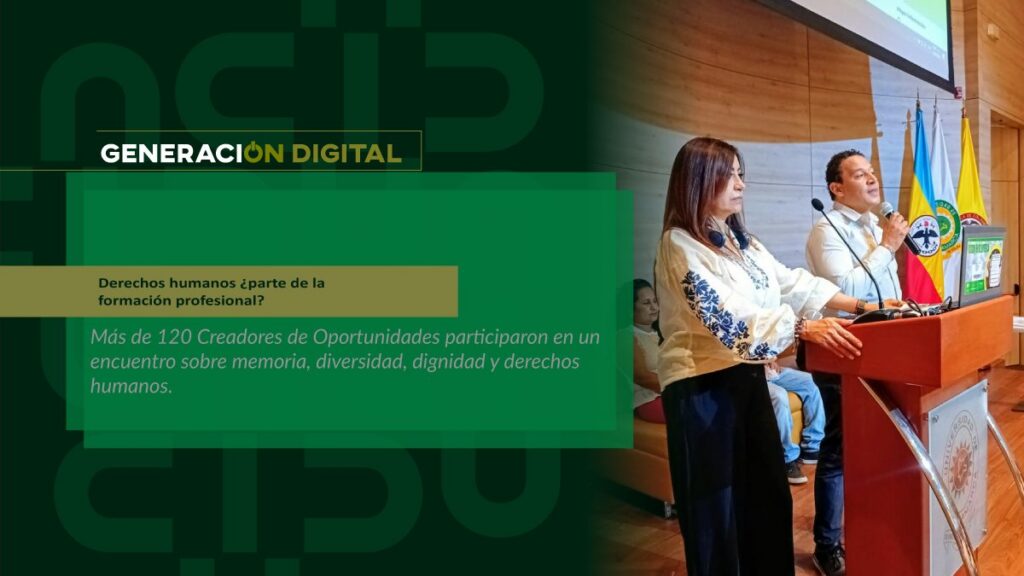
Human rights: part of professional training?
By: Alejandro García Suárez – Advisory Office of Communications


I am your virtual assistant, here to help you quickly and easily.
▲ Back to Top
By: Juan Carlos Monzón - Communications Advisory Office
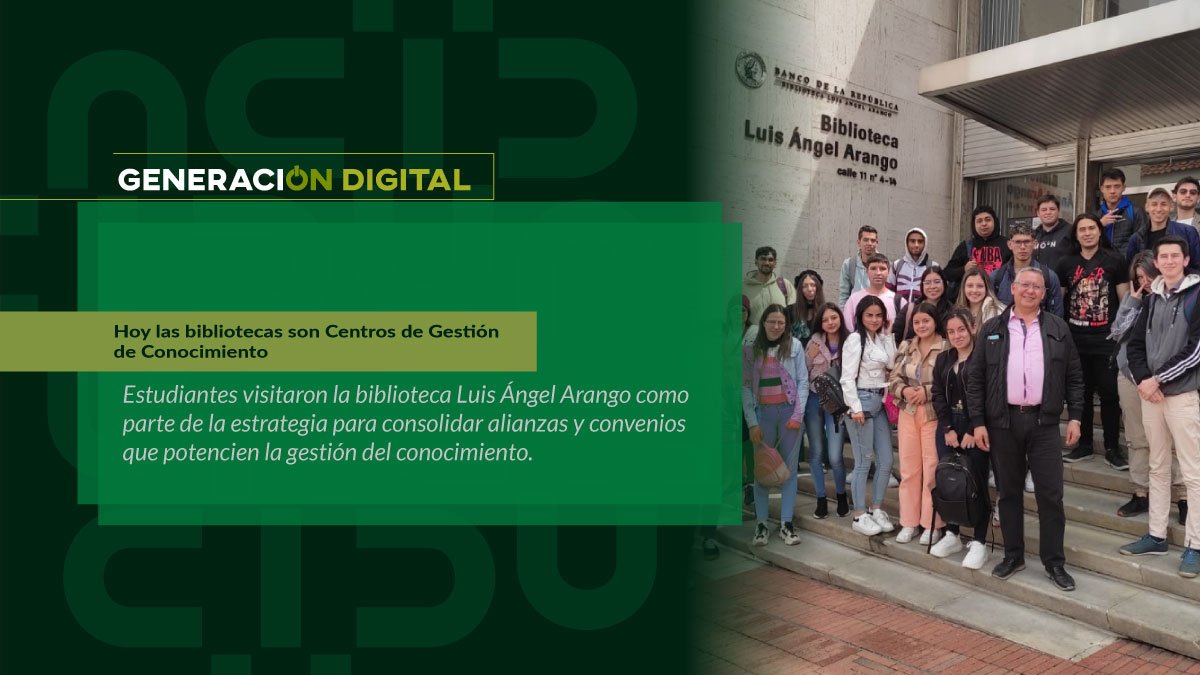
Libraries represent a tool for collecting, processing, and disseminating information and knowledge. Today, they are not only spaces for research or reading, but also a connection to innovation and translocal knowledge. On April 20th, students from the Industrial Engineering, Systems Engineering, Business Administration, and Public Accounting programs, specifically from the Institutional Learning Field II, Constructive Critical Reading, at the Chía campus, visited the Luis Ángel Arango Library.
The activity began around ten in the morning, and they were able to visit several rooms, including the music room, where they interacted with the instruments. “They were also shown resources for people with visual impairments that are only available at that library, and they were shown how to access them,” says Elizabeth Ahumada, coordinator of the Northern Node Knowledge Management Center.
This visit also aimed to introduce them to other options for research and cultural enrichment. “Most of the students had never been to a library of that size, which has a range of events that go beyond simply lending books.”.
One of the premises of the Knowledge and Learning Management Centers is to implement a strategy towards consolidating alliances and agreements that yield results like this.
Similarly, another important premise was that they should know that the university's Knowledge and Learning Management Centers have partnerships with one hundred libraries in Cundinamarca. "Many don't know that, for example, they can go to the libraries of the University of La Sabana, the Piloto University, and the National University; for that, they must submit a request, and we will process the corresponding letter that the student must bring to access the consultation and lending service.".
For Andrés Castillo, a third-semester business administration student, this opportunity enriched his cultural horizons. “I was impressed by how easily this library stores so much knowledge in its thousands of books and the exhibits open to the public. I thank the university for showing me that I can expand my learning here.”.
Francisco Javier Zipasuca Quemba, a professor in the Faculty of Social Sciences, Humanities, and Political Science, organized this visit and believes that, “the objective of this experience lies in the university's social interaction, combined with research and internal and external student mobility. These are fundamental pillars of the Transmodern Digital Educational Model (MEDIT), which are made tangible through values such as life, democracy, civility, and freedom.”.
She also commented that the visit broadened the young people's horizons. “It was a significant experience, as it showed them the importance of music, art, and research. The three-and-a-half-hour visit raised their awareness of these topics. They were also required to write a text about the visit, which strengthens this key skill for any professional.”.
If you would like to see the list of libraries with which the university has an agreement, click here. here
Libraries, key to managing knowledge
The most important resource in knowledge management is the person, and in this era of the knowledge economy, libraries must evolve to enhance the knowledge of the staff and adopt the development of knowledge resources based on the capacity of the staff.
Libraries are a vital link in knowledge innovation, acting as bridges to transform the results of that innovation. Knowledge management in libraries seeks to foster relationships between libraries, between the library and the reader, to strengthen knowledge through networking and streamline the flow of knowledge.
News
News
News
News