News
2026-09-24
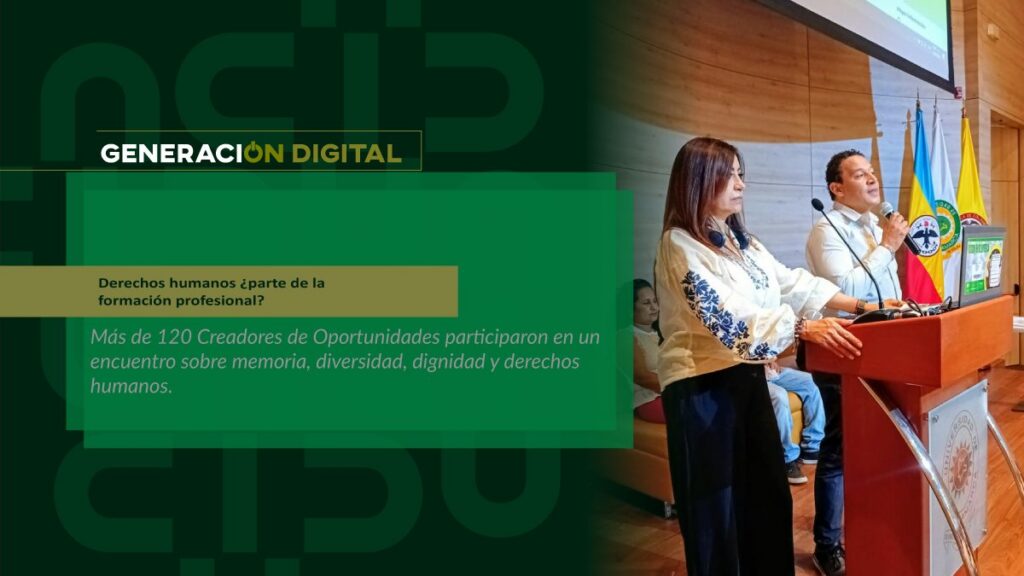
Human rights: part of professional training?
By: Alejandro García Suárez – Advisory Office of Communications


I am your virtual assistant, here to help you quickly and easily.
▲ Back to Top
By Pablo Arciniegas – Communications Advisory Office
Recognition of research output is one of the mechanisms that most effectively promotes knowledge generation. In Colombia, the Ministry of Science and Technology, formerly Colciencias, establishes a series of criteria to determine whether a book, a booklet, an article, or other published materials warrant additional income for the teachers who wrote them.
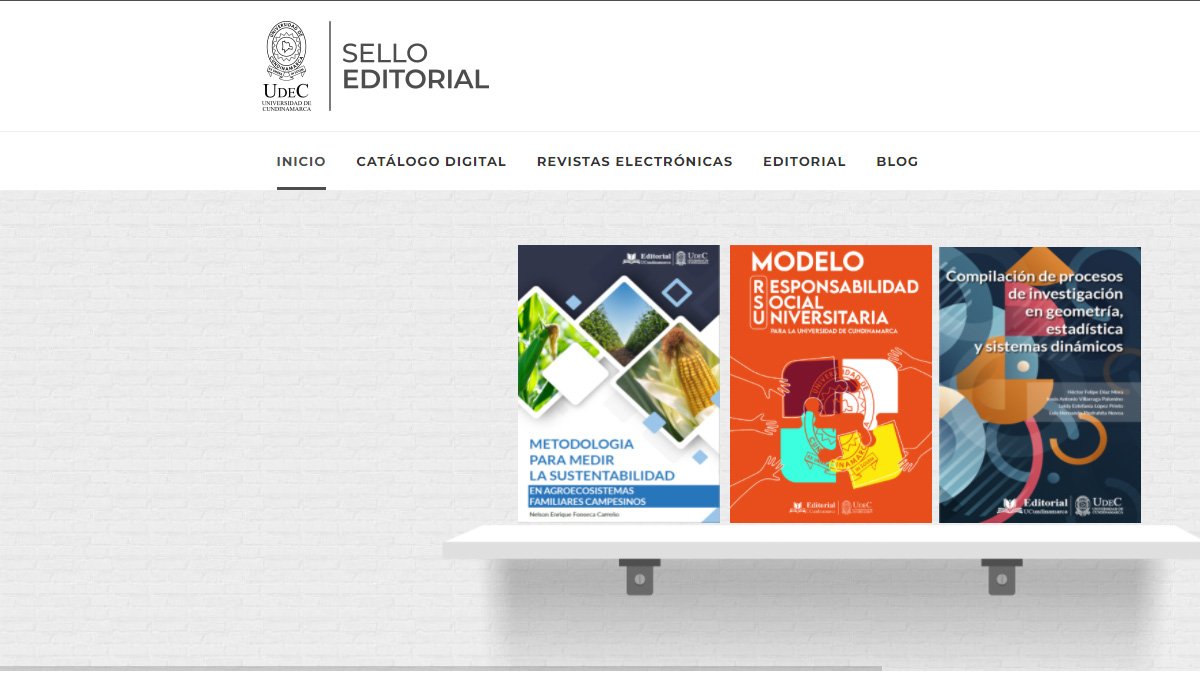
The University of Cundinamarca Press is the body within our institution responsible for meeting the Ministry's criteria, which is no easy task, especially given the University's continuous scientific output. According to Ana Milena Bejarano, more than 40 books are currently under review in 2022. It is projected that more than half will be published before the end of the semester.
Bejarano, a systems engineer from the University of Cundinamarca, has been with the Publishing House since 2018, when it was just being structured, and although her profession may not seem to have a direct relationship with the world of written production, she has collaborated by implementing digital processes and resources, which are of great importance for the University's knowledge to be produced and disseminated.
How to publish a book with the University?
“Anyone, especially from our academic community, can publish a book with us,” Ana explains, adding: “In fact, the Digital Operating Model, Mission Macroprocess, Process: Science and Technology, contains all the forms to activate the publisher's procedures. However, the essential requirement for publishing a book with us is that the book be finished and submitted in an editable format.”.
Indeed, when a book is received by the publisher, a series of internal and external reviews of its content begin. Internally, it is read by the faculty council of the professor or researcher submitting it, and eventually, it is reviewed by two evaluators under a double-blind review process, meaning they remain anonymous. “These evaluators use the Ministry's criteria for recognizing academic output, such as coherence, structure, and importance of the text, as well as the relevance of the bibliography. It is important to mention that these evaluators are, in turn, recognized by the Ministry of Science and Technology,” says Ana.
Depending on the feedback from these evaluators, the submitted books may be published after style editing and review by the editorial coordinator, or they may require adjustments to make them viable as a published product. If so, the evaluators reread the revised version of the book. “It’s clear that publishing is not a simple process, but thanks to the management of our editorial coordinator, Ana Lucía Osos, these processes have become more efficient,” says Ana Milena.
It's also important to note that the publishing house not only focuses on books but also ensures the integrity and dissemination of articles published in the University of Cundinamarca's journals, adhering to the Open Journal System (OJS) criteria. This is crucial for the journals because, in addition to being a requirement of the Ministry of Education, it guarantees that the content is indexed in databases worldwide, leading to increased citations. Ana, as an engineer, is responsible for the maintenance of this institutional platform.
“I really like the work the publishing house does because it has also represented the University at various book fairs and events focused on scientific production. Furthermore, during our calls for submissions, the effort that a professor or researcher puts into their work becomes clear, because we have published not only books from faculties, but also from the School of Teacher Training and Learning (EFAD) and the Accreditation Office,” says Ana Milena, who points out that all of the publishing house's output is disseminated online, and that to access it, one only needs to visit: https://www.ucundinamarca.edu.co/selloeditorial/
News
News
News
News