News
2026-09-24
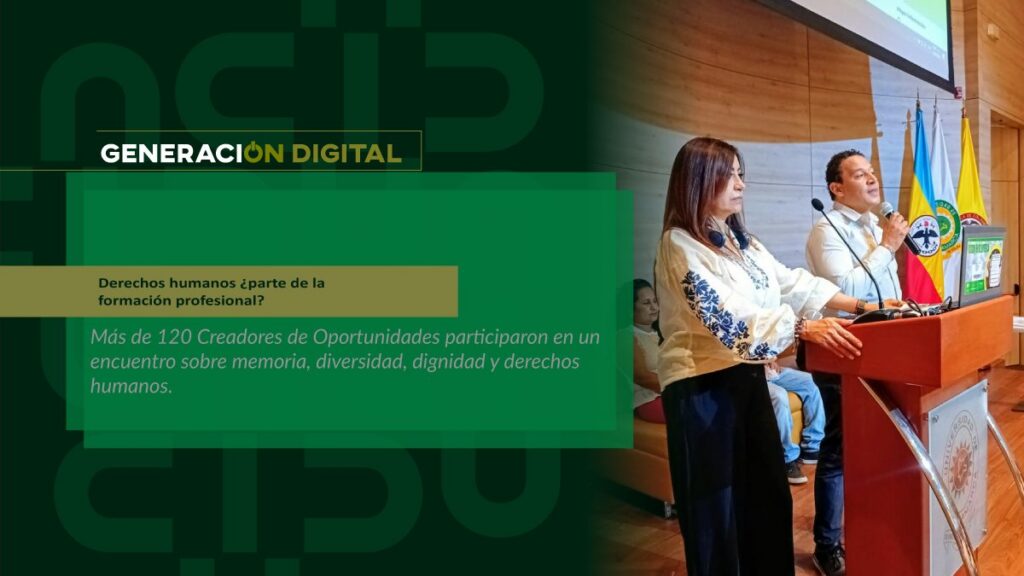
Human rights: part of professional training?
By: Alejandro García Suárez – Advisory Office of Communications



I am your virtual assistant, here to help you quickly and easily.
▲ Back to Top

These professionals are capable of studying and applying various branches of technology to solve the problems society faces daily. Therefore, Dean Javier Gracia's work is crucial for Colombia's development, as he bears the responsibility of training professionals who, based on mathematics, will improve the living conditions of communities.
UCundinamarca News: How is the dean's office doing in terms of the relevance of the different programs in relation to the productive sector?
Javier Gracia: The faculty is constantly updating its curriculum and areas of study. Our goal is to respond to the demands of the job market. In that vein, we plan to offer undergraduate programs such as Software Engineering, which will begin in Girardot in 2024, thanks to a visit we received some time ago from the Ministry of National Education, which granted us the necessary approval. We also pursued this process last semester to offer Mechatronics Engineering at the Chía campus. As soon as we receive approval, we will announce it.
In addition, we are reviewing the learning plans for several specializations we plan to offer, such as software development quality methodology, infrastructure and network security, and data analytics and science, among others. Similarly, we are working on some master's programs to articulate them with postgraduate programs, such as the Master's in Software Development Quality Methodology and the Master's in Data Science Analytics, among many others. With this strategy, we aim to eventually establish a doctoral program, providing students with an educational option that begins with an undergraduate degree and culminates in a doctorate.
UCundinamarca News: How are they linked to University Social Interaction, and what is being done?
Javier Gracia: We are working through various programs with single mothers, people with disabilities, and high school students in the department. We will soon be doing the same with indigenous communities at our Chía campus. In this way, we are fulfilling the Transmodern Digital Education Model, contributing to improving the quality of life in society.
UCundinamarca News: What are the prevailing trends in engineering in today's world?
Javier Gracia: The trends are very broad. These days, we're talking about artificial intelligence, big data, information security, design, instrumentation and control, networks and telecommunications, supply chain logistics, and the Internet of Things, to name a few. That's why our entire educational offering is always focused on content that covers these areas of knowledge.
UCundinamarca News: There's talk these days that many young people no longer want to pursue a degree. In that context, what's the situation like in the Faculty of Engineering?
Javier Gracia: In our case, that situation doesn't exist. For example, in Chía, we had three hundred applicants, and in Fusagasugá, a similar number applied for forty places in Systems and Computing. In Software Engineering, which is only in its third semester, we already have two hundred and twenty applicants. In conclusion, we don't have that problem here.
UCundinamarca News: What is your assessment of research at the faculty?
Javier Gracia: In the fourth research call, we submitted sixteen research projects that are currently underway, and in the fifth, thirteen. We are one of the faculties that contributes the most in this regard.
UCundinamarca News: What's next in terms of educational events?
Javier Gracia: This semester we plan to hold Engineering Week, which will take place from November 30th to December 3rd. We will showcase the impact we have in various fields. We'll have a robotics tournament; an online software competition; a programming marathon; a math olympiad; and November 1st will be dedicated to women in engineering, among other activities. We invite the community to stay tuned and participate.
UCundinamarca News: One final question, why does the country continue to rank last in mathematics and literacy in the PISA high school tests?
Javier Gracia: I think the secondary education model needs to improve its quality. Young people are often not given the necessary skills. However, the attitude of the younger generations also plays a role, since they often don't commit to their education.
News
News
News
News