News
2026-09-24
Human rights: part of professional training?
By: Alejandro García Suárez – Advisory Office of Communications



I am your virtual assistant, here to help you quickly and easily.
▲ Back to Top
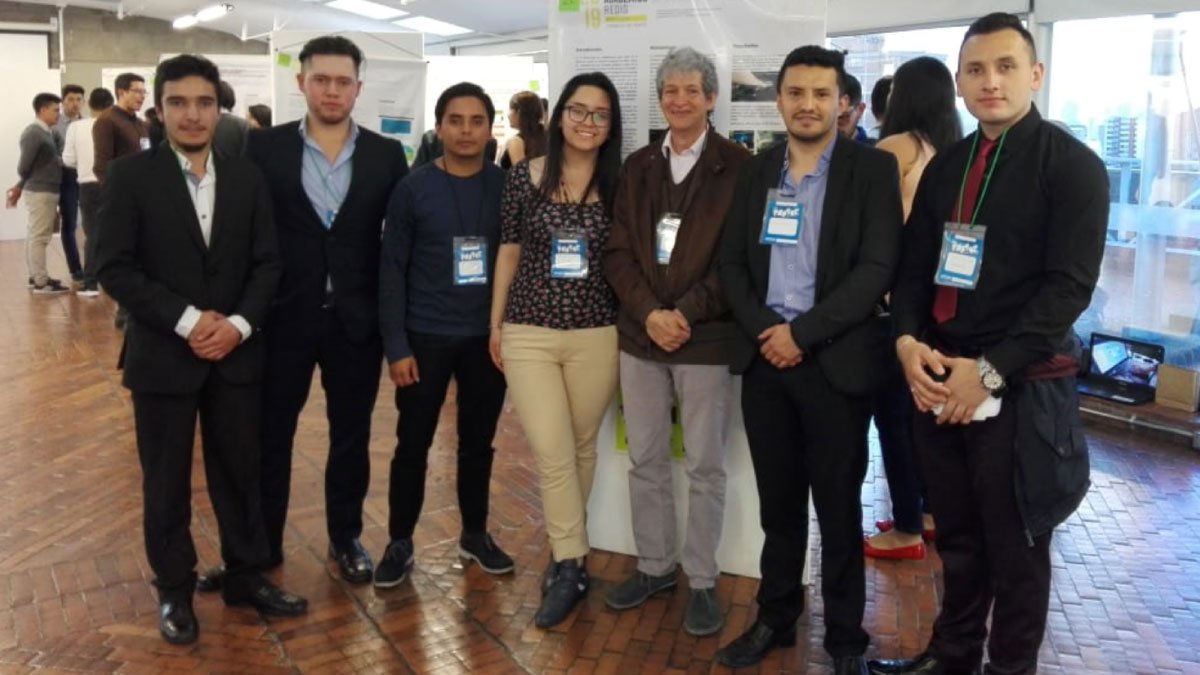
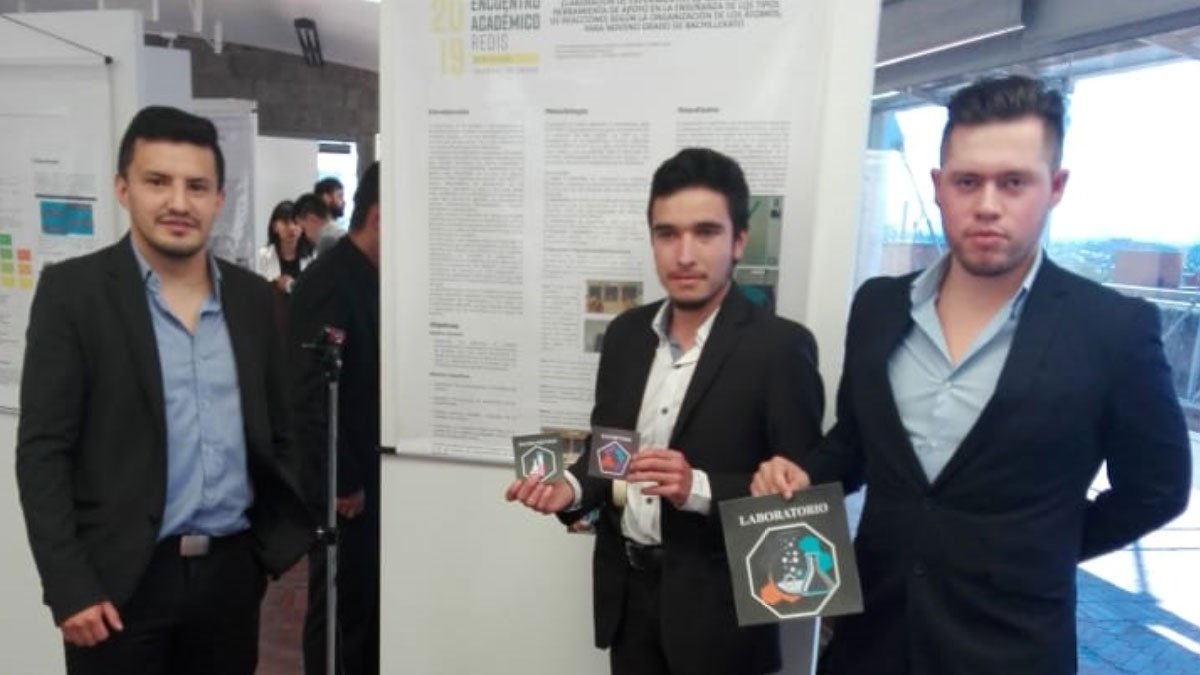
REDIS is the Network of Systems Engineering and Related Programs, comprised of various Higher Education Institutions and distributed across regional nodes. On this occasion, the University of Cundinamarca Through the Faculty of Engineering, it participated in the REDIS academic meeting (2019), Bogotá Node, with the exhibition of posters, degree projects and research groups, and of course, the application developed by the eighth semester students of systems engineering that allowed them to have third place in the match.
The student creators are: Jimmy Alexander Muñoz Gutiérrez and David Stiven Valdés, who, in turn, belong to the INVENSOFT research group, named their work: “Augmented reality application for the development of chemistry experiments as a support tool in teaching the types of reactions according to the organization of atoms, for ninth grade of high school.”.
“The application aims to help ninth-grade high school students understand, analyze, learn, interact, and evaluate the knowledge acquired in class, through the development of experiments, recording and monitoring of activities, with the support of the teacher,” say students Muñoz Gutiérrez and Valdés Julio.
The students' project idea arose from their observation that educational institutions lack adequate spaces for conducting chemistry labs, in addition to the certification required by the Ministry of National Education, which includes safety standards, equipment acquisition, appropriate infrastructure, instrumentation, and other resources that are quite costly. Another factor analyzed by the students was the low performance in science on the 2015 PISA tests.
In this sense, the engineering students thought of a project that would integrate the development of new technologies focused on the observation of virtual environments with real-world information to create digital learning, taking into account that the teaching of chemistry in high school plays a fundamental role in the modern world, which frames everyday factors and scientific argumentation of the phenomena of nature.
Thus, the development of the augmented reality application for the preparation of chemistry experiments was based on a support tool in the teaching of the types of reactions according to the organization of atoms, for ninth grade high school students.
“The project provides a fertile, safe, and low-cost learning environment that complements teacher instruction. It also includes the development of an application that replaces the need to count with a chemistry practice environment, since, through experiments, the integration and interactivity of the students is strengthened,”, "The student, Jimmy Alexander Muñoz Gutiérrez, stands out.".
The augmented reality application for conducting chemistry experiments is a teaching tool that supports the understanding of chemical reactions. It provides users with a simple yet effective environment for performing the experiments. Ninth-grade students can apply their knowledge in preparing each reagent by visualizing the instrumentation and components in three dimensions (3D) using targets or markers.
One of the main conclusions of the project is the creation of a virtual laboratory, developed for populations without access to complex laboratories and supported on an innovative technological base that promotes science, scientific research and innovative learning for the development of chemistry classes for the ninth grade of high school.
The project was carried out following the Agile RUP methodology, "AUP," whose objective is to ensure the production of high-quality software. AUP is a simplification of the Rational Unified Process (RUP) methodology, which uses the RUP phases in a simpler and easier-to-understand way for software development, reducing time and development costs by simplifying the disciplines.
The engineering professors Jorge Páramo and Edison Cañón provided technical advice, research and methodological support for the project.
News
News
News
News