News
2026-09-24
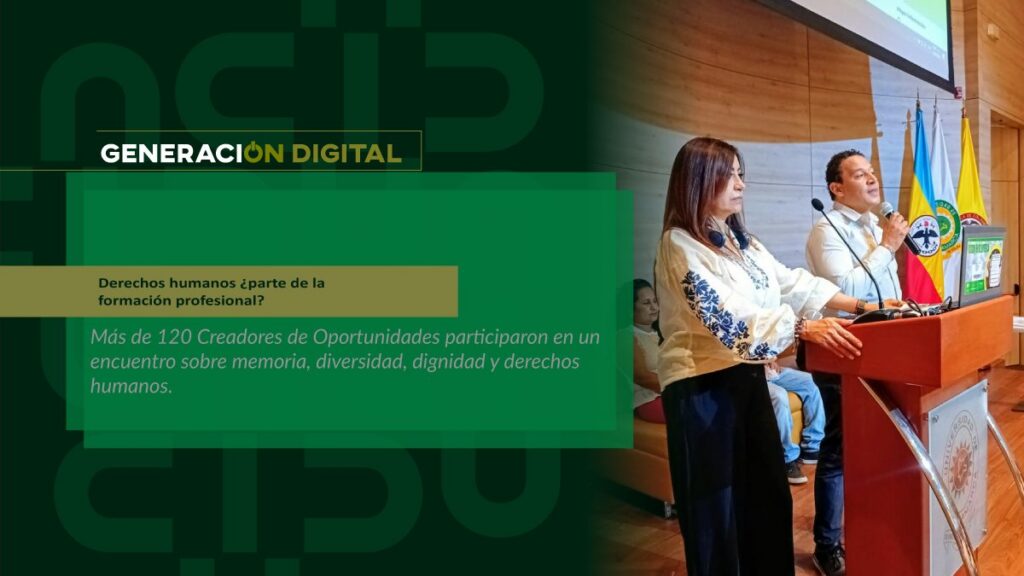
Human rights: part of professional training?
By: Alejandro García Suárez – Advisory Office of Communications



I am your virtual assistant, here to help you quickly and easily.
▲ Back to Top
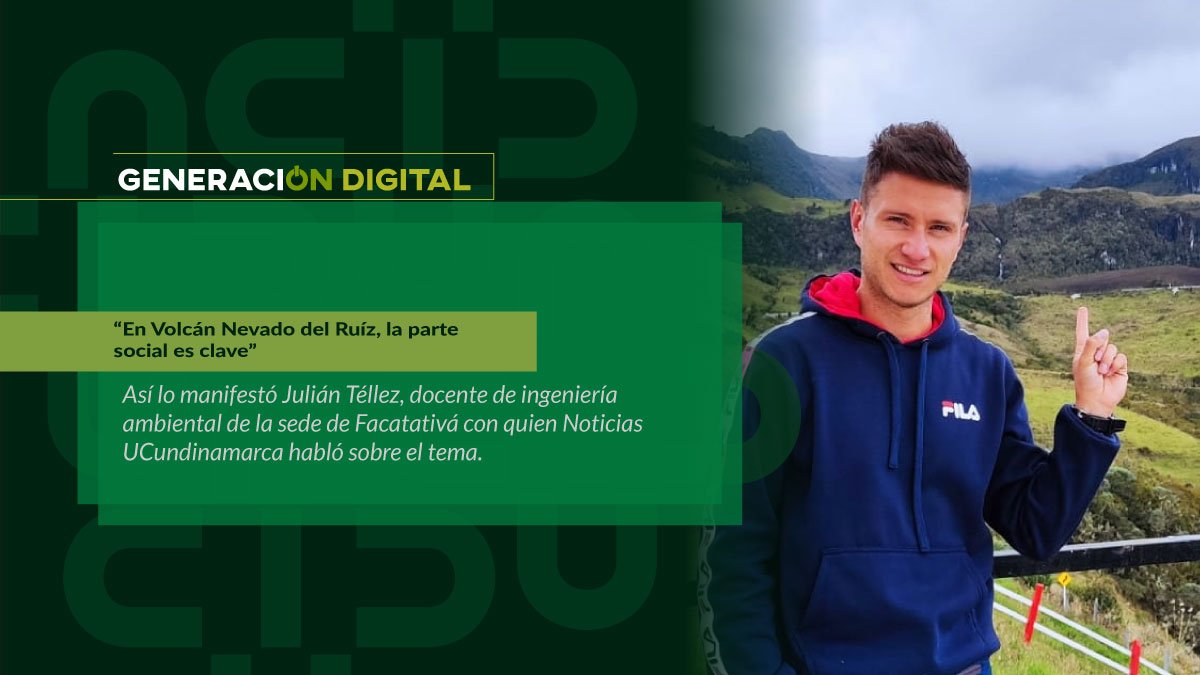
The institution, as part of its lifelong learning program, is moving beyond models that simply transmit knowledge and information, and is focused on motivating teachers to go beyond the classroom. Today we have the story of this teacher and his perspective on what happens there.
This geographer and environmental engineer knows what he's talking about, as he understands aspects such as multipurpose cadastre, social and environmental management, which are key in the event of an eruption.
At UCundinamarca, he has been teaching geographical information, cartography, and territorial planning to future engineers for a year and a half, fulfilling the mission of instilling the Transmodern Digital Educational Model (MEDIT) in all its dimensions, but with special emphasis on nature.
UCundinamarca News: How crucial is land-use planning in this case?
Julián Téllez Farfán: When there's a volcano like Nevado del Ruiz, it's humanity that must adapt to it, not the other way around. Along these lines, Colombia has been working for some time on a multipurpose land registry, which aims to organize the territory according to its social, environmental, economic, and cultural realities and to understand the status of properties and their owners. As this progresses, the risks posed by volcanoes can be mitigated because the information will be mapped and organized.
UCundinamarca News: How prepared is Colombia to face an eruption of the Nevado del Ruiz Volcano?
Julián Téllez Farfán: It's important to clarify that the Geological Survey and the National Risk Management Unit have been very active in monitoring the volcano. It's crucial that the community pays attention to the various alerts issued by these two agencies. However, we must understand the difference between prevention and emergency. An emergency is when the protocols of the different entities are activated to address a risk situation and monitor it in real time as the phenomenon occurs or the threat materializes.
In this case, the plans have already been drawn up, but having them is one thing; training people and implementing risk management so they understand them is quite another. If that isn't done, the effort is useless. Apparently, this hasn't been fully achieved. People need constant education on the actions to take according to the previously created contingency plan, including what to do in case of an ashfall or volcanic rock eruption, among other things.
UCundinamarca News: What kind of risk would people living near the volcano face?
Julián Téllez Farfán: There is a risk associated with ashfall, rockfalls, and lahar flows, which are a mixture of mud, water, sediment, and debris that flow downhill and caused the Armero tragedy. This can cause traumatic injuries, burns, asphyxiation, skin diseases, and eye and respiratory problems.
Because of these circumstances, people who live on the banks of rivers are the first who should evacuate.
UCundinamarca News: People in at-risk areas are refusing to evacuate. What has the government failed to do to convince them?
Julián Téllez Farfán: The State must undertake strong social work with these communities, explaining the consequences of remaining in these places and not leaving. This strategy is fundamental and must be implemented by leveraging the social fabric; it's not easy for them to understand that they must abandon their animals and spend the night in a shelter where they will lose their comfort. Therefore, a more comprehensive solution that provides them with a better quality of life is necessary. These types of solutions should already be included in the plans, and their dissemination is crucial.
UCundinamarca News: Is there another volcano in Colombia with similar characteristics?
Julián Téllez Farfán: Yes, the Cerro Machín Volcano, unlike the Nevado del Ruiz Volcano, has a blocked vent and is considered by experts to be one of the volcanoes with the highest risk of eruption. That's why we, as a university, will be visiting the area in the coming days to observe the social dynamics of the region, gather information, and develop practical strategies from an academic perspective, contributing to the creation of better plans and projects for the region.
News
News
News
News