News
2026-09-24
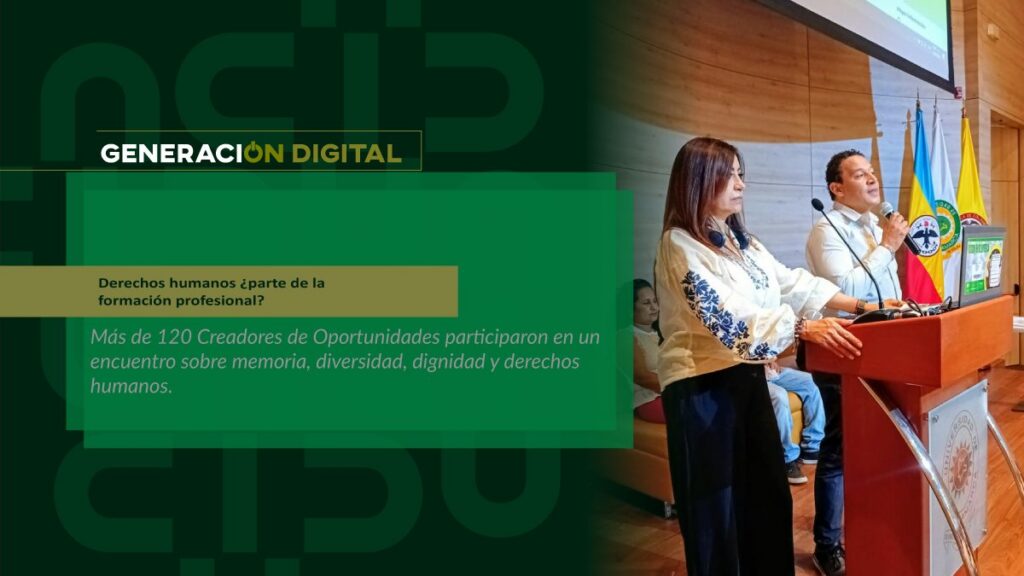
Human rights: part of professional training?
By: Alejandro García Suárez – Advisory Office of Communications



I am your virtual assistant, here to help you quickly and easily.
▲ Back to Top
By Alejandro García – Communications Advisory Office
In August 2022, the Ministry of National Education granted High Quality Accreditation to the Music program of the University of Cundinamarca in the Zipaquirá extension, an achievement that has allowed the institution to continue strengthening the processes of academic quality assurance that it has been consolidating.
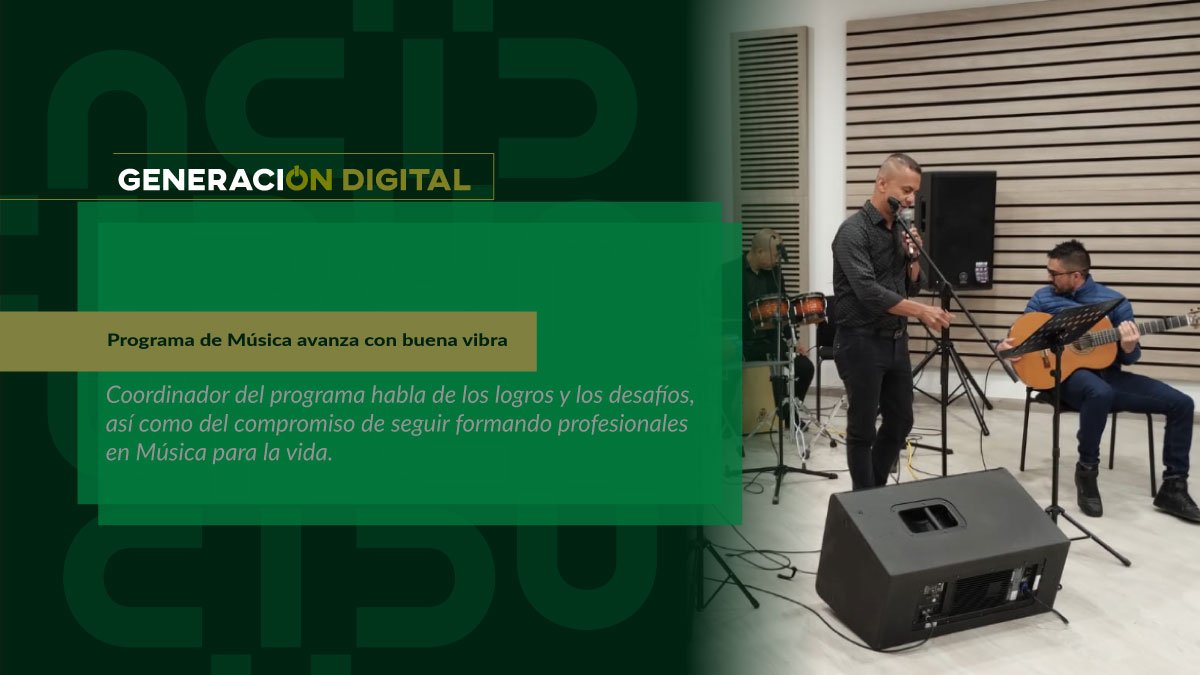
Juan Manuel Urrego Laurín, coordinator of the Music program at the University of Cundinamarca, highlighted the work being undertaken for the reaccreditation of the program, the agreements established with municipal administrations, the strategies implemented, as well as the challenges and obstacles facing the program.
News Agency (AN): What are the main achievements of the Music program?
Juan Manuel Urrego Laurín (JMUL): The recognition of High Quality is an achievement of the program that stems from the consolidation of its various core processes. However, there are other accomplishments as well, such as the consolidation of a redefinition process in which there was strong participation from the academic community, the hiring of full-time, permanent faculty, the recategorization, and the recognition of the productivity of the entire teaching staff of our program.
Additionally, the creation of conditions to improve musical skills that strengthen the Music teacher is highlighted, as well as establishing contingency processes in case of non-continuity or resignation of a teacher, and the implementation of strategies to improve the graduation rates of the program.
Likewise, the improvement in the results of the Saber Pro tests is highlighted, as well as the community's interest in participating in calls for mobility processes, both for professors and students, and the strengthening of our research seedbed and research group, which is projected in category B, recognized by the Ministry of Science and Technology.
News Agency (AN): What progress has been made in the infrastructure improvements for the classrooms of the Music program?
JMUL: The construction is at a high stage of progress, as it will have a five-story building, where there will be a significant number of classrooms, which will be used for the study of Music with adequate technical conditions for all the training and learning processes that are carried out in the 28 instrumental chairs that the program manages.
In addition, there are plans to open two auditoriums, as well as a recording studio, digital laboratory, editing consoles, a fantastic library, and of course spaces for socializing, the administrative area, the teachers' room, and the elevator with freight elevator for transporting instruments that require it.
This is a fairly large project, developed in several phases; the first phase, in which approximately 28 billion pesos have been invested, is already complete. We are beginning a second phase that will continue with security, ventilation, power plants, technological infrastructure, and the design of the auditoriums and recording studios. A third phase will follow, which will include academic spaces for the Psychology program and a bachelor's degree program that will also be offered at the Chía-Zipaquirá extension campus.
News Agency (AN): How has the Music program been integrated with the Transmodern Digital Educational Model of the University of Cundinamarca?
JMUL: We are a fairly diverse program in terms of instrumental training and also the different musical currents that coexist there.
Our University's Educational Model includes curricular guidelines that encourage innovation. In our case, the teaching and learning of music processes take different forms, with personalized classes and experiences that depart from traditional teaching methods.
News Agency (AN): What are the main agreements that the Music program has with the municipalities and how have they benefited the program?
JMUL: There's an agreement with the Tocancipá mayor's office, through which we'll be conducting a consultancy to develop the curriculum for the technical music program. With the Zipaquirá mayor's office, we're exploring collaboration with training schools; I think the issue of outreach and program availability is very important.
Similarly, we have a diverse range of diplomas in Music Pedagogy, Musical Direction, and Music Production, which contributes to strengthening the artistic processes of the region.
News Agency (AN): What are the main challenges and obstacles facing the Music Program?
JMUL: Among the challenges, the first is achieving reaccreditation of the program, which was accredited in August 2022 for four years at the High Quality level. We are working to achieve full accreditation of the program by 2026.
Currently, we have four categorized researchers. The idea of the next call is that our research group can reach category A and thus increase the number of researchers categorized and recognized by the Ministry of Science and Technology.
In the case of agreements, our challenge is to start generating and strengthening these spaces of alliance with the different municipal administrations, with foreign universities, because many of the processes of our mission and our substantive functions also depend on them.
Continuing with the adaptation and construction of the new headquarters is an important challenge; we must continue to support, supervise, and monitor the various investment projects that are planned to complete the entire construction, particularly with regard to recording studios.
Listen to our podcast:
News
News
News
News