News
2026-09-24
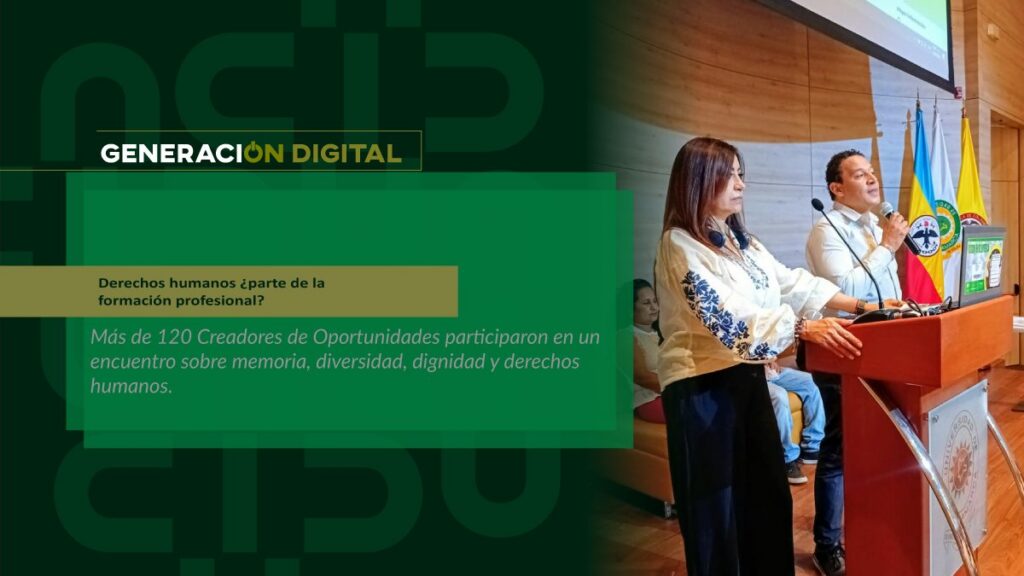
Human rights: part of professional training?
By: Alejandro García Suárez – Advisory Office of Communications



I am your virtual assistant, here to help you quickly and easily.
▲ Back to Top
By Juan Carlos Monzón - Communications Advisory Office
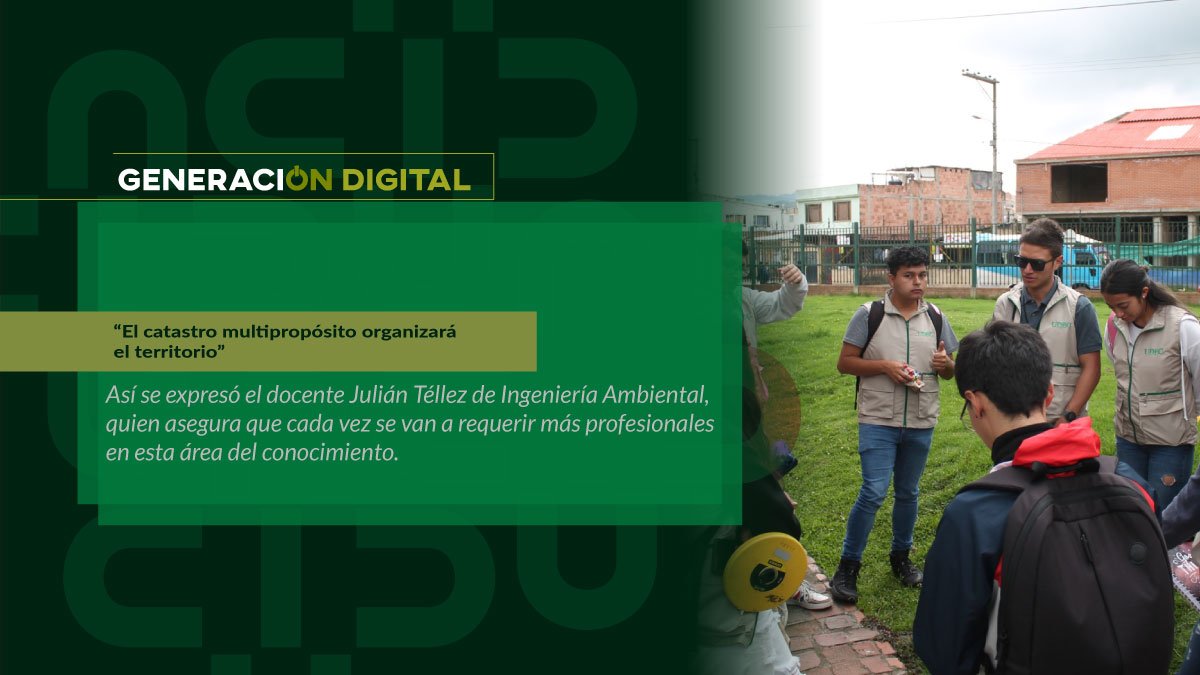
“The multipurpose cadastre is an area that will increasingly generate more jobs, since in the coming years trained professionals will be required to advance this state policy that requires a clear inventory of lands and real estate in Colombia,” says Professor Julián Téllez.
Therefore, this knowledge manager takes advantage of the UCundinamarca learning methodology in which students experience, solve problems and make decisions to delve deeper into these topics that will help them strengthen their professional and work skills.
UCundinamarca: What is the multipurpose cadastre?
Julián Téllez Farfán: The multipurpose cadastre is a real estate census that includes an inventory of land and real estate throughout Colombia. The goal of this measure is to organize property ownership, determining how it is divided and who owns it. This development policy also involves understanding the activities taking place on each property. Furthermore, it encompasses the legal aspects, identifying property owners through deeds, certificates of title, notarization, and registration. This is the primary territorial planning mechanism for the public and private sectors to generate projects and investments related to the territory; hence, it is called multipurpose.
UCundinamarca: A number of stories have been circulating about the multipurpose cadastre, such as the claim that property taxes will increase. How much truth is there to these rumors circulating in society?
Julián Téllez Farfán: There are many myths surrounding this because it's a sensitive issue, as it affects people's finances. This multipurpose land registry covers aspects such as a property's finishes, built area, number of floors, and luxury features, among other things. All of these elements are part of a property's characteristics, but when we talk about its economic value, it encompasses the property's intended use.
A house used for commercial purposes is not the same as one that isn't. The multipurpose land registry collects this information and generates what's called the cadastral valuation, which is a value assigned to a property and cannot exceed the 60% commercial valuation. Therefore, some people will see their valuation increase while others will see it decrease.
UCundinamarca: What benefits does the multipurpose cadastre bring to people?
Julián Téllez Farfán: It provides legal security. This means that the property owned by the citizen can be documented with the purchase and any improvements made. This is useful for transactions such as buying, selling, or inheritance, among other procedures. When the property records are not updated and the owner wants to sell it, the citizen loses money from the outset because the property's true characteristics are not reflected in the documentation.
Similarly, if there's a land dispute, these documents serve as collateral to secure a successful outcome in court. To conclude, bank loans involving large sums require collateral, and for this, borrowers must present legal documents such as an up-to-date land registry record. If they don't have it, they won't receive the loan.
UCundinamarca: How does the implementation of the multipurpose cadastre help the peace process?
Julián Téllez Farfán: Since the implementation of the peace accords, the multipurpose land registry has been revitalized, as there were displacements of communities and the social and economic dynamics of those territories were affected. Therefore, this initiative aims to determine who the true owners of the land are, how much there is, and what it is used for. This is when people who were dispossessed of their plots, houses, or farms can benefit from restitution or the allocation of new properties by the State. This tool greatly contributes to consolidating peace in these territories.
UCundinamarca: What recommendation do you give to property owners regarding the updating of their properties?
Julián Téllez Farfán: It would be extremely important for everyone to verify the status of their property, because this ensures that the information recorded in the land registry accurately reflects reality. This prevents errors that could ultimately harm their assets. Therefore, I encourage property owners to download their land registry certificate and check for any inconsistencies.
UCundinamarca: What is a visit to a property like for the cadastral update process?
Julián Téllez Farfán: Professionals come, take photos of the place inside and out, measure it, and update the records if there have been any changes, such as the addition of a floor, the remodeling of a space, or the opening of a new business. It's important to note that having this information up-to-date can help a low-income person access a government subsidy to remodel parts of their home, as this document is required by the authorities to verify their eligibility for the benefit.
Finally, it is important to highlight the words of Dr. Jorge Iván González, Director of National Planning, who stated that the multipurpose cadastre (urban and rural) is significantly behind schedule, which underscores the importance of the work being carried out by knowledge manager Julián Téllez. “We have only reached 9.41% of the total number of properties. This reflects structural political and economic problems. The situation is very critical in rural areas,” said the high-ranking official.
News
News
News
News