News
2026-09-24
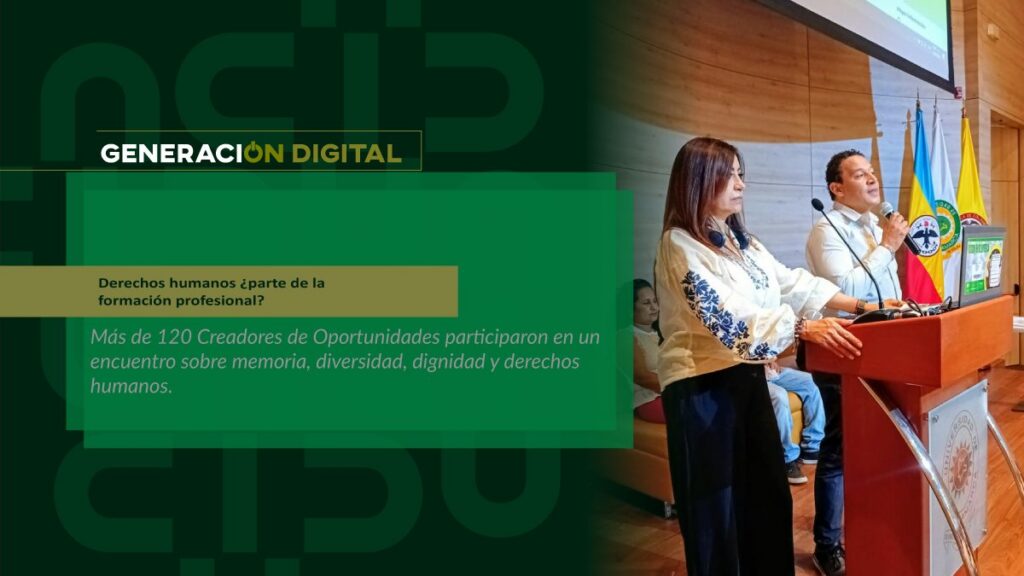
Human rights: part of professional training?
By: Alejandro García Suárez – Advisory Office of Communications



I am your virtual assistant, here to help you quickly and easily.
▲ Back to Top

Germán Pinzón Zamora, a psychology professor from the Nursing Program at the University of Cundinamarca, tells us about the social and academic work he does with a group of nursing students and homeless people.
How did the students' work with this population group of homeless people come about?
Professor Germán Pinzón: About two years ago, some students took the initiative to work with this population as part of their graduation projects. It was a new area of focus that was implemented as part of a social work research group focused on vulnerable populations that we had already been developing for some time.
The students had this good idea because Girardot, due to its climatic characteristics, is a transit point for many homeless people who have a difficult situation in the area of health.
How did students and teachers approach the people in this group?
Professor Germán Pinzón: As an educational institution, we must be prudent when addressing this topic due to the existing social problems surrounding homeless people.
For example, it would be reckless and irresponsible for a group of students to venture into areas where these individuals usually congregate. For everyone's safety, this should take place in a more institutionalized setting.
Initially, we contacted the Girardot Mayor's Office and discovered that there is an office that manages this group of homeless people and organizes support brigades for them. These brigades take them to a place where they receive new clothes, personal hygiene facilities, and other services. We saw that, as an educational institution, we could support these brigades initially by conducting health assessments of the members of this community.
In this institutionalized environment, where city hall officials, members of the National Police, and others are involved, the first approaches were made.
How do homeless people receive this attention?
Professor Germán Pinzón: By the time the students participate in this academic activity, they have already completed clinical rotations in healthcare institutions. The students' perception is that, compared to users of conventional healthcare services, homeless individuals show a great deal of respect toward the healthcare staff who treat them and are very participative and cooperative in the activities carried out.
There is no hostility or shirking on their part. Of course, this behavior is also part of a response to the way we treat them within the framework of respect for the
diversity. We consider them citizens, subjects of law, who must always be treated with dignity and respect, just like everyone else.
Are these people linked to the health system?
Professor Germán Pinzón: One of the difficulties we face in this academic work is precisely that many of these people do not even carry their identity card with them and, as you might expect, are not affiliated with any health care system.
Another problem is that some of them receive care when they are under the influence of psychoactive substances or in delicate health conditions, which makes communication and information gathering difficult.
In this way, the university has invoked the laws that regulate healthcare for the homeless population provided by local authorities. These authorities have the responsibility to establish a Network for the Care of the Homeless, and although this issue had been neglected in the past, our group has begun promoting the implementation of these policies, in conjunction with entities such as the National Registry and the SISBEN (System for the Selection of Beneficiaries of Social Programs), in order to integrate these individuals into the healthcare system.
In the latter case where the identity of the person is not yet well established, it has been decided to maintain at least an internal database, with basic data of the person.
Is it a myth or a reality that homeless people have "very strong immune systems" and don't get sick?
Professor Germán Pinzón: This statement is completely false. In reality, the mortality rate among the homeless is very high.
Currently, the seedbed ended up being linked not only with the Mayor's Office of Girardot but also with the Government of Cundinamarca, which has assigned the hospital of the municipality of Tenjo for the care of the homeless in the department.
Under the Governor's programs, our students received training from the Ministry of Health on tuberculosis. There, they learned about the high mortality rate among homeless people from this disease. And not only that, but due to their addictions, their habit of sharing needles, and their lifestyle, many are infected with HIV.
The problem is that psychoactive substances cause these individuals to live in a state of constant euphoria, which can mask or conceal very serious health problems such as pulmonary, immunological, or malnutrition issues. Many patients in their forties already require dialysis because they have lost their kidneys. Sadly, the life expectancy of a homeless person who began using psychoactive substances in adolescence is a maximum of 50 years.
Turning to the academic field, what achievements result from this social work?
Thanks to this social work, the students have been able to experience what transculturality and transmodernity, which are proclaimed at MEDIT, mean, as the students get closer to the reality of the context where they live and understand the problems that are there.
This becomes a serious, disciplined, and research-based endeavor. Some students have developed theses linked to significant projects. For example, we submitted a research project to an internal university call for proposals, led by the Girardot Mayor's Office through the stamp program, and this project was approved. Within this framework, students have gained methodological insight into research and have become integrated into research participation networks.
In other words, we are doing magnificent community work that goes beyond and achieves academic and scientific excellence.
Among other outstanding achievements, we have that in REDCOLSI, the work of the research group obtained a sufficient score to represent Colombia internationally, and last semester within the group we obtained the first meritorious thesis work for the Nursing program of the university.
Communications Office of the University of Cundinamarca: Congratulations to the students and teachers involved in this magnificent academic and social work that makes the University of Cundinamarca community proud.
News
News
News
News