News
2026-09-24
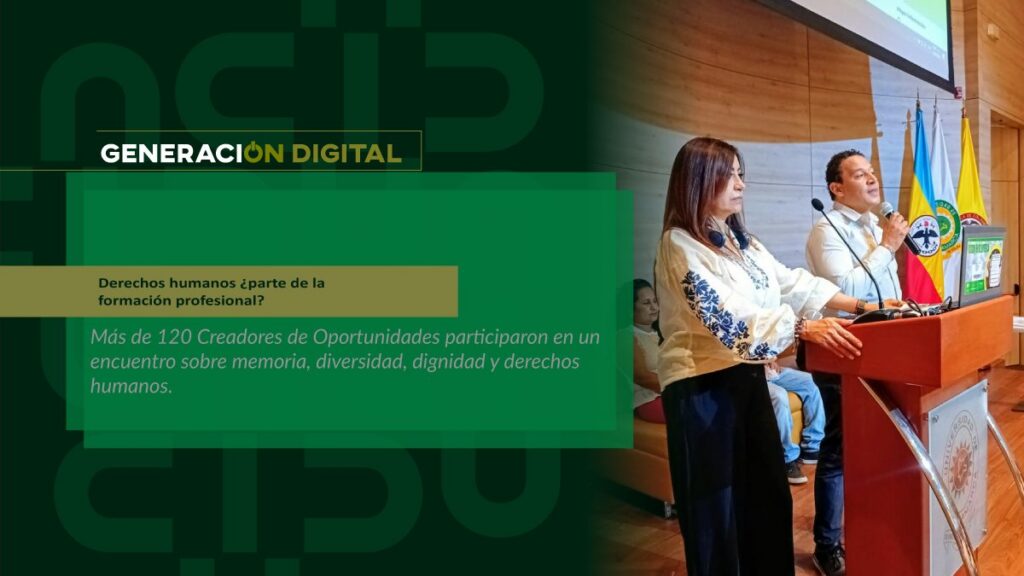
Human rights: part of professional training?
By: Alejandro García Suárez – Advisory Office of Communications


I am your virtual assistant, here to help you quickly and easily.
▲ Back to Top

Professor Fredy Augusto Duque Duque from the Environmental Engineering program, Facatativá extension, who teaches the subjects of Colombian Strategic Ecosystems, Restoration, Ethics, Bioindication, Environmental Education, tells us about his experience of online learning and teaching during the time of covid-19.
Here begins the story of a positive experience:
In these virtual classes, we as professors have received tremendous support from the university administration. However, it pains me to say it, but I feel that some students—not all—see the professor as a machine that can be programmed for either in-person or virtual teaching, like the virtual format imposed by the health emergency. I've tried to find a middle ground, understanding both my own dynamics and shortcomings in this new type of teaching, as well as understanding the students, without falling into false premises or expectations. In other words, we have to be realistic. It's impossible for us to present an ideal world in our classes when we don't even know where this crisis we're experiencing is going to lead us.
Based on the above, I can say that these virtual classes have given me the opportunity to understand that virtual tools don't replace teachers; on the contrary, they should be seen as complementary to the academic process. To further enhance the classes, it's necessary to learn how to use all the features included in the virtual tools. This would allow me to capture students' attention more effectively. It's an experience, I'm sure many will agree, that we never thought would come our way, but now it's time to look back at what I've done and how I can improve.
My experience has been somewhat curious. I've always demonized virtual communication tools, believing that in-person interaction has been lost with the advance of virtualization. Personal relationships are eroding daily, and public institutions—the sector where I've worked for the past few years—are becoming dehumanized. While virtual communication allows for the mechanization of processes, often with great efficiency, we can't disregard dialogue, nor can we forget courteous treatment and assertive communication between sender and receiver.
A key indicator of educational success is its students, as they reflect the strengths and weaknesses of each institution. I dare say that all students have responded positively and decisively to this challenge, understanding that halting the intellectual process is not an option, but rather recognizing the responsibility they bear as students enrolled in a public university.
Given this, I see situations where they demand more of me as a teacher, dedicating themselves more to their work, which has led them to have a more holistic view of their environment. They were reluctant and somewhat cautious when we first began to experience these changes; it was understandable, we were all seeing how the world as we knew it changed forever. I think they are brave in giving their teachers that vote of confidence, in agreeing to continue the semester. We, as teachers, must rise to the occasion so as not to disappoint them.
The students have always had an attitude of changing the world, a great curiosity to find answers to current problems. In my opinion, the great leap they have made is that they managed to understand and assimilate that one of those problems that we have theorized and hypothetically presented to them in the classroom has become a reality.
They are more aware, I'm not saying they weren't before, but they have gained a greater degree of awareness regarding household spending; that is, they are beginning to understand that wasting time is detrimental to their life plans and the family economy. They believe that the best thing to do in these crises is to take advantage of studying, since they cannot wait indefinitely for normality to return.
From this experience, I would highlight several things, such as:
-the capacity we have as a species to adapt to new situations and the great support that we teachers have received from the University's management.
-This experience showed us that we have virtual tools that will allow us to reach more students.
-The great challenge we have from academia is to demonstrate, based on this experience, the need to connect all the regions of Cundinamarca.
-It is the mission of the Ministries of Education and Information and Communication Technologies to strengthen internet connectivity in the municipalities and rural areas where the University is located.
A clear example of learning and knowing how to take advantage of technological resources was seen during the quarantine decreed by the Government in response to the health emergency caused by the coronavirus, since we had the technological tools, which, without going into listing the multiple existing difficulties, allowed us to continue with the classes.
If we extrapolate this to our teaching practice, I believe our role is to guide students through this vast ocean of information, teaching them to recognize reliable sources and, of course, preventing them from falling into the trap of unverified or incomplete information. From this foundation, professionals can conduct thorough research and apply it to propose solutions to local or regional problems they have previously identified. These professionals can be agents of change in mindset within their communities, leading to a better quality of life.
It's important to constantly reinvent ourselves and adapt to the changes the world imposes on us every day, because it's the only response we have to the ever-changing context in which we live. I believe there are no static systems; on the contrary, the continuous evolution of our society compels us to do so.
It must be admitted that one thing that remained largely unchanged was in-person classes, undoubtedly because these models have proven effective. Unfortunately, we had to switch from in-person to virtual learning, a great success without a doubt, but one that tested all of us teachers, since in many cases, even though we used virtual tools, there are still ways to get more out of them.
While a pandemic is incredibly difficult, as we are currently experiencing it, it has made us realize how fragile we are as a society, and in that sense, it has raised our awareness of the changes we are causing to the environment. I believe that the great challenge we face as a society is to fully understand that we are immersed in this vast ecosystem, and therefore, any damage we cause to it will sooner or later affect us. Generally speaking, we see the environmental problems facing our country, generated, among other factors, by the loss of ecosystems, deforestation, the invasion of introduced species, and the pollution of our rivers.
The environmental sector bears a great responsibility. Despite all the regulations, where we are an example for other countries, we fall short in their application and enforcement. Furthermore, from the perspective of Environmental Education, we see that these courses are not impacting the community as initially intended. The eloquent speeches of environmentalists such as Thomas van der Hammen, Julio Carrizosa, Manuel Rodríguez, Gustavo Wilches Chaux, and Augusto Ángel Maya have been lost in the halls and classrooms.
Environmentalism became "short-term," dedicated to celebrating Tree Day, Water Day, Earth Day, but the underlying problem continues, and that is the continuous and increasing degradation of the environment.
The role our students and graduates must assume is to take on the challenge we see in the environmental sector. It is necessary to monitor Environmental Education projects; there seems to be a lack of connection between the local context of communities and what is implemented in schools and universities. From an academic perspective, the University is called upon to document and showcase all the experiences undertaken by citizens regarding environmental stewardship. It is the University that must reflect on how these actions originate from the public and how they achieve long-term environmental impact.
The institution doesn't have all the answers, but academic work is very important for generating new ways of thinking and understanding why caring for nature, as a discourse, hasn't generated a change in mentality in society; it's necessary to rethink the way we are conveying this message of conservation and preservation of the environment.
One piece of advice I give to all students is not to stop studying; quitting should not be an option. Some cases of student dropout occur because the student deceives themselves by thinking that they can leave their studies for later.
I know we are in a very difficult time, but I want to assure students that we, the faculty, are rising to this new challenge. The University has rethought its philosophy, which has led us to view the professional training process with a different perspective. In addition, the University offers various socioeconomic support programs for students who need them. The message is clear: the intellectual process must continue, because our commitment is to yourselves and to society.
To all my colleagues, I say that they are the heroes of the day—of course, after the doctors, nurses, and healthcare workers, whom I admire and respect immensely—but to the faculty, I say that the University continued to function thanks to their rapid response, their capacity as a result of their training, and the great love and dedication they demonstrate for their profession. I believe that the importance of the professor's role in society is being rediscovered and understood once again; they are agents of change, agents of reflection, responsible not only for teaching but also for shaping future professionals.
We've all had our share of setbacks: internet access problems, microphones that don't work, speeches that often go unanswered, students with difficulties, and so on. I end up turning to the comforting phrase that Freire always delivers: "Teaching demands understanding that education is a way of intervening in the world." In other words, we've earned our keep (laughs).
News
News
News
News