News
2026-09-24
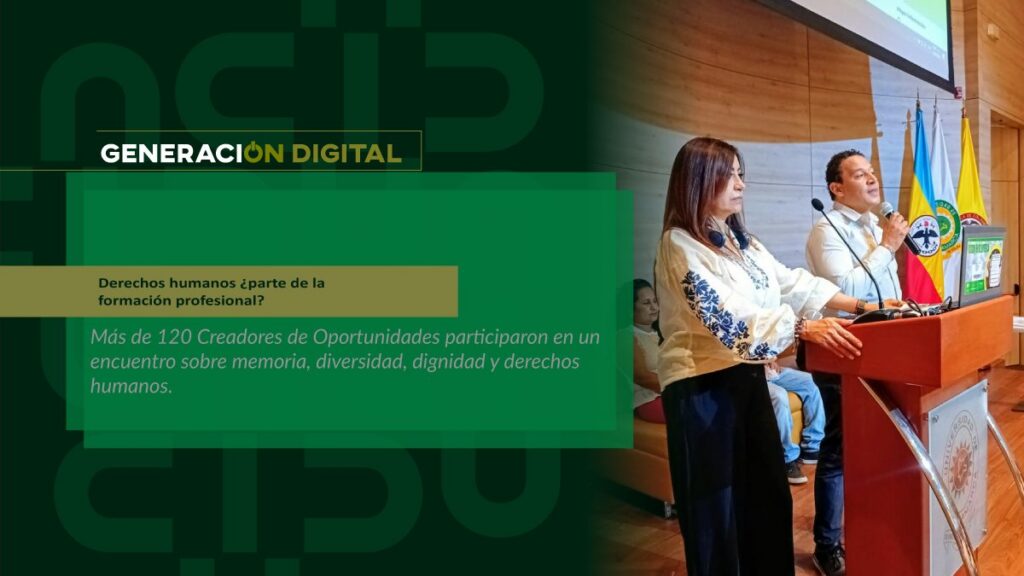
Human rights: part of professional training?
By: Alejandro García Suárez – Advisory Office of Communications



I am your virtual assistant, here to help you quickly and easily.
▲ Back to Top
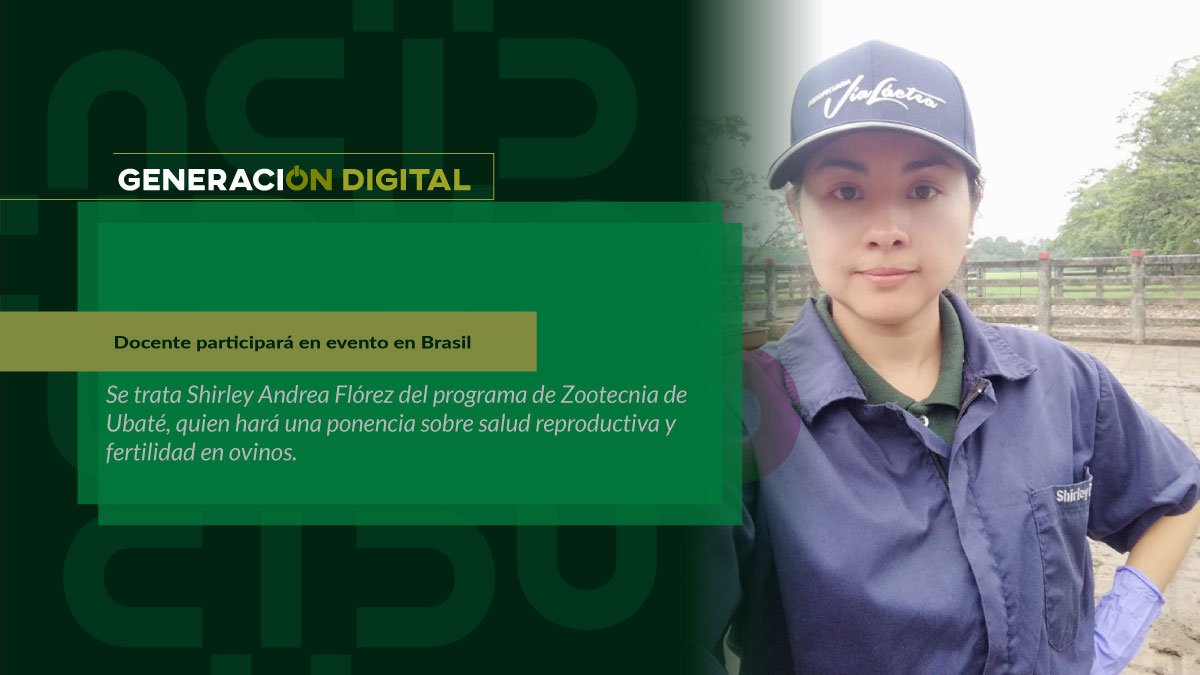
UCundinamarca News spoke with this professor, who holds a doctorate in animal reproduction from the University of São Paulo in Brazil and is also a member of the Animal Reproductive Health and Fertility Research Group (SISARF). She shared her expectations for this experience.
UCundinamarca News. How did the University of Sao Paulo and the Brazilian Association of Andrology invite you?
Shirley Andrea Flórez. Thanks to the work of the SISARF research group, which focuses on reproductive health and animal fertility within our Animal Science Program, we submitted a study titled "Study of the Feasibility of Using Sexed Semen in Sheep Systems," authored by student Jackie Peña. I participated in this study along with Professor José Fernando Pérez, who served as its director. Shortly afterward, we were informed that we had been selected, but since the event is mid-year, UCundinamarca does not fund inter-semester activities, so I will be presenting it myself.
UCundinamarca News. What will your presentation in Brazil be about?
Shirley Andrea Flórez. The Seventh Meeting of the Brazilian Association of Animal Andrology will take place in Brazil from June 15th to 18th. Her presentation addresses the topic of sperm sexing in sheep. This study explores the hypothesis of whether this sexed semen biotechnology can be implemented in Colombian sheep breeding programs, as it allows for the selection of the animal's sex. For example, a male is used for fattening, and a female for breeding. This depends on the purpose of the breeding operation.
UCundinamarca News. In addition to this presentation, what other academic activities are being carried out in the research group?
Shirley Andrea Flórez. As a complement to this research, we want to conduct a survey titled "Technical and Social Analysis of an Alternative for Sperm Sexing in Sheep." This survey will be administered to sheep producers. We will ask them if they are familiar with this sexed semen technique, if they consider its implementation appropriate, and what the advantages and disadvantages of this system are, among other things. We have already validated the measurement instrument and will present it to the attendees here and at the event in Brazil. This survey will allow us to understand the current state of sheep breeders regarding this technology and what we need to improve.
UCundinamarca News. Following this trip, what will be done regarding knowledge management?
Shirley Andrea Flórez. This scientific knowledge will be shared through a summary and a publication in an animal reproduction journal. I've already published two summaries there. We also worked with producers in Ubaté in May to explain what sexed semen is.
UCundinamarca News. Is Brazil a powerhouse in sheep sexing?
Shirley Andrea Flórez. Their focus is more on sexed semen, but from cattle, not sheep. I've also noticed that they make considerable use of laparoscopic insemination. All of this leads me to conclude that this country is a powerhouse in the region in terms of biotechnology.
News
News
News
News