News
2026-09-24
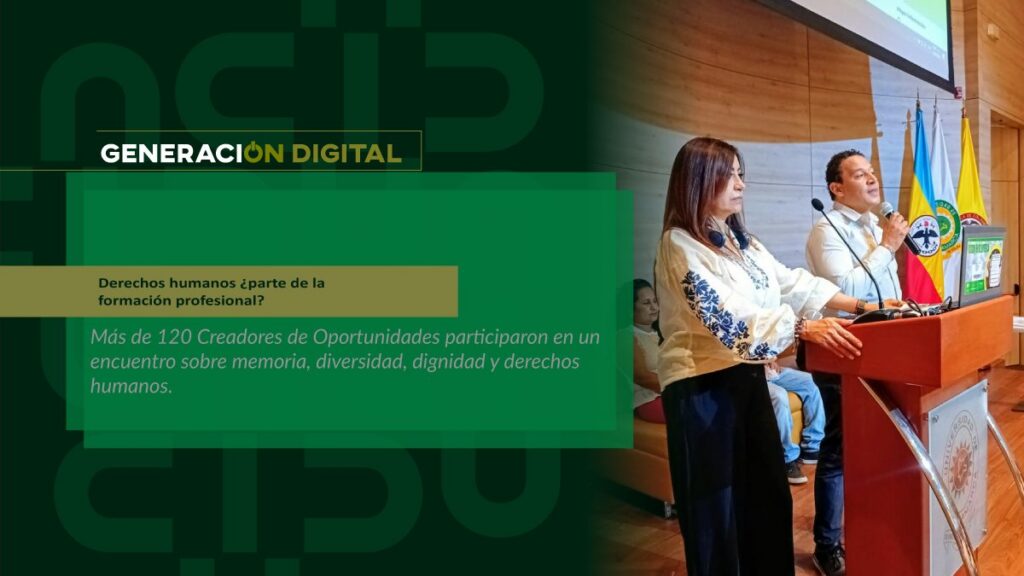
Human rights: part of professional training?
By: Alejandro García Suárez – Advisory Office of Communications



I am your virtual assistant, here to help you quickly and easily.
▲ Back to Top
The event, which began yesterday and continues today, aims to showcase the research and artistic production within the Zipaquirá music program, as well as that of internationally renowned artists. All of this is framed within the Transmodern Digital Educational Model, which focuses on creating academic processes with a translocal and cross-border perspective.
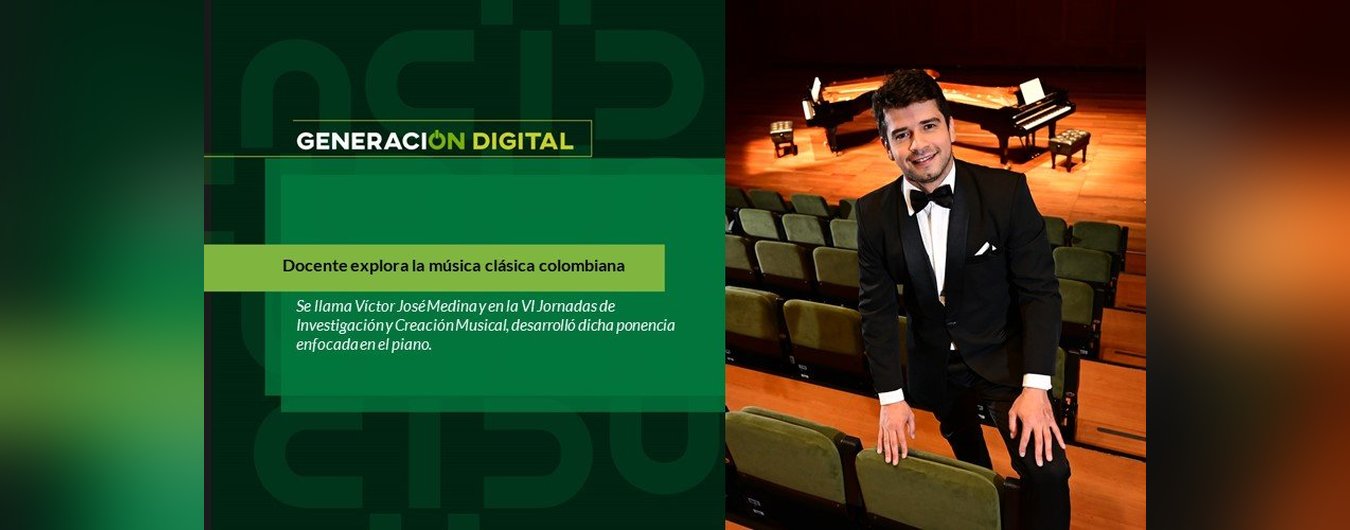
UCundinamarca News spoke with this musician, a graduate of the University of Los Andes, who could not shake off his Llanero roots, which captivated him, creating an amalgam between classical and traditional music, even dressing it up in a tuxedo with two pianos, alongside his colleague Wolfang David Ordoñez.
UCundinamarca News: What did the presentation consist of?
Victor Jose Medina: I spoke about the alternatives to what we know as Colombian classical music and its repertoire in a lecture I titled: Research and Creation in Colombian Piano Literature. That is, alternatives for producing music in this style with folkloric influences, but for this instrument. Today, I discussed my colleague Wolfgang David Ordoñez, a composer who actively works on our research project, Joropo and Pajarillo Sinfónico: Public Reaction to Folk Music Expanded into Academic Language Adapted for Two Pianos, and I made a point of mentioning classical llanera music.
UCundinamarca News: The presentation addressed paradigms in musical training. What do these paradigms consist of?
Victor Jose Medina: Today I discussed this topic and how it has evolved throughout history. Before the 19th century, musicians were trained as composers and performers—all in one package. Now there's a different paradigm that affects all the arts. In our case, the careers of composer and performer are separated. This has resulted in less output from the classical tradition. Composers typically work with different instrumental formats, while performers primarily play European music.
UCundinamarca News: What was the research process like for the llanera music adapted for two pianos in which you participate?
Victor Jose Medina: In this lecture, I presented the research process behind Llanera music, specifically joropo, and how we adapted it for two grand pianos. I showed videos of the final result, which was well-received by the audiences. In the past, we have performed at the National Pedagogical University and the Julio Mario Santo Domingo Library, among other venues.
In this last piece, we showcase the fanfare and "pajarillo" of llanera music and the possibilities I created by working with the composer to adapt his work. What we achieved is virtuosic music, difficult to perform, and capable of competing with European music, within the realm of classical music.
UCundinamarca News: Where do you hope to go with this musical proposal?
Victor Jose Medina: We want to motivate students to integrate the musicians who compose and those who play, and to start doing bigger, more creative and investigative projects that generate impact, unlike if they developed them alone.
UCundinamarca News: Are there other countries in Latin America that are working on this type of experience?
In this case, there aren't many examples of two acoustic pianos that integrate folk and classical music. There is a project in Argentina with tango and the composer Alberto Ginastera. Along those lines, our dream is for this work to become international. However, it is quite common in the classical music format.
Today's Schedule
Finally, it's worth noting that today at 2:00 pm, the lecture "Multispecies Musical Zooethnographies," presented by Simón Castaño from the University of Antioquia, will be streamed on the university's social media channels. At approximately 2:20 pm, Zemög José Miguel Gómez Ríos will present on "Musical Creation Through Experimentation, Sound Design, and Synthesis." At 2:40 pm, Santiago Barbosa Cañón from the University of the Arts of Cuba will discuss "Teaching and Learning Contemporary Music Today." At 3:00 pm.
Effective Communication in Film Music by Carlos Alberto Duran Zarate from the University of California, Los Angeles, and to conclude the day, at 3:20 pm, National and Regional Music: The Case of Agustín Payán Arboleda in the Valle del Cauca will be presented. PRÁCSOMUS, Universidad del Valle, Buga campus. At 3:40 pm, Between Mountains: The New Sounds of the Coffee Region. A concert in dialogue with Cenit Ensemble, Ted Ford, and Yuen Po Hang. Cenit Ensemble New Music Research Center and Royal Northern College of Music of Manchester.
News
News
News
News