News
2026-09-24
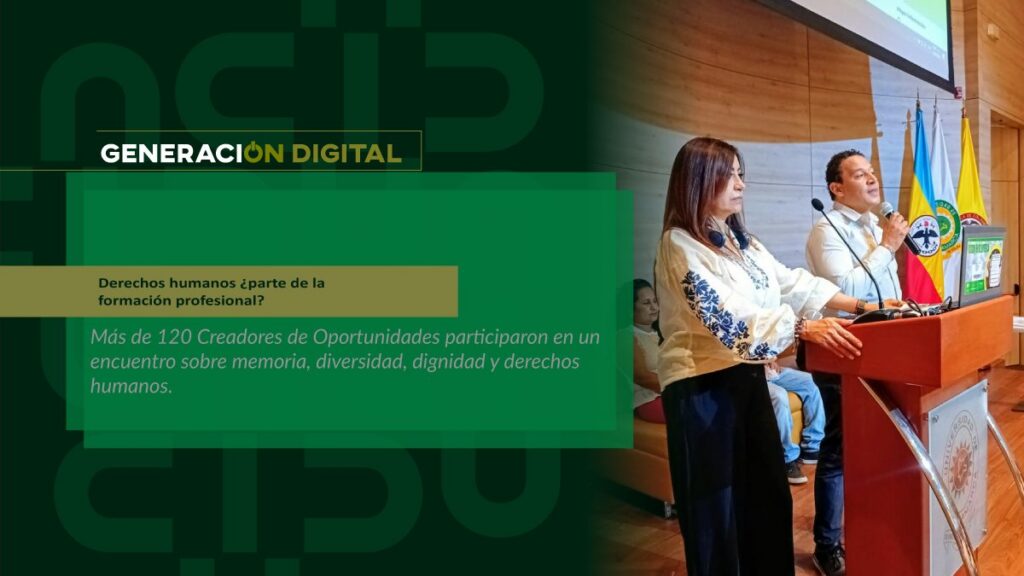
Human rights: part of professional training?
By: Alejandro García Suárez – Advisory Office of Communications



I am your virtual assistant, here to help you quickly and easily.
▲ Back to Top
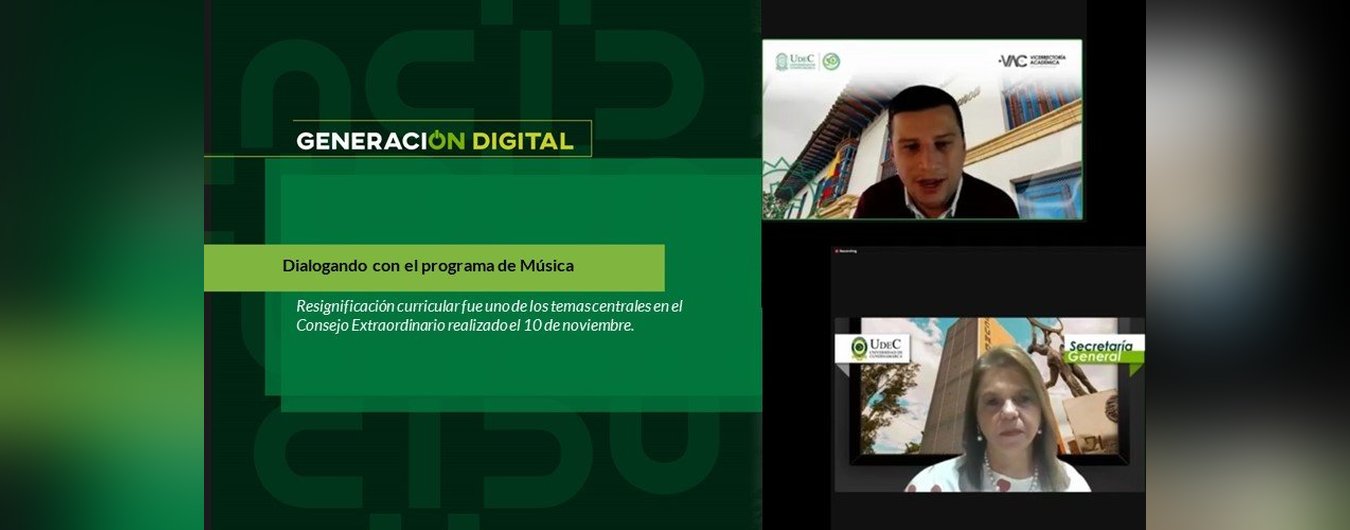
Under the principles of dialogue and collective construction, the extraordinary session of the Academic Council was held, with the participation of students from the Music program. “We held this session at the request of the students in the program, in a space where the purpose is to listen and gain a better understanding of the reality of curriculum redefinition through dialogue, being pluralistic because we know that there are no single positions or solutions in these environments,” said Rector Adriano Muñoz Barrera.
“The curricular redefinition of the Music program has been a process that has been underway since 2019 with the participation of the academic team and the students. 16 sessions were held where there was also a discussion about the process and how it was going to be carried out. In 2020, 19 sessions were held, in 2021, 22 sessions were held, and in 2022, 10 sessions were held,” explained the Academic Vice-Rector, Dr. Víctor Hugo Londoño.
“Through agreement 009 of May 3, 2022, the redefinition was approved within the framework of the renewal of its qualified registration, presented by the same academic program, where the program coordinator as representative of the Curriculum Committee supported the redefinition exercise within the framework of the model of guidelines and commitments that were approved by the Committee and the Faculty Council,” added Dr. Londoño.
There are substantial elements for this redefinition such as coherence. When we observe the master document presented by the Faculty Council and the Curriculum Committee, we realize that in relation to the duration of the programs analyzed, the national trend fluctuates between 8 and 12 semesters, which is in accordance with what is proposed in the Music program, which redefines it to 9 academic periods and has all the arguments of the case supported in the master document.
It was also mentioned that the program has included components of musical direction, a feature that is highlighted within the new proposals for reinterpretation, granting it 10 credits in the in-depth study, which makes it clear that it is a strengthened training for the professional of the program, a curriculum that is transdisciplinary to address the new challenges of music, with an international focus.
“The academic peers in their report and evaluation have determined that the institution and the program possess all the necessary attributes to guarantee its quality through any necessary curricular reforms,” the Academic Vice-Rector pointed out.
Therefore, it is worth mentioning that due to this redefinition, several students in the program at the Zipaquirá extension began a work stoppage a few days ago, stating that they did not agree with the redefinition of the program.
In the middle of the extraordinary session of the Academic Council, Valentina Rivera, a student in the Music program, said, “We do not agree with the redefinition, since we were not taken into account for this, and we also ask to have a space for the conversation in person.”.
In turn, the student representative, Jonathan Pasos, responded: “The students were taken into account for these processes; 67 sessions were held with student participation, and if they disagreed with what was done, they should have intervened at the time. As the student representative to the Academic Council, I only learned of this discontent last week.”.
Finally, the rector called for tolerance and dialogue, and therefore the Academic Council will continue in permanent session this Friday, November 11, for which a commission was appointed to be present at the Zipaquirá extension.
News
News
News
News