News
2026-09-24
Human rights: part of professional training?
By: Alejandro García Suárez – Advisory Office of Communications



I am your virtual assistant, here to help you quickly and easily.
▲ Back to Top
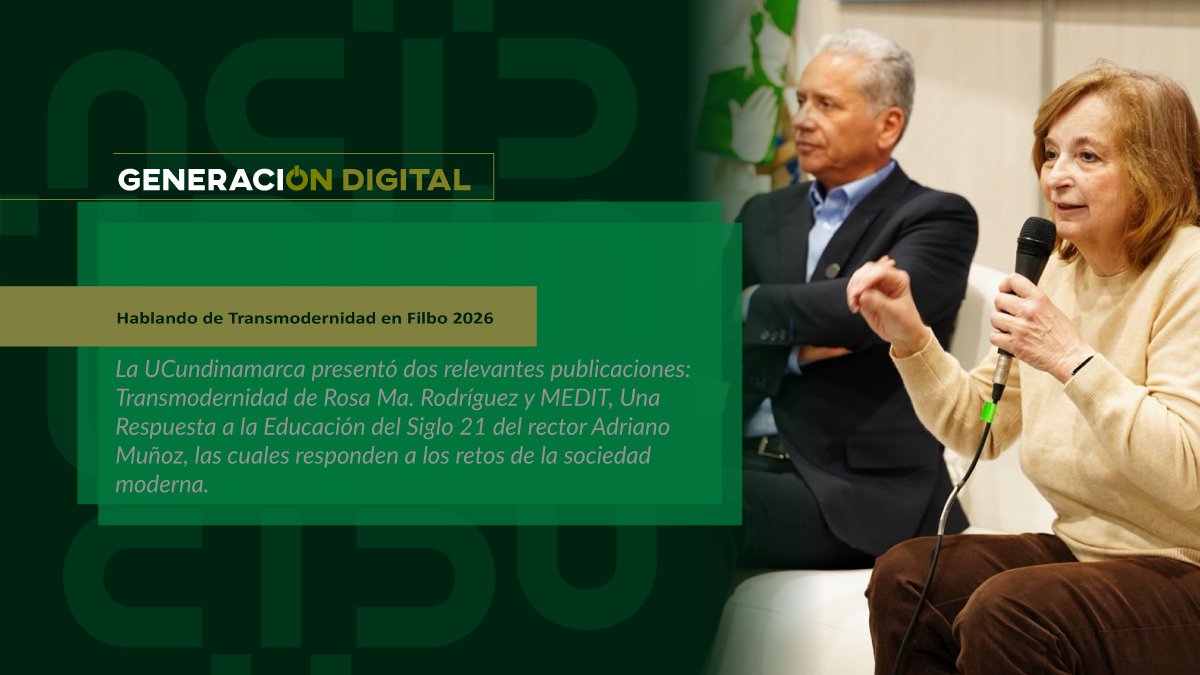
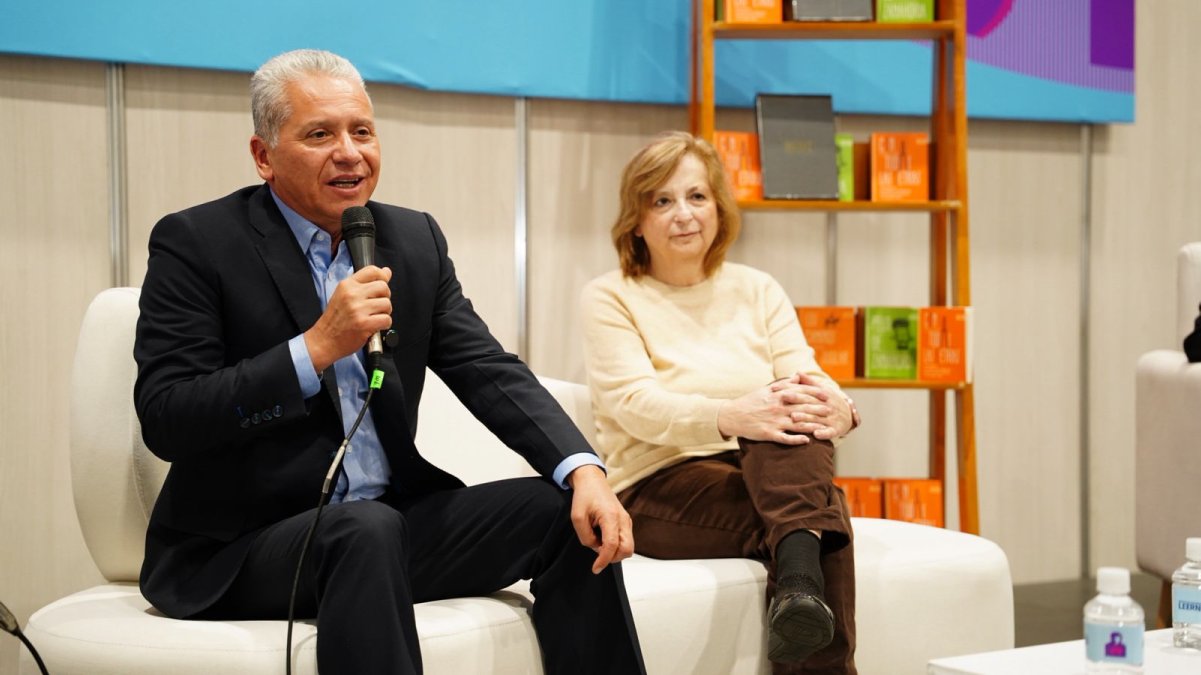

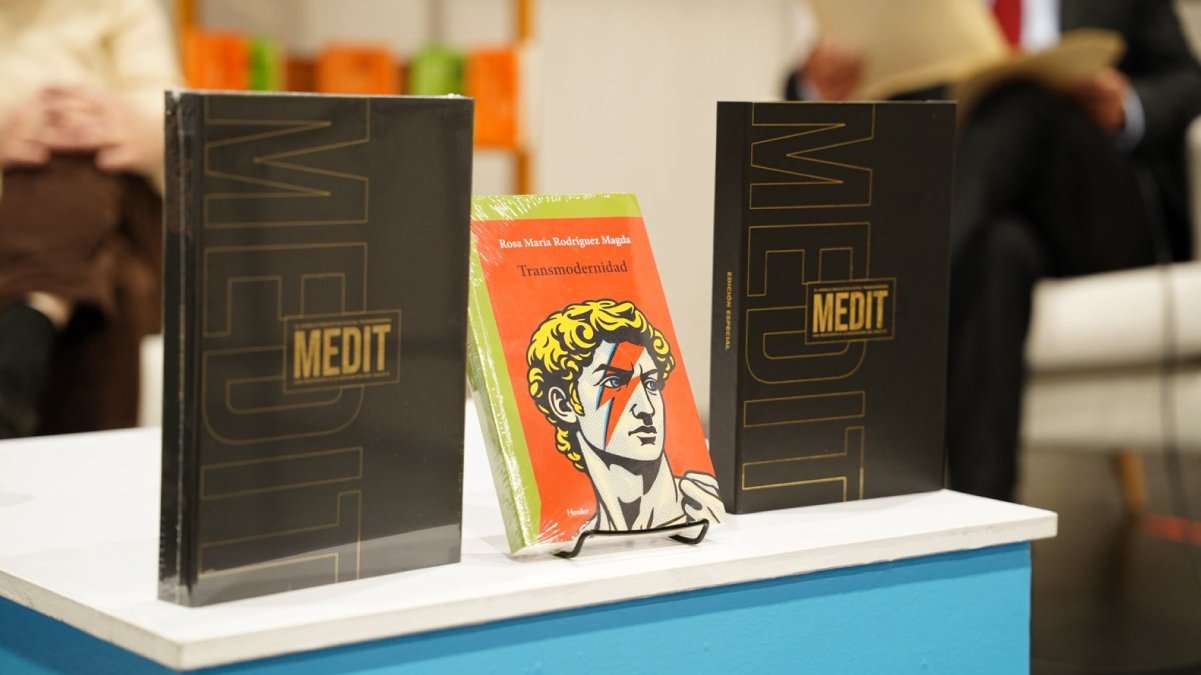
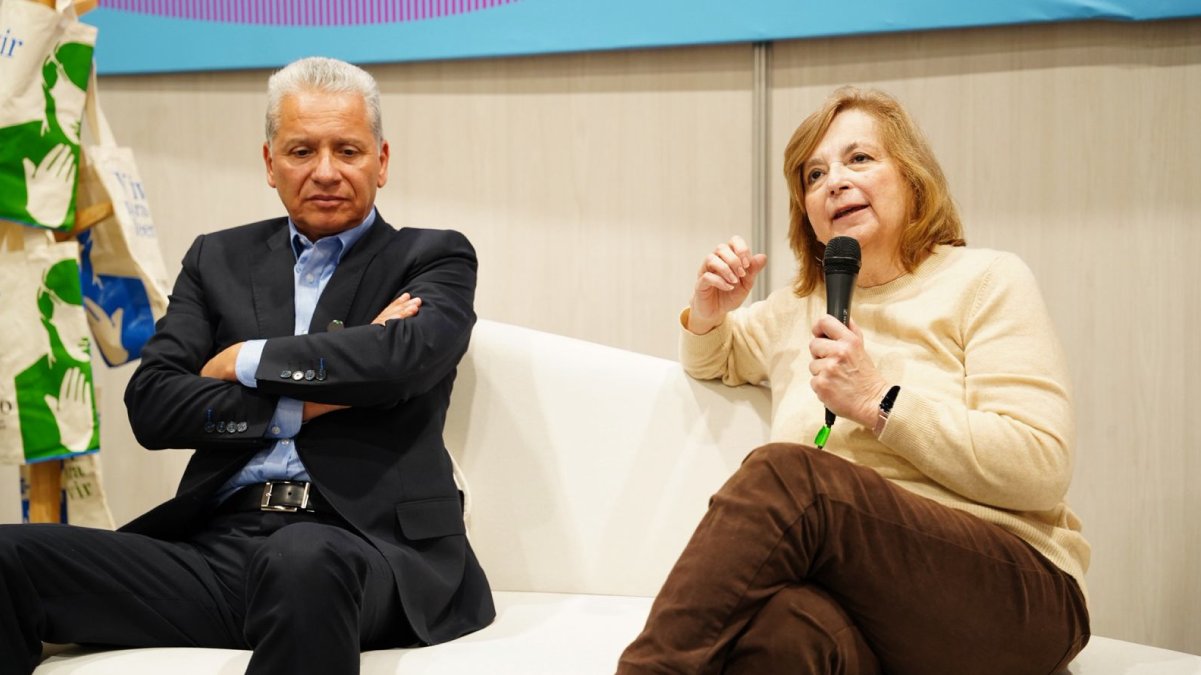
The University of Cundinamarca made history at the Bogotá International Book Fair (FILBo) by presenting two works: Transmodernity by the renowned Spanish philosopher and writer Rosa María Rodríguez Magda, and MEDIT, A Response to 21st-Century Education, authored by Rector Adriano Muñoz Barrera. Both publications call for a return to human essence, proposing that, despite living in a technologically advanced and fast-paced world, we must reclaim human values, ethics, and social responsibility.
This intellectual synergy not only strengthens the institution's visibility on the country's most important literary stage, but also reaffirms the university's commitment to cutting-edge education. The works presented offer a roadmap for understanding the hyperconnected society, where modernist reason and postmodern critique intertwine to give rise to a new academic narrative centered on integrity and human development.
As the culmination of this distinguished cultural program, the higher education institution will award an Honorary Doctorate to writer Rosa María Rodríguez Magda on April 30. This highest academic distinction recognizes her invaluable contribution to the university's educational model, which, from a transmodern perspective, prioritizes the essence of the human being over mere achievement, thus consolidating a humanistic and ethical vision in the face of the advances of the digital age.
About the publications
In her work *Transmodernity*, the author proposes a way to overcome postmodern fragmentation, suggesting a synthesis where reason, technology, and globalization do not erase identity, but rather transform it. This approach describes a hyperconnected society that recovers "grand narratives" through a global ethic, establishing that modernity has not died, but has transcended into an era of total interconnection where the virtual and the real coexist in a new human narrative.
For its part, the book MEDIT, a response to 21st-century education, proposes a break with traditional teaching methods to adopt a structure that responds to the reality of today's networked society. MEDIT is an educational, not a pedagogical, model, as it does not seek to engage in theoretical discussions about pedagogy and didactics, but rather establishes a university educational ideal in accordance with the present moment, that is, within a specific socio-historical and cultural context. It is a roadmap that constitutes the institution's ideal and its aspiration.
At the University of Cundinamarca, a position called dialogical and formative construction is adopted, as a basis for building knowledge and learning of the subject, with a view to a personal transformation that positively influences society.
From the philosophical perspective of transmodernity adopted by Rodríguez Magda (2004), the University of Cundinamarca does not abandon the unfulfilled utopias of modernity and postmodernity, such as justice, solidarity, and freedom. Consequently, it seeks to cultivate a free individual who understands themselves through others and nature, who, through dialogue and collaborative construction as a guiding ideal, forges their identity and personal development, appropriates the local and ancestral context, and acts as a transhuman person who transforms reality.
The common ground between the two texts lies in their prioritization of "being over doing." While Rodríguez Magda provides the conceptual framework for understanding the transmodern subject, Rector Muñoz Barrera materializes this thinking in an educational proposal that prioritizes holistic development for life. In this sense, both works offer a cohesive vision that seeks to reclaim the human essence in the face of digital automatism, making them essential reading for those who seek to transform education into an act of transcendence.
On the other hand, it is worth noting thatOn April 30, the Spanish philosopher and writer will receive an Honorary Doctorate from the University of Cundinamarca, a distinction that celebrates her influence on an educational model that puts the integral formation of the person at the center of the digital age.
News
News
News
News